
HBM4E production to expand in H2 next year; foundry utilization for sub-8nm processes to hit 100%
Mobile, home appliance units post losses as Samsung vows to improve profitability
Samsung Electronics is expected to sustain strong growth into next year, riding a memory chip boom driven by the technological edge of its sixth-generation high bandwidth memory, HBM4.
Through the third quarter, Samsung's semiconductor division alone posted cumulative operating profit of 249.4 trillion won ($187 billion), effectively accounting for the company's entire operating profit of 254 trillion won for the period. The result underscores how the chip business has carried the company even as its finished-product divisions — mobile, home appliances and TVs — have all slipped into the red.
Securities analysts expect Samsung to sustain quarterly operating profit in the 100 trillion won range starting from the third quarter. The consensus forecast for fourth-quarter operating profit stands at 117 trillion won, with full-year earnings projected to surpass 300 trillion won and potentially reach 370 trillion won.
Analysts attribute the outlook to a memory price rally tied to an unprecedented industry supercycle, along with long-term supply agreements Samsung has signed with multiple customers, which are expected to bolster medium- to long-term earnings stability.
HBM4E mass production to begin in H1 next year, ramp up in H2
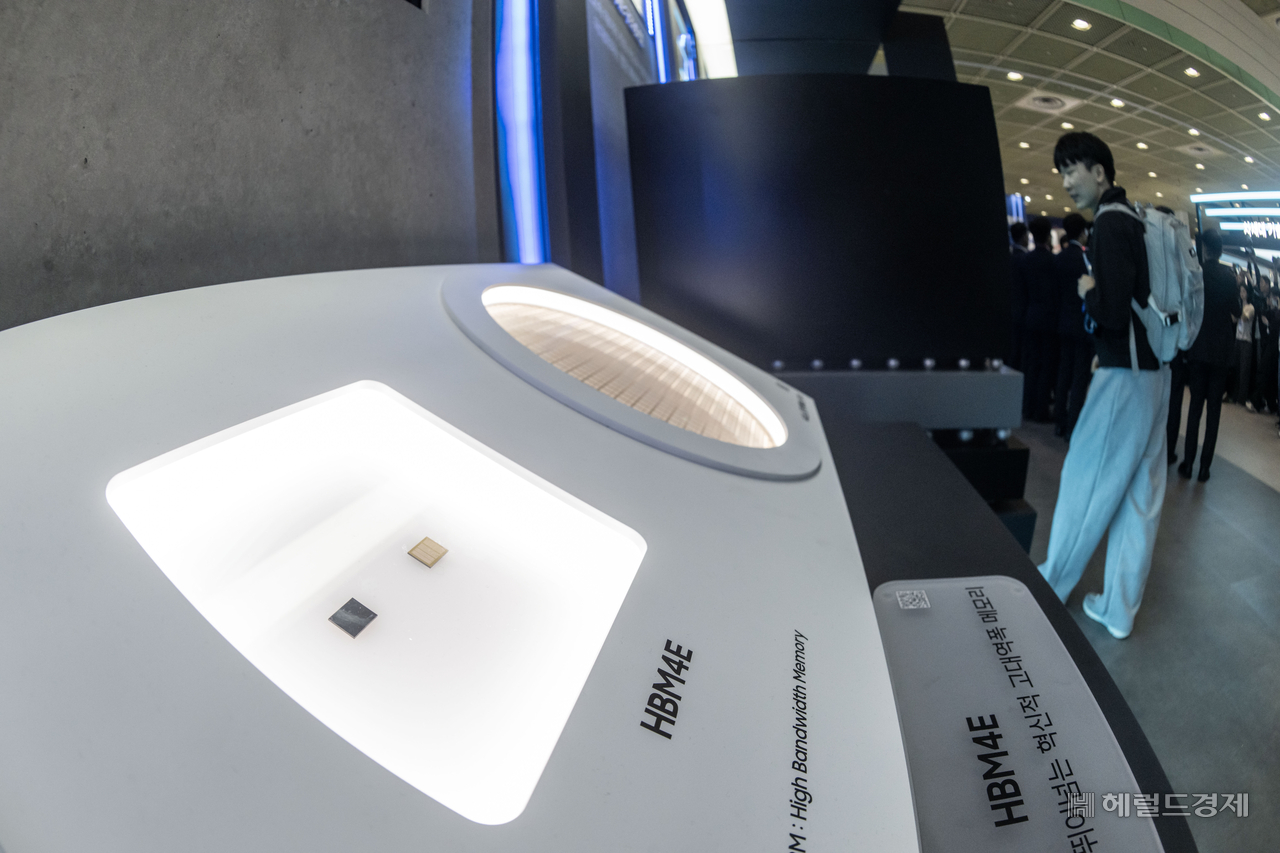
The record performance of Samsung's semiconductor business reflects both rising memory selling prices and growing HBM4 sales. In the third quarter, Samsung's average selling price for DRAM rose 20 percent from the second quarter, while NAND prices climbed 10 percent, boosting overall chip profitability.
Kim Jae-jun, executive vice president and head of Samsung Electronics' memory strategy and marketing division, said Thursday on the company's third-quarter earnings conference call that AI infrastructure investment continues to grow in the fourth quarter, with memory demand expanding further — particularly for products tied to newly launched GPUs and CPUs.
With investment from major AI data center operators on the rise, Samsung plans to concentrate its supply capacity on AI applications where strong demand has been confirmed.
Kim said some demand adjustments are expected next year in mobile and PC applications. "We plan to expand HBM4 sales while beginning mass production of HBM4E in the first half and ramping up volume production in the second half," Kim said.
Semiconductor strength to continue; annual operating profit seen topping 600 trillion won next year
Samsung's HBM4 supply is expected to grow sharply next year as Nvidia ramps up shipments of its next-generation AI accelerator, Rubin, in 2027.
KB Securities forecast that Samsung's average selling price for HBM will rise 100 to 150 percent next year compared with this year, propelled by HBM4 — which commands the highest prices in the industry.
The brokerage also projected that DRAM prices will lead the way higher from the first quarter of next year, rising by double digits compared with the fourth quarter of this year.
Analysts said HBM4, which is drawing a flood of orders from global big-tech customers, is becoming a core growth engine and will mark a turning point for a revaluation of Samsung's corporate worth.
Some in the securities industry have projected Samsung's annual operating profit next year could exceed 600 trillion won. Hanwha Investment & Securities put the figure at 605 trillion won, representing growth of about 63 percent from this year's projected 370 trillion won.
Foundry targets double-digit growth; sub-8nm utilization to hit 100% next year
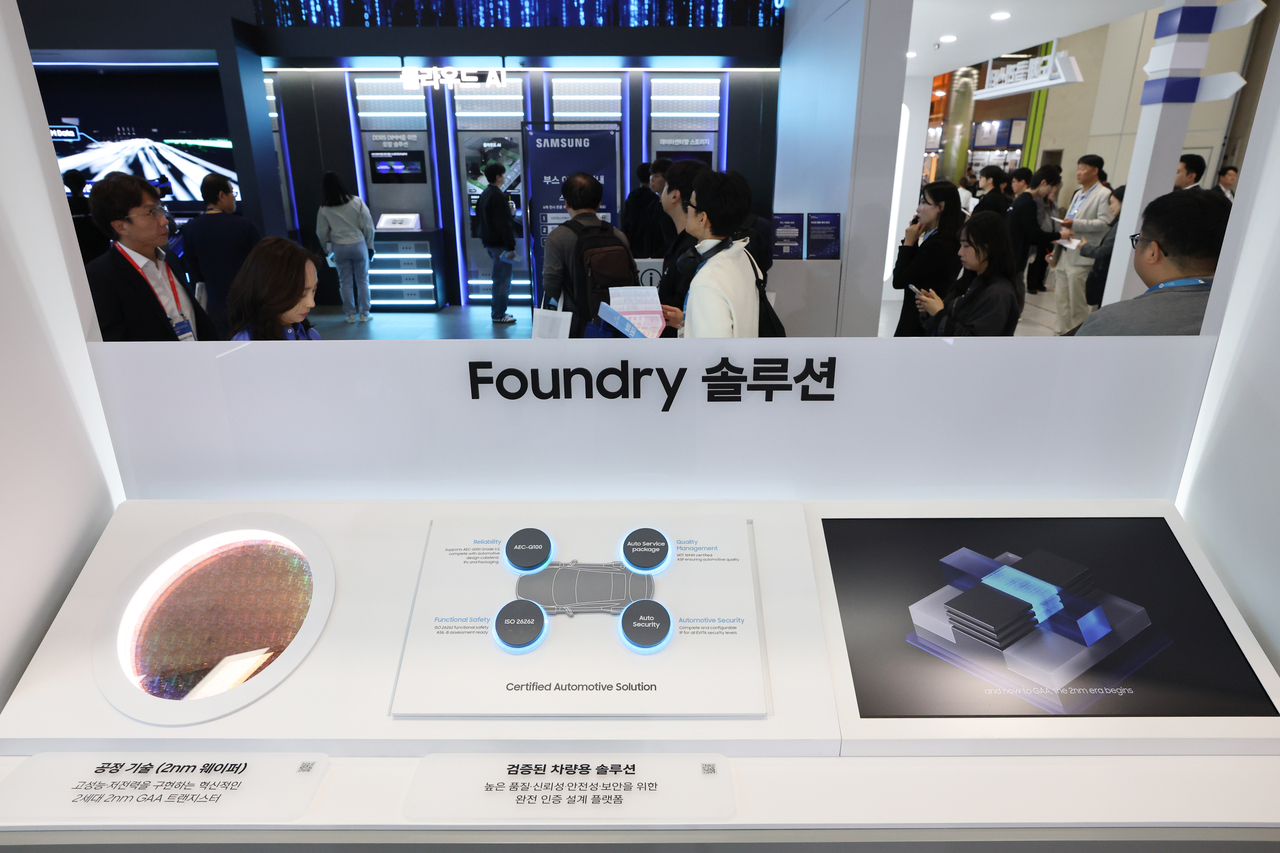
The foundry business posted significant improvements in both revenue and profitability from the second quarter, driven by growth in base-die sales for HBM4 made on a 4-nanometer process and stronger advanced-node sales to global customers. In the fourth quarter, Samsung will begin mass production of its Exynos 2700 mobile application processor, based on a second-generation 2-nanometer process.
Kang Seok-chae, executive vice president of the foundry division, said the unit expects double-digit or greater revenue growth compared with both the previous quarter and the same period last year, citing expanded memory product sales and increased sales to major customers in the United States and China.
Kang said growth in 2027 is expected to center on advanced 4-nanometer and 2-nanometer processes amid strong AI demand. "Sales of 4-nanometer products will grow through expanded AI and HPC-oriented sales to major US customers and solid memory demand," Kang said.
With a major customer set to begin mass production of a new 2-nanometer product in the second half of next year, utilization rates for advanced processes are expected to improve substantially. Demand across sub-8nm processes as a whole is projected to outpace production capacity by a wide margin, pushing utilization above 100 percent.
Mobile and home appliance losses deepen; Samsung vows to focus on improving profitability
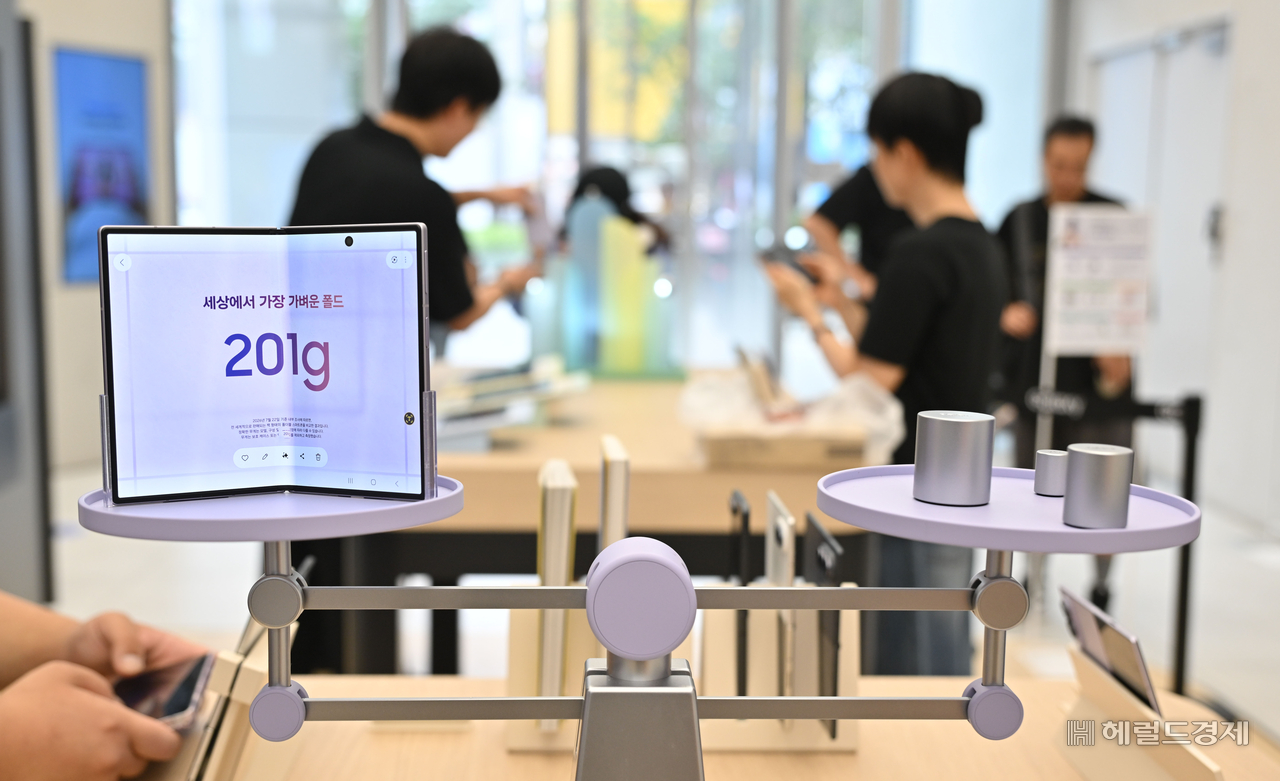
While the Device Solutions division continues to set records each quarter, the Device eXperience division — which oversees Samsung's finished-product businesses — posted an operating loss of around 800 billion won in the third quarter.
The Mobile eXperience division plans to expand sales of the Galaxy S26 series and foldable models to capture year-end holiday demand, with a focus on improving the product mix toward flagship devices and raising user-perceived value through hardware performance and form-factor innovation.
The Visual Display and Digital Appliances divisions, which handle TVs and home appliances respectively, also continued to struggle with profitability pressures from rising costs. The combined operating loss widened to around 200 billion won in the third quarter from about 10 billion won the previous quarter. The home appliance business in particular was weighed down by higher raw material and logistics costs.
Park Soon-cheol, Samsung Electronics' chief financial officer and executive vice president, said the DX division faces continued headwinds in the fourth quarter from macroeconomic uncertainty and rising costs. "We will strengthen the foundation for future growth by improving our profit structure," Park said, adding that Samsung will accelerate the transformation of its business through AI-driven productivity innovation and resource efficiency.
joze@heraldcorp.com
jeongwan@heraldcorp.com




