
'Healthspan' and anti-aging take center stage as scientists examine red ginseng's mechanisms for managing stress, brain health and muscle loss
Wide-ranging presentations spanning basic science to industrial applications underscore red ginseng's growing global clinical and academic value
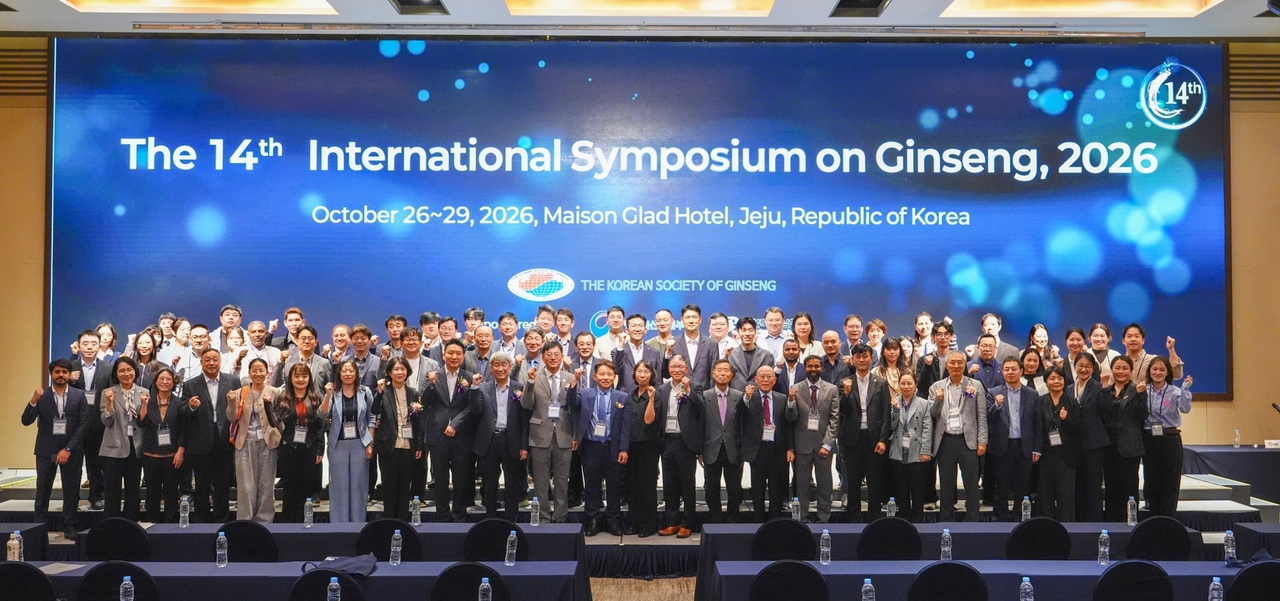
The 14th International Ginseng Symposium, a global academic forum bringing together red ginseng and ginseng researchers from around the world, concluded Thursday after a four-day run.
Organized by the Korea Ginseng Society and sponsored by the Ministry of Agriculture, Food and Rural Affairs and the Korea Ginseng Association, the symposium ran Monday through Thursday at Maison Glad Jeju. First launched in 1974 and held every four years, the event is the world's most prestigious international academic conference in the ginseng field, with a history spanning more than 50 years. This year's gathering drew more than 800 academic and industry experts from 14 countries — including South Korea, the United States, Germany, Sweden, China and Japan — reflecting intense global interest in red ginseng and ginseng research.
The symposium featured a wide range of clinical and basic research presentations centered on "healthspan" and anti-aging, two defining themes of an era of rapid aging. Researchers presented a series of scientific findings showing that red ginseng acts on key pillars of healthspan — including reducing oxidative stress that accelerates aging, improving sleep quality, alleviating dementia symptoms, and addressing metabolic syndrome and sarcopenia.
Johan Auwerx, a professor at the School of Life Sciences at the Swiss Federal Institute of Technology Lausanne (EPFL) and a world-renowned authority on metabolism and aging, delivered a keynote address confirming that red ginseng extract improves markers related to metabolic syndrome and liver damage.
Hong-Sheng Tan, a professor at the School of Medicine at Shanghai Jiao Tong University in China, drew significant academic attention by presenting findings that red ginseng consumption meaningfully lowers oxidative stress markers (MDA) while substantially increasing deep sleep duration and improving quality-of-life scores.
Additional findings that elevated red ginseng's academic and practical standing included research by Moon Min-ho and Nam Yun-kwon, professors at Konyang University College of Medicine, on treating Alzheimer's disease and improving cognitive function through red ginseng's key active compounds (polysaccharides). Also presented was a study by Park Sang-min, a professor at Chungnam National University College of Pharmacy, on alleviating age-related muscle loss, improving motor function, and identifying the integrated brain-liver mechanism behind these effects.
The symposium also broadened the known spectrum of red ginseng and ginseng benefits through sessions covering skin and sensory function, suppression of colitis, immune regulation and antiviral activity. Presentations ranged from fundamental science to industrial applications. A dedicated "World Ginseng Industry" session provided a platform for sharing the latest industry developments and future outlook from major ginseng-producing countries, including South Korea, China and Vietnam, laying the groundwork for deeper global cooperation.
Kim Jong-hun, president of the Korea Ginseng Society, said the symposium was "a meaningful occasion for researchers from around the world to come together, identify and share the scientific mechanisms by which red ginseng and ginseng contribute to extending the healthspan of people today." Kim added that the society would "work to strengthen the global competitiveness of red ginseng and ginseng on the basis of the research discussed here, while preparing without delay for the 15th symposium in four years, where we hope to present even more advanced results."
kty@heraldcorp.com




