
Q3 2026 earnings results released
Annual facility investment plan for 2026 unveiled
Lee Jae-yong marks four years at the helm, drives push for future competitiveness
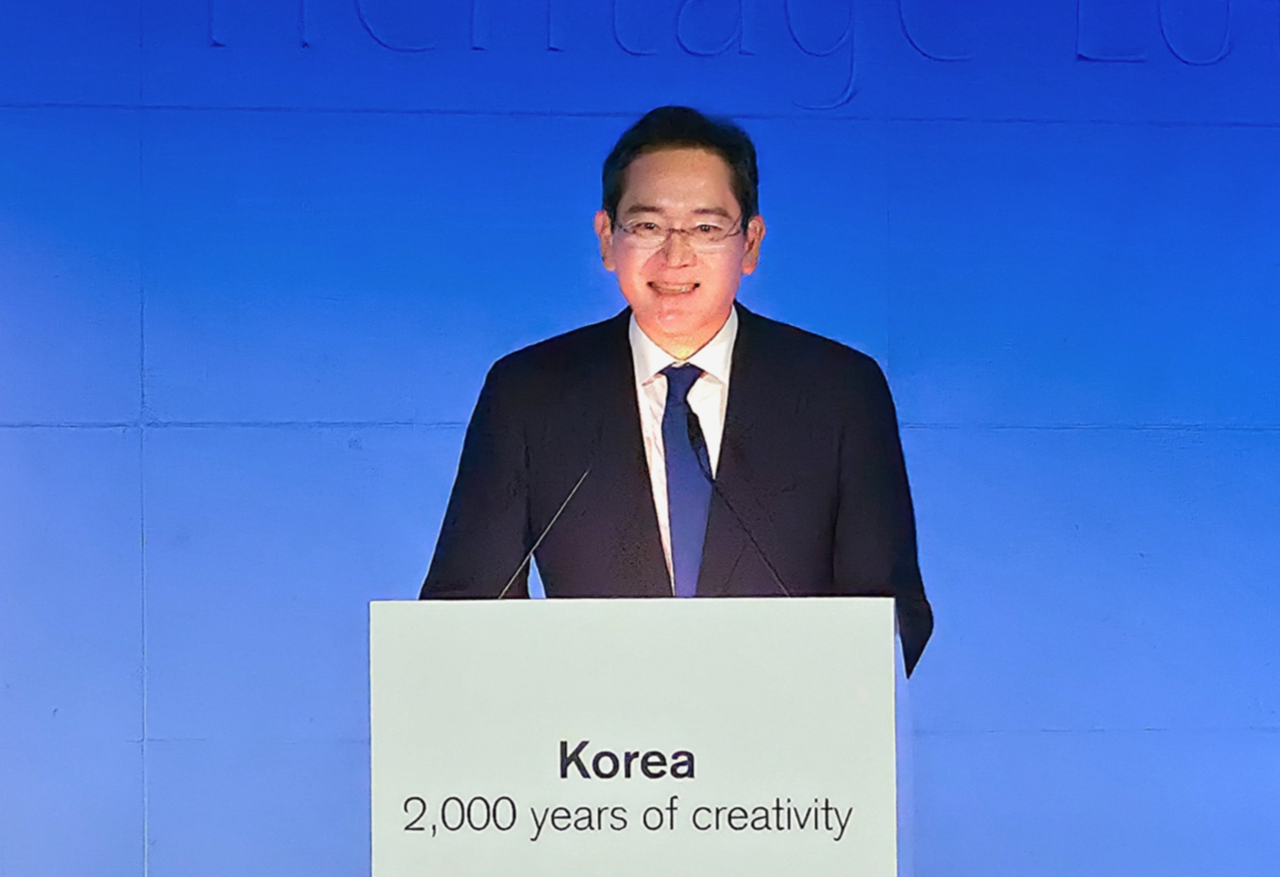
Samsung Electronics plans to commit 84.4 trillion won ($63.2 billion) in facility investment this year, the company announced Thursday.
The chipmaker disclosed the annual facility investment plan alongside its finalized third-quarter earnings. By division, the DS (Device Solutions, semiconductor) unit accounts for 76.8 trillion won, while the display segment is set at around 3.9 trillion won.
Within the DS division, the memory chip business will direct investment toward new fab infrastructure to meet robust AI demand and prepare for the medium to long term. The foundry business will focus investment on the Taylor, Texas fab to respond promptly to surging demand in the AI and high-performance computing market. The display segment will invest in supplementing existing lines and improving performance.
The scale of the investment reflects not only the need to meet persistently strong demand but also a sense of urgency that failing to prepare proactively could erode Samsung Electronics' current competitive edge.
The push for a decisive technology lead is expected to accelerate under Chairman Lee Jae-yong, who marks the fourth anniversary of taking the helm this month.
Lee is expected to press ahead with technology investment and mergers and acquisitions to strengthen the group's future growth engines, while focusing on managing external uncertainties and maximizing synergies across the "One Samsung" framework.
Since the Supreme Court acquitted Lee last year, an active global schedule has helped Samsung Electronics secure major contracts from big-tech companies including Tesla and Apple.
As a semiconductor supercycle took hold, Samsung Electronics posted operating profit exceeding 57 trillion won in the first quarter, 89 trillion won in the second quarter and more than 107 trillion won in the third quarter — setting a record among global big-tech companies.
Samsung Electronics also became the first company in the world to successfully mass-produce sixth-generation high-bandwidth memory, HBM4, restoring its technology credentials. Building on its position as the world's largest chipmaker by production capacity and the only fully integrated semiconductor company, it has fully reclaimed leadership of the memory chip market.
The biotech businesses Lee has identified as Samsung's "second semiconductor" — Samsung Biologics and Samsung Bioepis — continue to post strong earnings, driven by growth in contract development and manufacturing and expanding biosimilar sales.
Lee has also steadily strengthened the foundation for accountable management by receiving successive transfers of group affiliate shares from Hong Ra-hee, honorary director of the Leeum Museum of Art.
Going forward, Lee is expected to maintain a hands-on global management approach to sustain recent momentum and support group-wide growth.
Samsung Electronics is expected to expand production capacity and technology investment to widen its semiconductor lead and position itself as a frontrunner in AI, while actively pursuing new growth portfolios and large-scale acquisitions.
Expectations are also growing for meaningful results in advanced robotics, automotive electronics and heating, ventilation and air conditioning, following the establishment of a dedicated M&A team within the Business Support Office — an organization elevated from a task force to a permanent unit last year.
The most immediate focus in business circles is Samsung Electronics' upcoming regular executive reshuffle.
For the past three years, Samsung Electronics has held its annual personnel review in late November — earlier than in previous years — to ensure thorough preparation for the following year's business.
A similar timeline is expected this year, with observers anticipating a generational shift through executive promotions alongside an emphasis on leadership stability to minimize management uncertainty.
Amid persistent geopolitical risks and domestic and international uncertainties, the company is also expected to pursue continuous reform and innovation.
In May, Samsung Electronics replaced the head of its Visual Display division, which oversees the struggling TV business, and in July established the RX Business Promotion Office — a robotics unit reporting directly to the chief executive.
As a result, analysts expect the company to accelerate bold structural changes through ad hoc personnel moves when needed, rather than waiting for the year-end reshuffle and reorganization cycle, in order to respond swiftly to shifts in the business environment.
gil@heraldcorp.com




