
Budget up 8.3% from this year; city vows to maintain fiscal discipline without adding debt
500,000 young residents to receive AI usage vouchers; 27,200 public rental units to be supplied
Night economy activation, expanded public jobs, and generational growth and employment support also planned
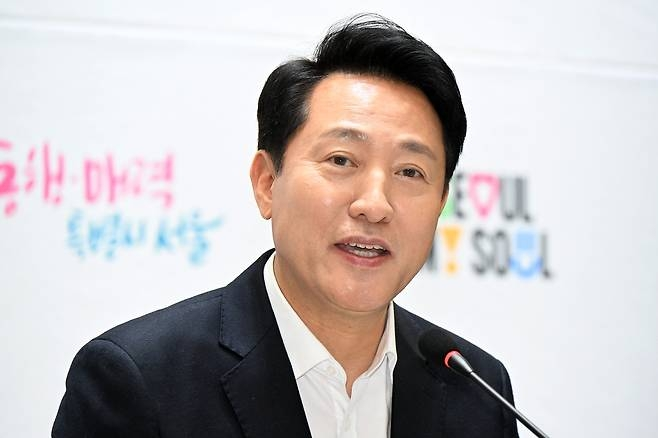
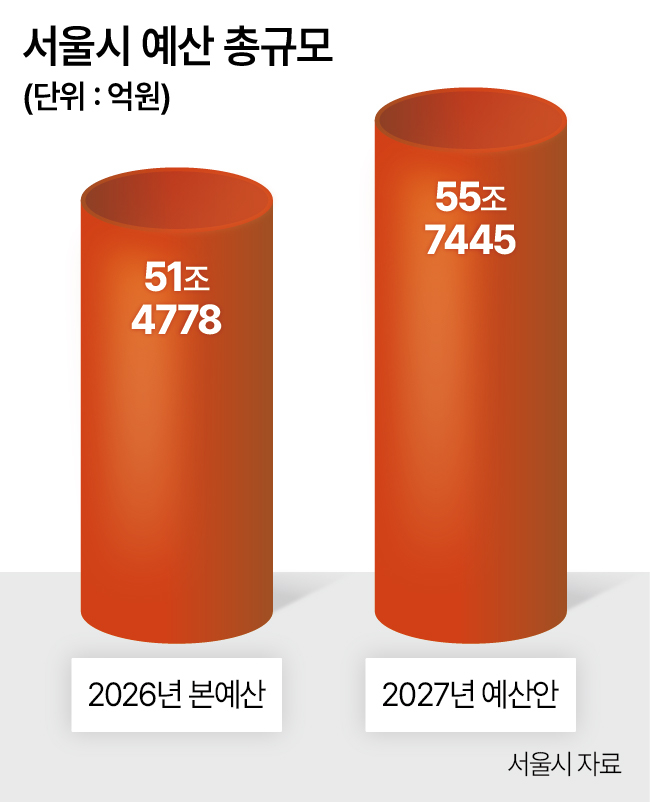
The Seoul Metropolitan Government has drawn up a budget of 55.74 trillion won ($41.7 billion) for next year, an increase of 8.3 percent, or 4.27 trillion won, from this year's main budget. The spending plan places particular emphasis on closing the AI access gap among young residents and stabilizing housing costs for citizens.
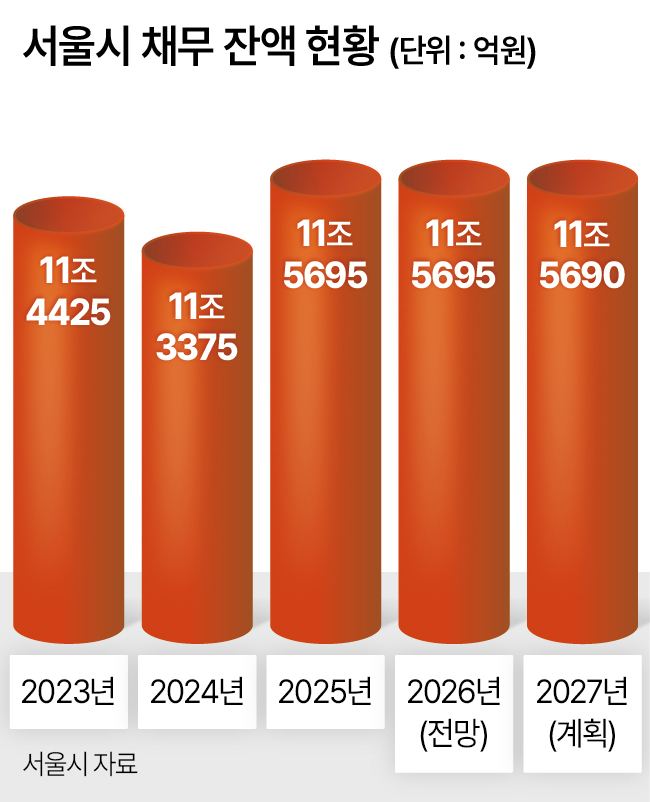
The city announced Thursday that it will submit the 2027 budget proposal to the Seoul Metropolitan Council on Friday. City-funded spending matched to central government programs — expanded this year to cover marriage support and child-rearing subsidies — will rise by 1.17 trillion won from the previous year. Despite that increase, the city said its outstanding debt at the end of next year will be held at this year's level, maintaining its commitment to fiscal discipline.
'Youth AI vouchers' to bridge digital divide; night economy to get a boost
The budget introduces a "youth AI voucher" program — allocated 26.6 billion won — to provide 500,000 young Seoulites with access to generative AI services. The initiative was scrapped after its full budget was cut during this year's second supplementary budget review, and the city is now reviving it for next year to prevent disparities in cost and educational opportunity from widening employment and income gaps. A career-exploration and job-placement program called Seoul Young Careers, funded at 22.3 billion won, will also be launched, while the Youth Employment Academy will train 4,500 AI specialists with a budget of 46 billion won.
The city will also invest in the night economy. Ten new sites for the second phase of the "Seoul Moonlight Night Market" outdoor dining program will be created at a cost of 10.5 billion won, and Han River camping will be expanded to 300 units. Nighttime sports facilities will be built at Ichon and Gwangnaru Han River parks for 1.9 billion won.
Public jobs for middle-aged residents, seniors, people with disabilities and low-income groups will be expanded with 780.6 billion won. Youth aging out of juvenile welfare facilities will receive independence settlement grants totaling 700 million won. Meal support for children at risk of going hungry and food allowances for children in welfare facilities will be increased under a 39 billion won allocation. A new "Seoul-style in-between generation pension" — budgeted at 1.3 billion won — will help 10,000 middle-aged residents near retirement bridge income gaps. Loneliness-care hub "Itda Place" will receive 1.5 billion won, and the "Seoul Mind Convenience Store" mental health support service will be expanded with 800 million won.
Generational growth and re-employment will also be supported. The online education program Seoul Learn, funded at 26.7 billion won, will strengthen digital content support for underprivileged students, and a new foundational arts education program for elementary school students will be launched with 1.4 billion won.
The "Wrist Doctor 9988" health management program will be extended to cover metabolic syndrome, dementia and smoking cessation, and the mobile fitness assessment service will be expanded. The "Swieomswieoem Morning" leisure program will also be scaled up, the World Cup No. 1 park golf course will be remodeled, and four indoor screen park golf facilities will be added.
Garden and waterfront spaces will be expanded. The Seoul International Garden Expo will be held at Namsan Park with a budget of 5.8 billion won, and a garden valley project in the G-Valley industrial complex will be developed for 1.8 billion won. Eco-friendly electric vehicle and charger distribution will be scaled up with 202.2 billion won. Hydrogen bus deployment and a hydrogen refueling station at the Songpa public bus depot will be built for 34.9 billion won. Shaded pedestrian pathway standards will be incorporated into plans from the city master plan through individual development projects at a cost of 2 billion won. A master plan for expanding and improving Seoul Station Plaza will also be drawn up for 700 million won.
Urban rail and arterial roads will be expanded as well. A combined 138.3 billion won will be invested in five urban rail projects: the Ui-Sinseol extension line, the Dongbuk Line, the Gangbuk Crosstown Line, the Seonam Line and the Seobu Line. Construction of an underground road tunnel beneath the National Assembly Boulevard and a park above it will receive 132.1 billion won.
Some 747.8 billion won will be channeled into public transit fare refunds through the Climate Card pass, easing the burden of transportation costs. Disability call-taxi services and universal design taxis — open to both disabled and non-disabled riders — will be expanded with 101.9 billion won.
Safety infrastructure will also be reinforced. A total of 236.2 billion won will go toward installing deep underground stormwater drainage tunnels at Gangnam Station, Gwanghwamun and Dorimcheon, as well as building or expanding nine rainwater pumping stations. Some 410.9 billion won will be spent on overhauling 113 kilometers of aging water supply pipes and 151 kilometers of sewer lines.
27,200 public rental units to be supplied; new affordable studio program for university students
The budget pairs housing supply expansion with residential cost support. Some 1.12 trillion won has been set aside to supply public rental housing for young residents, newlyweds and housing-vulnerable groups. The 27,200 units will be delivered through three channels: 20,736 acquired units, 3,100 leased units and 3,364 newly constructed units. The city will also support faster execution of private redevelopment projects, including the Rapid Integrated Planning 2.0 scheme (10.8 billion won) and the Moa Town and Moa Housing programs (12.3 billion won).
A new "Seoul-style Seedling Studio" program will supply 500 leased units for university students. The program uses housing near campuses to provide affordable accommodation for students enrolled at Seoul universities, with plans to deliver 500 new leased units through interest-free deposit support and remodeling. Alongside this, 3,027 new units of safe housing for young residents and newlyweds will be purchased as public rentals.
Monthly rent support for young residents will be expanded from 23,000 to 32,000 recipients — an increase of 9,000 people — with 126.2 billion won allocated. Interest subsidies on lease deposit loans for non-homeowning newlyweds and young residents will also be increased. Housing benefit payments will be provided to households earning at or below 48 percent of the median income standard, with 1.03 trillion won set aside, and interest-free loans of up to 70 million won will be available for long-term jeonse deposits, backed by 72.5 billion won. Tenants without homes will receive up to 500,000 won in jeonse deposit return guarantee premiums, supported by 11.1 billion won.
Seoul Mayor Oh Se-hoon said the city had expanded investment in citizens' daily lives without increasing its debt load, even amid rising mandatory expenditures and what Oh described as discriminatory fiscal treatment by the central government. "We will give young people opportunities to leap forward, provide housing stability for citizens burdened by housing costs, and offer a robust safety net for those who need help," Oh said. "We will execute this budget so that citizens can feel in their daily lives that Seoul is a city of quality living — where everyone, wherever they live, enjoys a healthy and convenient life."
cook@heraldcorp.com




