
2 Fed members voted for immediate hike; Chair Warsh says inflation 'too high'
BOK deputy governor warns of lingering external risks
Narrowing Korea-US rate gap could ease won pressure
Strong GDP growth, October inflation data in focus
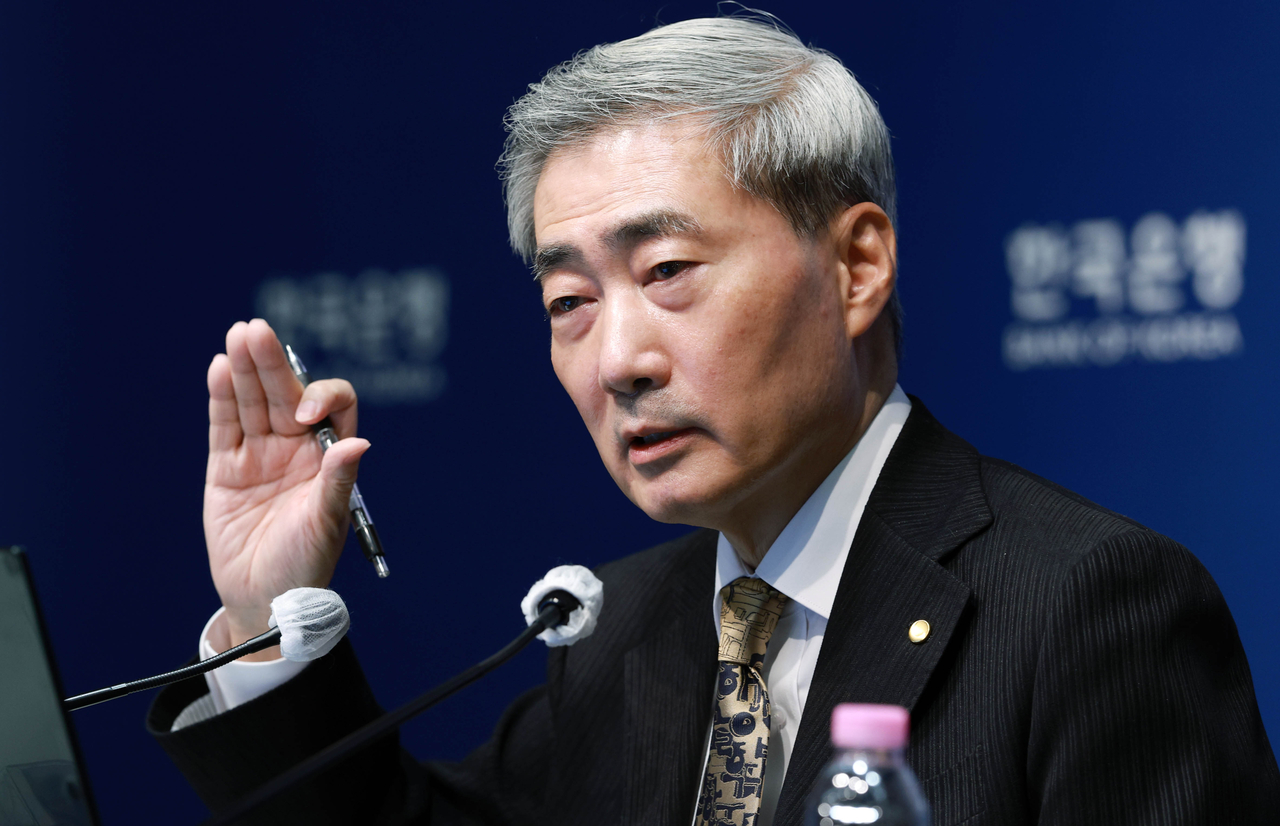
The US Federal Reserve held its benchmark interest rate steady but left the door open to further hikes, with two board members calling for an immediate increase and Chair Kevin Warsh stressing that inflation remains "too high." The hawkish hold has strengthened expectations that the Bank of Korea will also raise rates at its final meeting of the year next month.
BOK Deputy Governor Kwon Min-su convened a market-monitoring meeting Thursday morning and said the Fed had held rates as expected overnight, but warned that external risks persist — including ongoing tensions in the Middle East, concerns over fiscal health in major economies, and uncertainty surrounding AI investment. "The ECB and the Bank of Japan are both scheduled to announce monetary policy decisions this week, and uncertainty around US policy changes following the midterm elections remains elevated," Kwon said. "We will continue to monitor domestic financial and foreign exchange market conditions with heightened vigilance."
In the early hours of Thursday, the FOMC held the benchmark interest rate at 3.75 to 4.00 percent at its regular meeting. Ten of the 12 committee members voted in favor of the hold, while the remaining two dissented, calling for an immediate 25-basis-point increase.
Warsh declined to signal the direction of the December rate decision at a press conference but made clear his concern about prices. "I don't support forward guidance unless we're in an emergency or a crisis," Warsh said, and went on to say that "real economic activity is clearly pointing in the right direction, but inflation is too high." Warsh also left room for further tightening, saying financial conditions since last month's hike were "hard to call restrictive."
Markets are now leaning more heavily toward a December hike. According to the CME Group's FedWatch tool, the probability of a rate increase at the December meeting stood at 79.4 percent as of Wednesday (local time), up 1.1 percentage points from 78.3 percent the day before.
The BOK assessed the meeting as one in which the Fed "held the policy rate as expected, but upgraded its assessment of economic activity while maintaining its judgment on inflation, with two dissenting votes for a hike."
"The purpose of this rate hold is to assess the effects of previous hikes," said Kim Seong-su, a researcher at Hanwha Investment & Securities. Kim forecast a further 25-basis-point increase in December, followed by a hold through 2027.
As the likelihood of another Fed hike this year grows, so does the expectation that the BOK will raise its own benchmark rate next month. Governor Shin Hyun-song has repeatedly said in recent weeks that raising rates ahead of the US helped stabilize financial markets. The Fed's hawkish hold could further strengthen Shin's case for another increase.
If the BOK raises rates next month, the gap between Korean and US benchmark rates would narrow from 1 percentage point to 0.75 percentage point on an upper-bound basis. The current situation — in which Korea's rate sits below that of the US — is seen as a fundamental driver pushing the won-dollar exchange rate higher.
The Korea-US rate inversion has persisted for more than four years since the US surpassed Korea's rate in 2022. The gap had narrowed from 1.25 percentage points to 0.75 percentage point after the BOK raised rates in consecutive months in July and August, but widened back to 1 percentage point after the Fed raised rates by 25 basis points in September.
Shin has repeatedly suggested the won-dollar rate is elevated relative to Korea's economic fundamentals, implying room for further won appreciation. But with the rate hovering in the mid-to-low 1,300-won range and upward pressure potentially building, a November BOK hike to narrow the Korea-US rate gap could gain additional justification.
After holding in the 1,320-won range for much of the past week, the won-dollar rate climbed back to the 1,340-won range Wednesday on dollar buying. The weekly closing rate was 1,337.7 won, rising above 1,330 won for the first time in seven trading sessions since Oct. 19, when it closed at 1,330.3 won. As of 9 a.m. Thursday, the won-dollar rate was trading at 1,340.7 won.
Other key macroeconomic indicators are also pointing toward further tightening. Third-quarter real GDP grew 1 percent quarter-on-quarter, more than three times the BOK's forecast of 0.3 percent. While consumption contracted for the first time in more than four years, the BOK expects it to pick up in earnest from the fourth quarter. A business sentiment survey for October also showed corporate confidence rising to its highest level in four years and two months.
The main variable remaining before the next rate decision is October inflation data, due for release in early November. The BOK expects the October inflation rate to climb back to around 3 percent.
kimstar@heraldcorp.com




