NST hosts deep tech startup challenge, with 8 teams from government research institutes competing; PFAS-free waterproofing wins top prize, AI medical device and plasma technologies draw attention
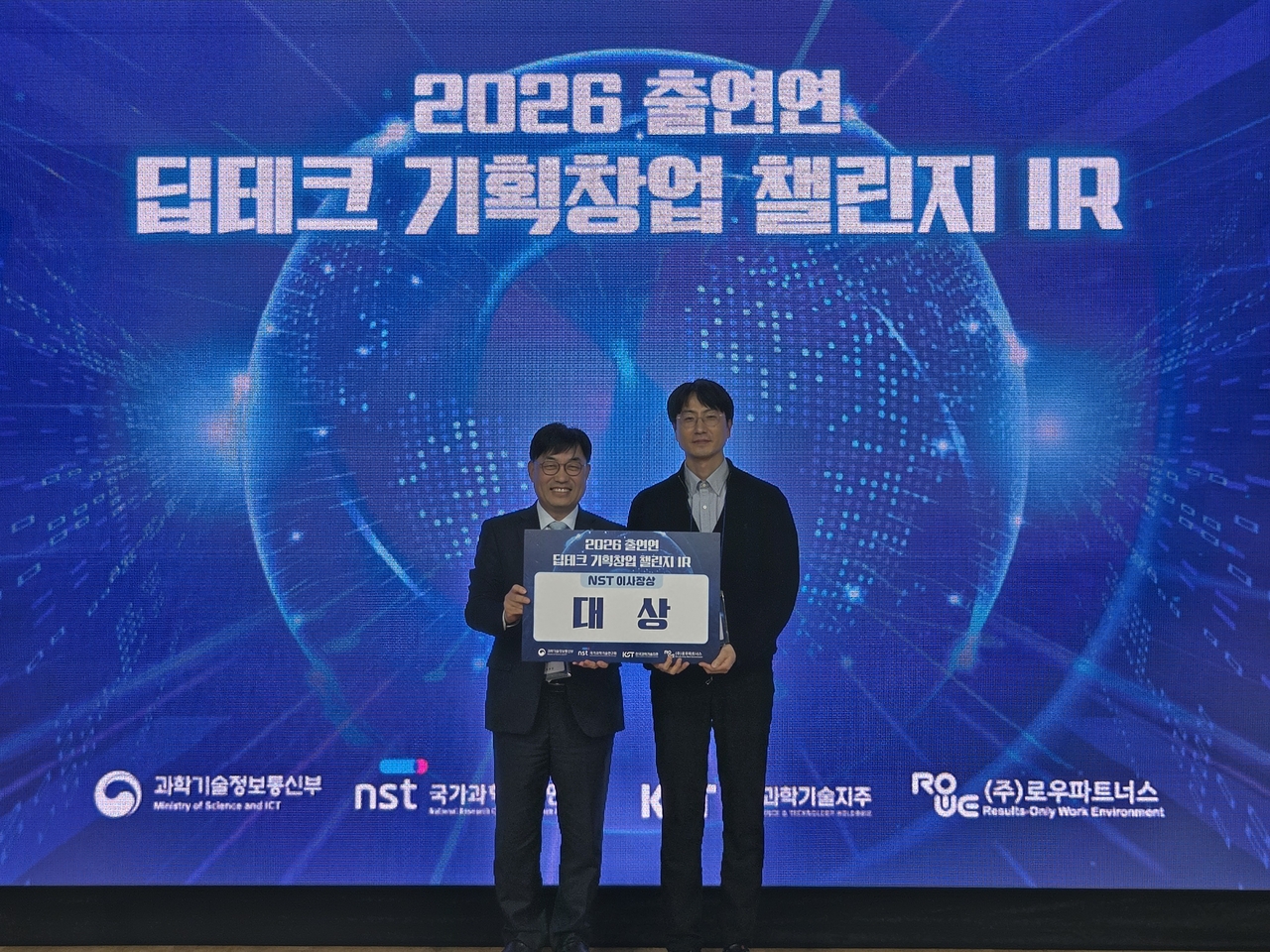
A technology that waterproofs fabric in under a minute — without using per- and polyfluoroalkyl substances, or PFAS, which have drawn scrutiny over health risks — took the top prize at a deep tech startup competition for government-funded research institutes.
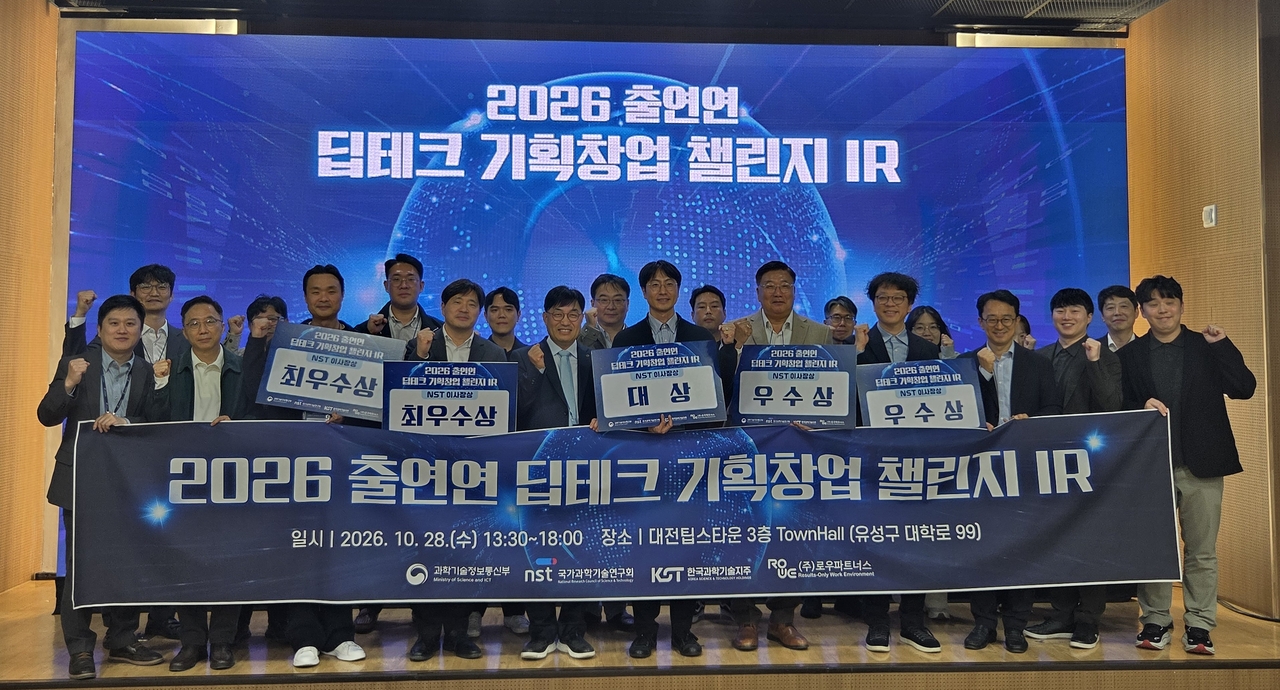
The National Research Council of Science and Technology (NST) announced Thursday that it held the "2026 Deep Tech Startup Challenge IR" at Tipstown in Daejeon on Wednesday and selected five winning teams.
The event was designed to connect outstanding research results from government-funded institutes with actual startups and investment opportunities. Eight pre-startup teams, identified and developed through a startup program jointly run by NST and Korea Science and Technology Holdings (KST), competed to demonstrate their technological competitiveness and commercialization potential.
A panel of judges drawn from investors and technology commercialization experts evaluated each team on market potential, customer demand, business model and investment viability.
The grand prize went to the "NanoAquaShield" team, led by Park Seung-cheol of the Korea Institute of Machinery and Materials.
The research team developed a coating agent and spray that can impart high-performance waterproofing to fabric in under a minute without using PFAS.
By combining low-surface-energy materials with fluorine-group-induced bonding technology, the team said it achieved waterproofing performance that surpasses Gore-Tex. Judges gave the team high marks for technological competitiveness, market potential and commercialization prospects.
Two teams received the excellence award: "Flexa," led by Kim Woo-jin of the Korea Institute of Industrial Technology, and "Placend," led by Lee Dae-hun of the Korea Institute of Machinery and Materials.
Flexa presented a business model centered on contract development and manufacturing of interventional medical devices using an AI-based autonomous manufacturing platform. Placend showcased technology that uses plasma to convert atmospheric nitrogen into useful nitrogen compounds.
The merit award went to "KGFT," led by Jeong Heon of the Korea Institute of Energy Research, and "MelonSpace," led by Jang Seong-hwan of the Korea Institute of Machinery and Materials.
KGFT proposed a sustainable bio-aviation fuel production technology for carbon-neutral flight, while MelonSpace presented an AI- and brain-engineering-based sensory-control wearable technology applicable to remote drone and robot operation as well as extended reality (XR).
NST plans to provide follow-up support to the winning teams to strengthen their technology commercialization capabilities, including connections to professional accelerators and help building a foundation for attracting investment.
The event was also designed to go beyond a simple startup competition, with a focus on verifying the market viability of research outcomes.
NST identifies startup teams by matching industry demand with technologies from government-funded institutes, or by combining technologies from different research organizations. It then provides step-by-step support covering intellectual property and market analysis, tailored mentoring, business model refinement, investment validation and company incorporation.
The program has already produced real startup results. Jeong Yeong-do of the Korea Institute of Science and Technology (KIST), who won the competition in 2024, founded Floatbio and this year took the grand prize in the startup league of a science and technology entrepreneurship competition.
Lee Byeong-cheol, also of KIST and last year's winner, launched XMUT, which won the grand prize in the pre-startup league of the "Challenge! K-Startup 2025" championship round. Chae Gil-byeong of the Korea Atomic Energy Research Institute founded Axion Space, which also won an award this year at the Daedeok Special Zone deep tech pre-startup competition.
"This IR is a process for validating the startup ideas that researchers have prepared from the perspective of the market and investors," said Min Byeong-gwon, head of NST's research strategy division. "We will actively support deep tech companies from government-funded institutes in entering the market through a planned startup platform that connects technology discovery, business model refinement, investment validation and actual company formation."
nbgkoo@heraldcorp.com