
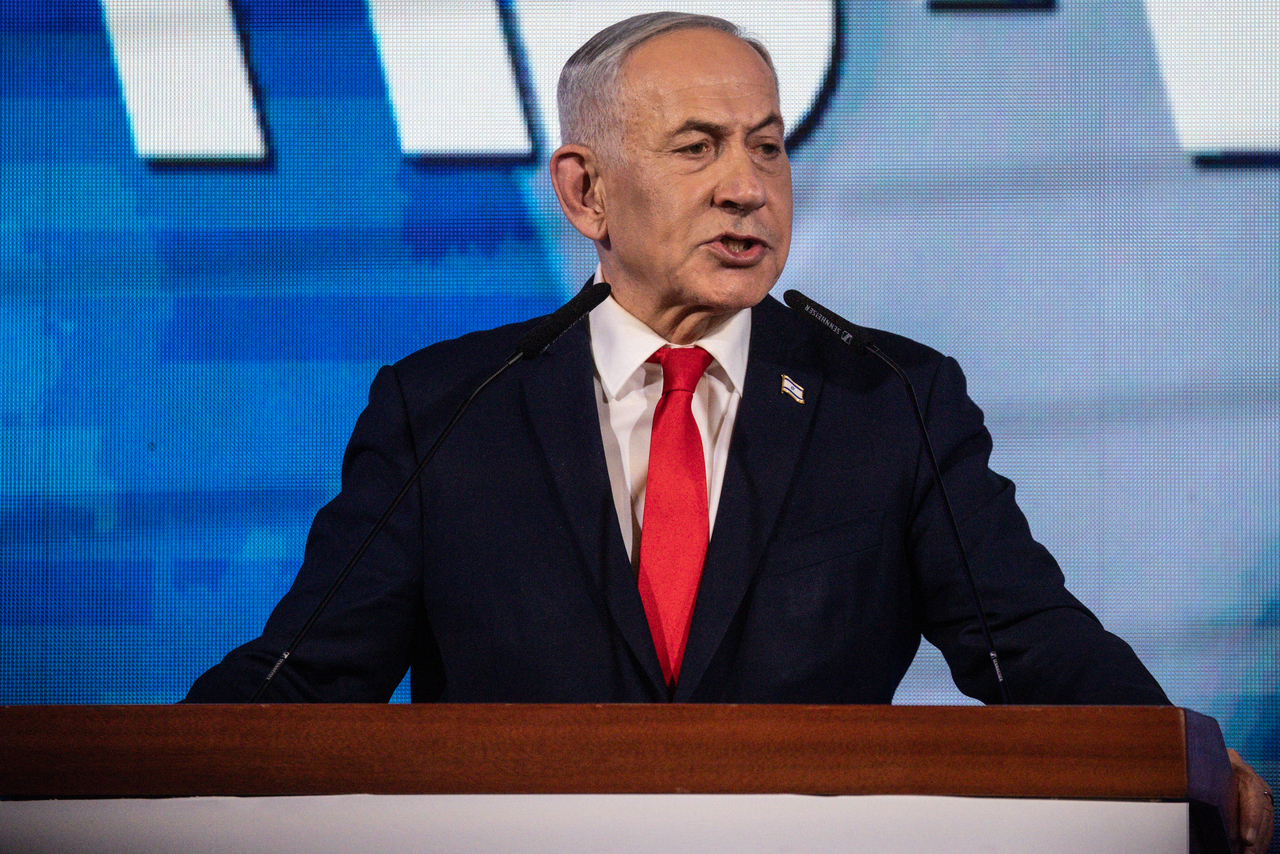
Concerns have emerged within Israel's opposition that a "historic" opportunity to oust Prime Minister Benjamin Netanyahu's government was squandered in the country's general election, the Financial Times reported.
With 86 percent of votes counted as of Wednesday (local time), Netanyahu's Likud-led governing coalition had secured 53 seats in the 120-seat Knesset, while the Jewish opposition bloc centered on the Yashar party — led by former military chief of staff Gadi Eisenkot — had won 48 seats.
The remaining 19 seats were projected to go to two Arab parties, buoyed by high turnout among Arab citizens of Israel. If the Jewish opposition were to align with those parties, it could reach 67 seats — well above the 61-seat majority threshold — but leaders of major Zionist parties have rejected such an alliance, leaving the prospect of a change in government uncertain.
However, the governing coalition also fell roughly 10 seats short of its 2022 election result, failing to secure a majority on its own.
"It is a devastating blow for long-time opponents of Netanyahu who went to the polls hoping for a historic opportunity to oust him," the FT said.
Shira Efron, a researcher at the RAND Corporation think tank, told the FT that the opposition "had the best possible conditions to win this time." Efron noted that despite public anger over the Netanyahu government's security failures, tens of thousands of expatriates returning home to vote, and a consolidated opposition base, the bloc still failed to convert those advantages into victory.
The result has delivered an even sharper shock to the opposition given that the election was held in the wake of Hamas's Oct. 7, 2023 attack — widely regarded as the worst security disaster in Israeli history.
Within opposition circles, there has been soul-searching over the bloc's failure to unite behind a single candidate to challenge Netanyahu, with critics saying the campaign relied on an unfocused "anyone but Netanyahu" message rather than a coherent alternative.
Netanyahu did not emerge with a clean victory but appears to have survived the gravest threat to his hold on power. Uncertainty in Israeli politics is expected to grow ahead of the final vote count and coalition talks with the president next week.
Likud alleges election fraud
Meanwhile, Likud leveled fraud allegations against the Arab parties, whose seats could prove decisive in determining who forms the next government.
The move was seen as an effort to undermine the legitimacy of the Arab parties and preempt the possibility of an anti-Netanyahu coalition, while also leaving the door open to contesting the election results.
In a statement cited by AFP, Likud said the election "was stolen by Arab parties that support terrorism and the destruction of the Jewish state."
The party also claimed the Arab parties had resorted to "corruption, intimidation, violence, lies and the use of prohibited software," and said it was submitting related testimony and evidence to the authorities.
Specifically, Likud alleged that thousands of envelopes containing ballots and cash belonging to the Arab Ra'am party were found at polling stations, and that intimidation and violence against polling officials had also occurred.
Ra'am leader Mansour Abbas rebuffed the claims, saying Netanyahu was "spreading lies and incitement" and using Ra'am to mobilize right-wing voters.
yul@heraldcorp.com




