Chabot survey of 300-plus respondents
85% report vehicle damage after delivery
59% find first damage within 6 months
Price discount tops hybrid as most-wanted perk
Demand grows for repair-cost support
Nearly six in 10 consumers shopping for a new car are not confident they are getting the lowest available price, a new survey shows. And even after taking delivery, many drivers encounter scratches, door dings and other damage — yet often leave their vehicles unrepaired because of the cost.
Chabot Mobility released the findings of its Vehicle Purchase and Management Awareness Survey on Thursday, drawing on responses from more than 300 current vehicle owners and people planning to buy a new car within the next year.
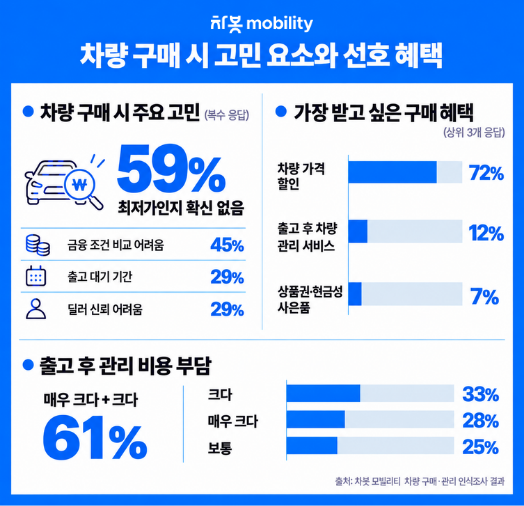
The survey found that 59 percent of respondents cited "not being able to confirm whether the price is the lowest available" as their biggest concern when buying a vehicle — reflecting how difficult it is for consumers to judge whether they are truly securing the best deal even after comparing prices and discount conditions.
Another 45 percent said they found it hard to compare financing options such as installment plans, leases and credit cards. Concerns about delivery wait times and a lack of trust in salespeople or dealers were each cited by 29 percent of respondents.
When asked what benefit they most wanted when buying a vehicle, 72 percent chose a direct price discount — far ahead of post-delivery vehicle management services at 12 percent and gift vouchers or cash-equivalent freebies at 7 percent.
The results suggest consumers are more focused on cutting the upfront cost of a purchase than on receiving add-on gifts. At the same time, the difficulty of judging whether a discount is truly adequate points to significant uncertainty around purchase terms.
The trend reflects a broader industry practice in which discount levels vary depending on when a vehicle was produced, even within the same model line. Hyundai Motor is currently offering 2 million won ($1,510) off Santa Fe hybrid units produced before August and 1 million won off those produced in September. The actual purchase price can therefore differ based on inventory and production timing.
Purchase incentives had a greater influence on where consumers chose to buy than on which brand or model they selected. On a five-point scale, incentives scored an average of 3.46 points for their impact on "choice of dealership," compared with 3.29 points for "choice of brand or model." Among owners of imported vehicles, the figure for dealership selection rose to 4.18 points.
After taking delivery, unexpected damage and repair costs emerged as a significant burden for owners.
Some 85 percent of vehicle owners surveyed said their car had sustained damage since delivery. Scratches and dents from parking incidents were the most common type, reported by 71 percent. Wheel and tire damage followed at 55 percent, stone chips from road debris at 43 percent, and damage to exterior parts such as side mirrors and bumpers at 27 percent.
The most common time for owners to discover their first damage was three to six months after delivery, cited by 31 percent. Combined with those who found damage within the first three months, 59 percent of respondents had experienced their first damage within six months of taking delivery.
A notable share of drivers, however, do not repair damage promptly when it occurs.
Among those who had experienced damage, 43 percent said they simply continued driving without repairing it. Some 39 percent said they paid for repairs out of pocket, while 33 percent used auto insurance.
Among those who did not use insurance, 66 percent said the damage was too minor to justify filing a claim, while 47 percent worried that doing so would raise their premiums.
Another 29 percent each cited the hassle of the claims process and the need to pay a deductible even when using insurance. The findings point to a dilemma many drivers face with minor damage — too small to comfortably claim on auto insurance, yet still costly enough to repair out of pocket.
In all, 61 percent of respondents said post-delivery vehicle damage and repair costs were a financial burden.
That burden also shaped preferences for new-car purchase incentives. When presented with the same vehicle price, 58 percent said they would choose a dealership offering a 300,000-won gift voucher, compared with 26 percent who preferred "repair-cost support for damage during the first 100 days after delivery."
"This survey confirmed that new-car buyers' anxiety does not end at the moment of signing — it extends into daily life after delivery," a Chabot Mobility official said. "Chabot plans to continue expanding its 'zero-risk commerce' approach, which covers transparent quote comparisons at the purchase stage as well as Chabot Care, a service that eases the repair-cost burden from everyday post-delivery damage such as stone chips, dents and scratches."
Meanwhile, Chabot Mobility launched Chabot Care in September, a service designed to help cover repair costs from door dings, stone chips, and wheel and tire damage on new vehicles. The flagship product, Chabot Care 365, supports up to 2 million won per year in combined lifestyle damage repairs and auto insurance deductibles during the first year after delivery.
kwater@heraldcorp.com