
AI learns on-device without sending personal data externally
Optimization technology validated on smartphones to be extended to server GPUs
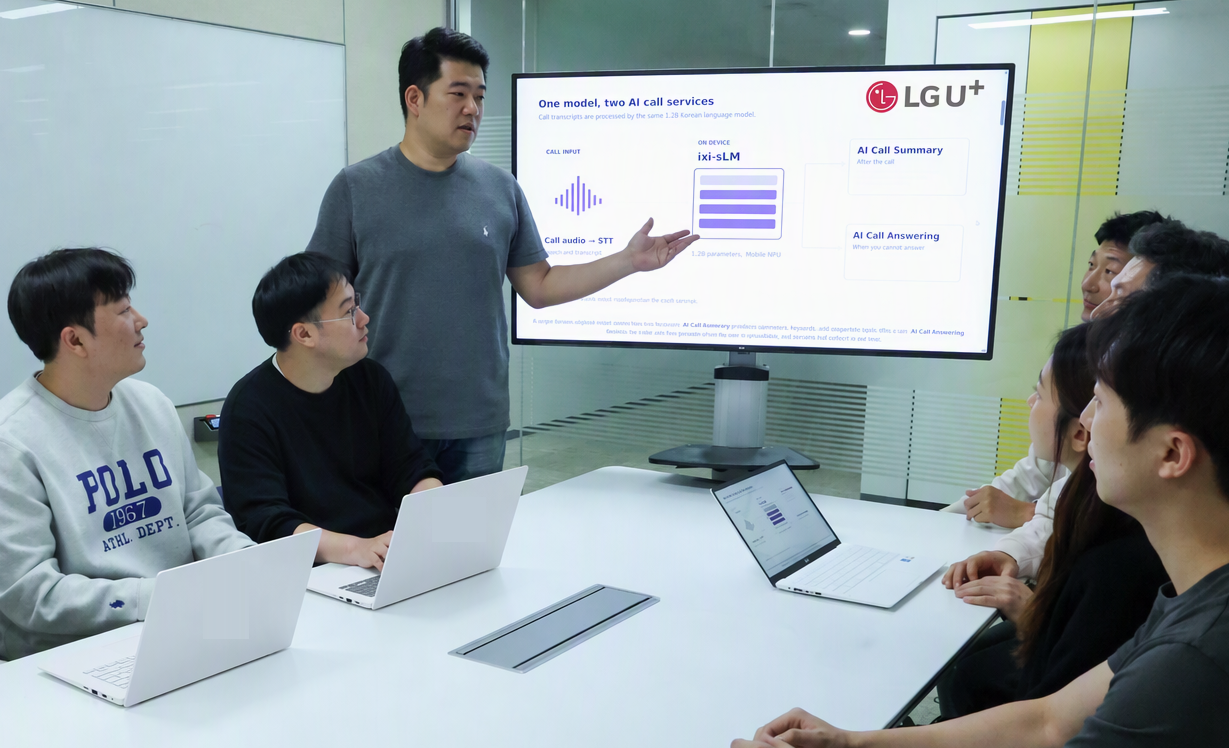
LG Uplus has developed an AI token optimization technology that boosts AI processing speed by about 4.5 times while cutting battery consumption by 77 percent. Two research papers documenting the findings were accepted to a workshop at NeurIPS 2026, one of the world's three leading AI conferences, cementing the company's standing in the field.
LG Uplus said Thursday that the two papers on AI token optimization research had been accepted to the "On-Device Intelligence" workshop at NeurIPS 2026.
NeurIPS ranks among the world's top three AI conferences alongside ICML (International Conference on Machine Learning) and ICLR (International Conference on Learning Representations). The event draws researchers from global technology companies such as Google and Meta, as well as leading universities worldwide, to present the latest AI research. This year's conference runs from Dec. 6 to Dec. 12 in Sydney, Australia.
Token efficiency has grown increasingly important in the AI service race among companies, going beyond raw model performance. Tokens are the units of data AI uses to interpret questions and generate responses. Improving token processing efficiency can speed up response times and reduce power and resource consumption.
LG Uplus said it researched ways to apply token optimization technology to smartphone environments, enabling small language models to run and learn efficiently even under limited memory and power constraints.
The company developed a small language model for use in call services, then applied model compression and inference acceleration techniques to optimize it for smartphones. As a result, it maintained performance comparable to the latest cloud AI while boosting processing speed by about 4.5 times and cutting battery consumption by about 77 percent compared with conventional methods.
LG Uplus also researched a technique that allows AI to learn directly on a smartphone without sending personal data to external servers. By optimizing the computation and memory usage required for AI training, the company enabled additional learning to take place entirely on the device. In tests conducted in an actual smartphone environment, the approach achieved accuracy on par with server-based training without transmitting any personal data externally.
LG Uplus is reviewing ways to apply the research findings to its own AI services going forward. In addition, the company plans to extend the optimization capabilities validated on smartphones to server GPU environments.
"The acceptance of these papers at NeurIPS recognizes our research achievements in running and training AI quickly and efficiently even in constrained environments," said Lee Sang-yeop, chief technology officer at LG Uplus. "We will apply the relevant technology to actual services so that customers can use AI services more quickly and conveniently, and we will continue to expand our research scope to server environments in the future."
young2@heraldcorp.com




