Over 100 injured, 15 in critical condition
2 of 10 South Korean passengers hospitalized
Control center ordered trains to resume before system restored
Maintenance underfunding questioned amid rising accident toll
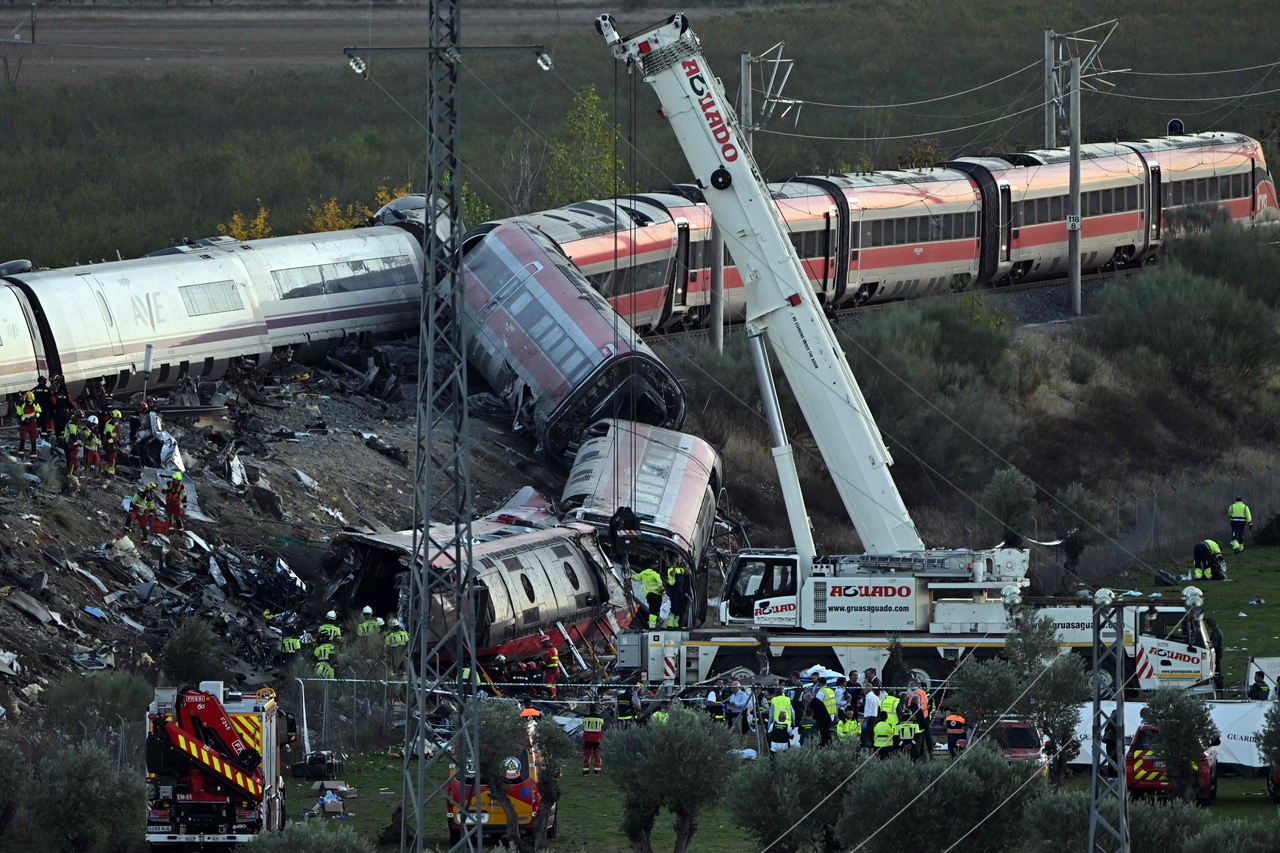
A collision between two high-speed trains in Spain has killed at least 68 people and injured more than 100, triggering a growing controversy over safety failures after it emerged that a control center ordered trains to resume service before a computer communications system had been fully restored.
According to AFP and other news agencies, the crash occurred Wednesday (local time) near Urda in Toledo province, south of Madrid, with the death toll standing at 68 as of the latest count.
Regional authorities in Castilla-La Mancha said more than 100 people were injured, of whom 58 were taken to hospital. Fifteen of the injured are in critical condition, raising the possibility that the death toll could climb further.
South Korean nationals were among the injured. According to the South Korean Embassy in Spain, 10 South Korean citizens were aboard the train at the time of the crash, and two sustained injuries and received hospital treatment.
The accident occurred just before 9 a.m. on a high-speed rail line connecting Madrid with the southern region of Andalusia.
A state-owned Renfe AVE train struck an Iryo train that had stopped on the tracks ahead of it. Both trains were traveling southbound and were carrying a combined total of about 540 passengers at the time.
The force of the impact derailed several carriages, which rolled down an embankment.
Initial investigations raised the possibility that a decision to resume train operations after a computer communications failure — before the system had been properly restored — may have led to the crash.
According to AP and Reuters, Spanish Transport Minister Oscar Puente told reporters the situation was "incomprehensible from our perspective," adding that the control center had ordered trains to resume service even though a train was stationary and a red signal was showing at the approach to Urda station.
Puente added that there had not even been a recommendation to reduce speed to a maximum of 40 kilometers per hour.
According to Puente, a problem arose in the computer system at around 8:30 a.m. on the day of the accident, and the decision to resume operations was made just six minutes later, at 8:36 a.m.
"Problems can occur in any system that relies on computers and software, and they can be resolved quickly," Puente said. "But in this case, the decision was made to resume operations while the system was not functioning normally."
Puente added, however, that further investigation would be needed to determine whether the decision to resume service was the result of human error.
Renfe also said in a statement that the Iryo train "had stopped for reasons unknown to us," and that "the Renfe train continued operating as instructed, and the collision occurred."
Spanish Prime Minister Pedro Sanchez, who visited the scene, pledged a thorough investigation into the cause of the accident.
"All of Spain is in mourning today, Thursday," Sanchez said. "We will investigate this matter thoroughly. If there was negligence, we will uncover it."
Sanchez called it "unacceptable" that two major rail disasters had occurred in Spain this year alone, and said safety improvements would be pursued if necessary "to restore public confidence in the high-speed rail system."
In January, a train collision near Adamuz in the southern province of Córdoba, Andalusia, killed 46 people and injured more than 150.
The latest crash is now the deadliest rail accident in Europe since a Spanish train derailment in 2013 that killed about 80 people.
The back-to-back disasters have renewed scrutiny over chronic underinvestment in the maintenance of Spain's rail network.
Spain operates Europe's largest high-speed rail network, spanning more than 3,900 kilometers, yet the number of train accidents has been trending upward in recent years.
Train accidents in Spain — including derailments and collisions — rose from 45 in 2016 to 57 in 2024, and reached 69 last year.
Reuters, citing European Commission data, said Spain's investment in high-speed rail maintenance lags behind that of other EU member states.
From 2018 to 2022, Spain invested an annual average of 1.5 billion euros ($1.67 billion) in its high-speed rail network, but the bulk of that spending went toward building new lines. Only 16 percent was allocated to maintaining, replacing and upgrading existing infrastructure.
Ridership on high-speed trains has also declined. According to Spain's competition authority, about 25 million passengers used high-speed rail in the first half of this year, down 14 percent from the same period last year.
With major fatal accidents now occurring in rapid succession on Europe's largest high-speed rail network, calls are expected to grow for a comprehensive review of Spain's railway safety systems and maintenance investment.
sjy@heraldcorp.com