Warsh says tightening effects 'beginning to show'
Fed upgrades US economy from 'solid' to 'strong'
Chair pushes back on claims politics drove pause:
'Politics played no role whatsoever'
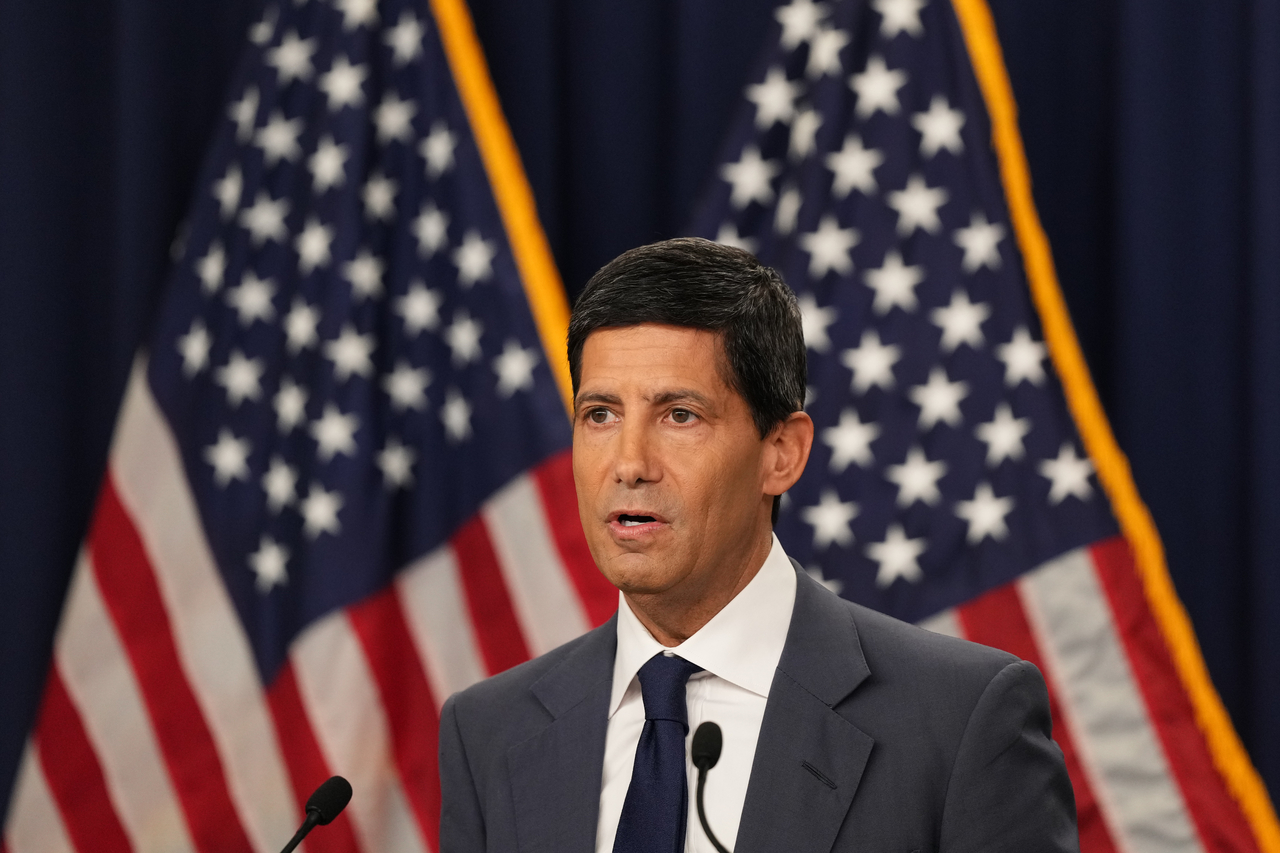
The Federal Reserve held its benchmark interest rate steady Wednesday (local time), pausing to assess the market impact of last month's first rate hike in more than three years. Even so, the Fed signaled strongly that inflation remains too high and that it is committed to restoring price stability — leaving the door open to another increase before year's end. On Wall Street, a consensus is forming that the Fed will raise rates at the December FOMC meeting.
The Fed kept the benchmark interest rate at 3.75 to 4.00 percent at Wednesday's FOMC meeting. Surging energy prices tied to the Middle East war and stronger-than-expected US economic growth have continued to fuel inflationary pressure, but with financial conditions already tightening following last month's rate increase, the Fed appeared to want more time to gauge the effects of existing policy.
Fed Chair Kevin Warsh said at a post-meeting news conference that "the overwhelming judgment of my colleagues is that this 'monetary policy prescription' we've been administering is beginning to work," adding, "The period ahead is an information-rich one. A lot is happening in the world, and my colleagues and I intend to study it carefully."
Warsh said that "since last month's policy action, some changes have begun to emerge in financial and credit conditions. Conditions for some businesses and households have tightened as we expected," and that "market participants are becoming somewhat more selective in how they allocate capital. Overall financial conditions have also tightened." Warsh added that "the information coming in will help us determine where we want to position policy," signaling that future economic data would guide the Fed's next move.
Warsh placed particular emphasis on vigilance against inflation and the Fed's mandate to restore price stability. "If you step back and look at the overall state of the economy and financial conditions, real economic activity is clearly pointing in the right direction," Warsh said. "But inflation is still too high."
Looking at US price levels and economic conditions alone, the Fed could have followed last month's hike with another one this month. The US consumer price index rose 3.7 percent in September from a year earlier, driven by a sharp jump in energy prices — and climbed 0.6 percent from the prior month, the steepest monthly gain since April.
The unemployment rate, meanwhile, remains low at 4.2 percent, reducing any urgency to halt tightening out of concern over labor market deterioration. US economic growth has strengthened, as Warsh assessed Wednesday: consumer spending still leads the expansion, and growth could exceed 3 percent.
The Fed's statement Wednesday described US economic activity as expanding at a "strong pace" — an upgrade from the "solid pace" used in last month's statement — suggesting the Fed has raised its assessment of the economy's momentum.
The economy's resilience in the face of higher rates gives the Fed the option of raising rates further. Two Fed officials — Governor Lisa Cook and Cleveland Federal Reserve Bank President Beth Hammack — dissented Wednesday, calling for an additional 25-basis-point increase.
With the Fed opting for a pause, markets now see a high probability of a rate hike at the December FOMC meeting, the last of the year.
A Reuters survey of 100 economists conducted Oct. 16 through Oct. 20 found that all 100 respondents expected a rate increase in December. CME FedWatch showed that interest rate futures markets were pricing in an 83 percent probability of a December hike as of Wednesday.
Warsh declined to give a direct answer when asked whether the Fed would raise rates in December. Asked why the Fed chose not to hike at this meeting despite still-elevated inflation, Warsh said, "Achieving price stability is not a matter of a specific date on the calendar."
The rate decision came just six days before US midterm elections, in which high inflation has been the dominant issue. The decision drew added scrutiny because further rate increases would raise borrowing costs for households — including mortgage and consumer loan rates. Brad Fay, a finance professor at Virginia Tech, had predicted ahead of the meeting that "while economic fundamentals may call for a rate hike, the proximity to the election and political considerations could lead the Fed to wait."
Warsh flatly rejected the suggestion that the midterms had influenced the decision to hold rates steady. "Political considerations played no role whatsoever in this decision," Warsh said. "I spent two days with my colleagues and did not hear a single word about politics — not about politics, not about the election, not about what might happen over the next week or so."
kate01@heraldcorp.com