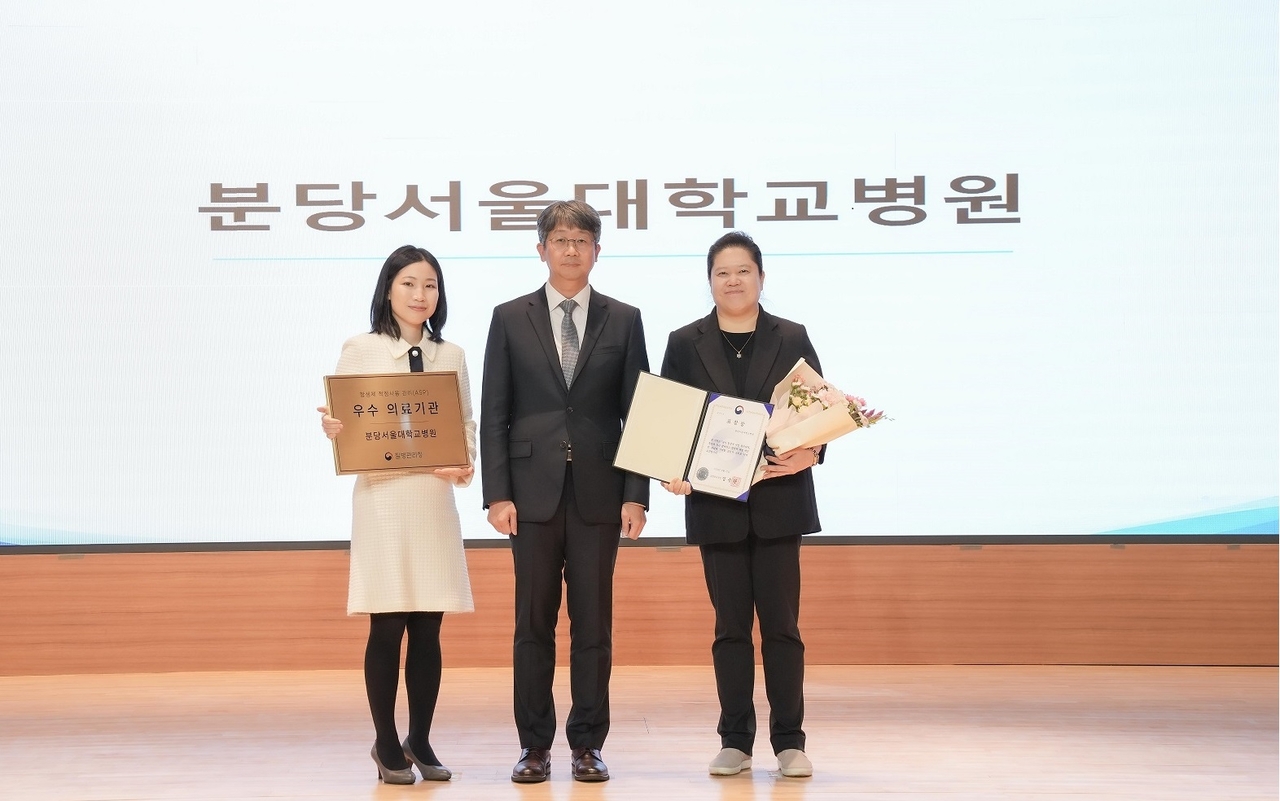
Bundang Seoul National University Hospital has been named an outstanding institution for antimicrobial stewardship, receiving a commendation from the KDCA commissioner and a plaque of recognition at a first-year outcomes forum for the national Antimicrobial Stewardship Program (ASP) pilot project, held Thursday at the C&V Center in North Chungcheong Province.
The Korea Disease Control and Prevention Agency organized the forum to share key results from the pilot project, which the agency has been running since November 2024, and to help spread the operational experience and achievements of top-performing institutions.
An ASP brings together infectious disease specialists — in internal medicine and pediatrics — along with pharmacists and other clinical staff to review whether the type, dosage and duration of antibiotic prescriptions are appropriate for each patient's condition and the nature of the infection, recommending adjustments when needed. The goal is to improve treatment outcomes and patient safety while reducing unnecessary antibiotic use and the development of antibiotic resistance.
The government-led pilot enrolled 78 hospitals in its first year and has since expanded to 90 participating institutions in its second year. The KDCA announced that 321,000 antibiotic prescription interventions were carried out during the first year, with an acceptance rate of 81.9 percent.
Bundang Seoul National University Hospital was recognized for its role in supporting the introduction and establishment of the national ASP pilot and for strengthening antibiotic stewardship capacity at hospitals across the country. Particularly noted was a benchmarking program the hospital ran in 2025 for 150 physicians and pharmacists at 45 hospitals nationwide that were newly joining the pilot — sharing hands-on experience in building stewardship systems and conducting prescription interventions.
The hospital has also been active in academic work and inter-institutional collaboration to advance national antibiotic management policy. In January, it published research in an international journal analyzing the background and future direction of the national ASP pilot. Building on an ASP network chaired by Professor Moon Song-mi of the infectious disease division, the hospital has hosted symposiums and ASP workshops to expand training for specialists and promote exchange among institutions.
"Effectively addressing antibiotic resistance requires not just the efforts of individual hospitals, but sustained participation and collaboration across the country," Moon said. "We will continue working through research, education and policy cooperation to strengthen antibiotic stewardship capacity at medical institutions and help embed a culture of appropriate antibiotic use throughout the healthcare system."
Bundang Seoul National University Hospital laid the groundwork for systematic antibiotic management from its founding in 2003, when it introduced a clinical decision support system for antibiotic prescribing and a restricted antibiotic approval regime. Even before joining the pilot project, the hospital had developed its stewardship framework over more than two decades, incorporating prescription intervention activities by infectious disease specialist pharmacists and an electronic medical record-based management program.
In 2019, the hospital assigned a dedicated antibiotic stewardship pharmacist, and in 2023 it established a pediatric antimicrobial stewardship team, creating a system that covers both adult and pediatric patients. Today, specialists across infectious disease, pediatrics, laboratory medicine and pharmacy work together to carry out antibiotic stewardship activities.
fob140@heraldcorp.com