
Vocational school students selected for 36-month work-study program
Seven German brands on board; more than 800 trainees selected to date
Graduates earn associate degrees and German certification
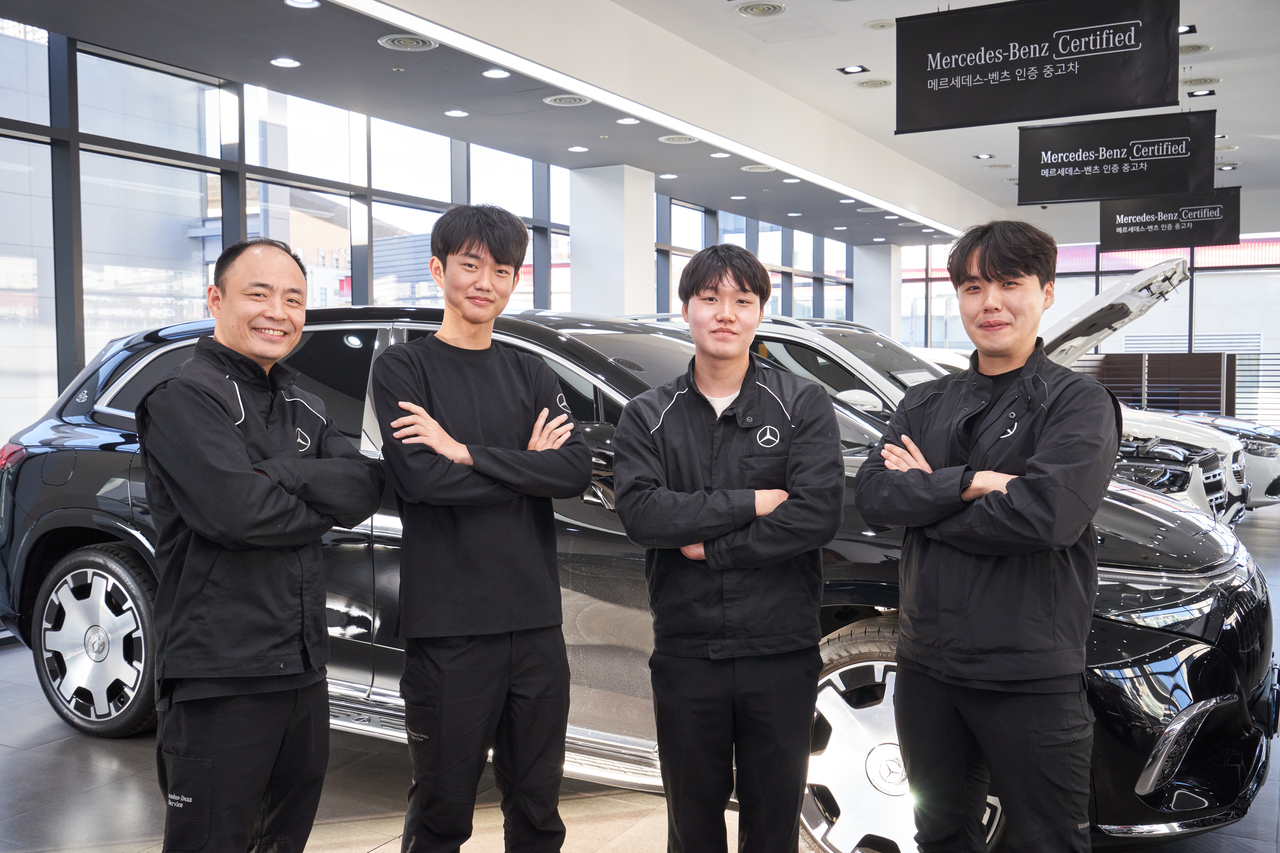
"There is a saying that the first car is sold by the sales team, and the second by after-sales service," said Kim Chang-ho, head of the Mercedes-Benz Korea Training Academy. "Through technician development programs including Ausbildung, we are delivering a customer experience worthy of a premium brand."
Mercedes-Benz Korea is training high school graduates into professional technicians through Ausbildung, a German-style dual vocational education system that combines on-the-job learning with classroom instruction. By having official dealers provide hands-on training directly, the company says it is cultivating talent tailored to its specific needs while simultaneously strengthening the customer experience.
On Tuesday, young technicians moved busily through the HS Hyosung The Class Mercedes-Benz Jukjeon service center in Yongin, Gyeonggi Province. The large facility handles about 150 vehicles a day and employs a range of technicians — from 18-year-old vocational high school students selected for the Ausbildung program to program graduates and trainers.
70% on-site, 30% classroom: 'More than 95% equivalent to Germany'
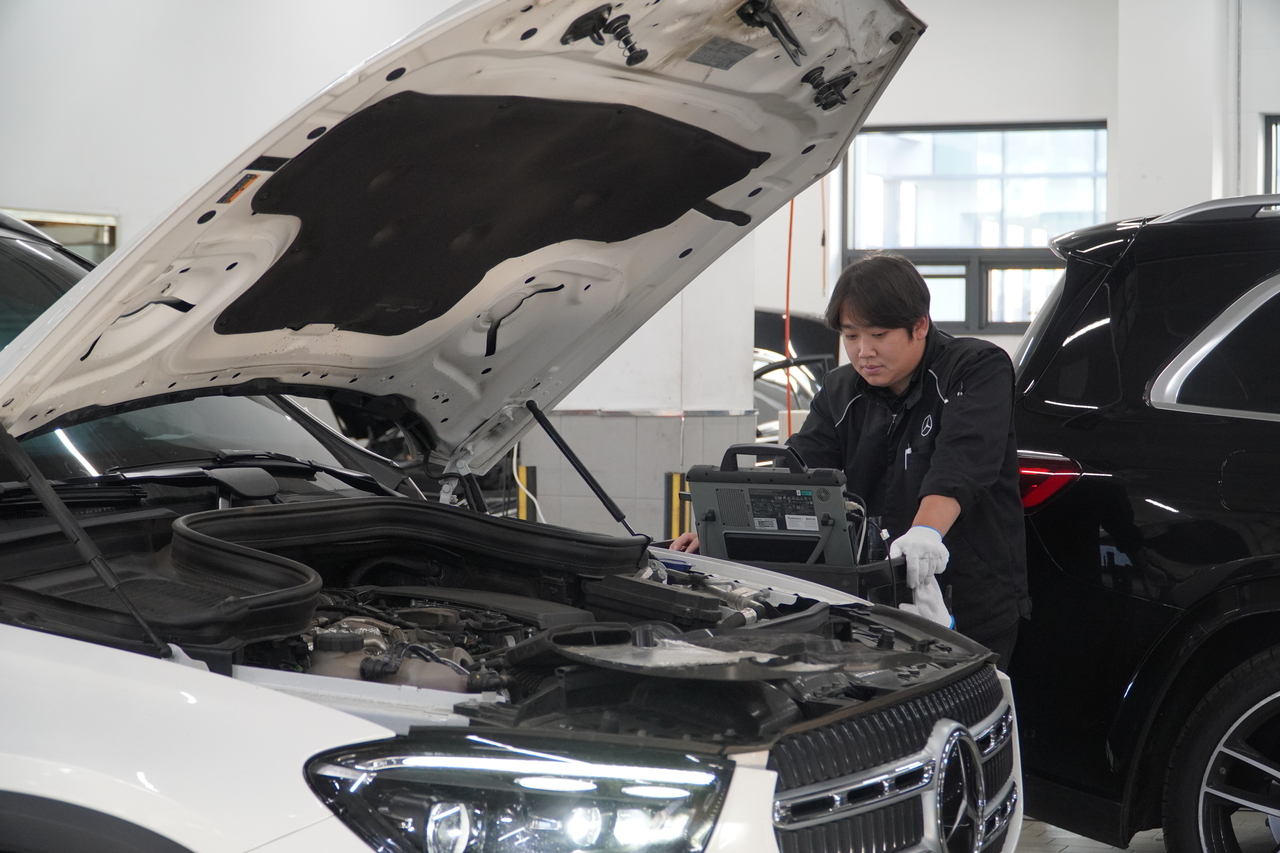
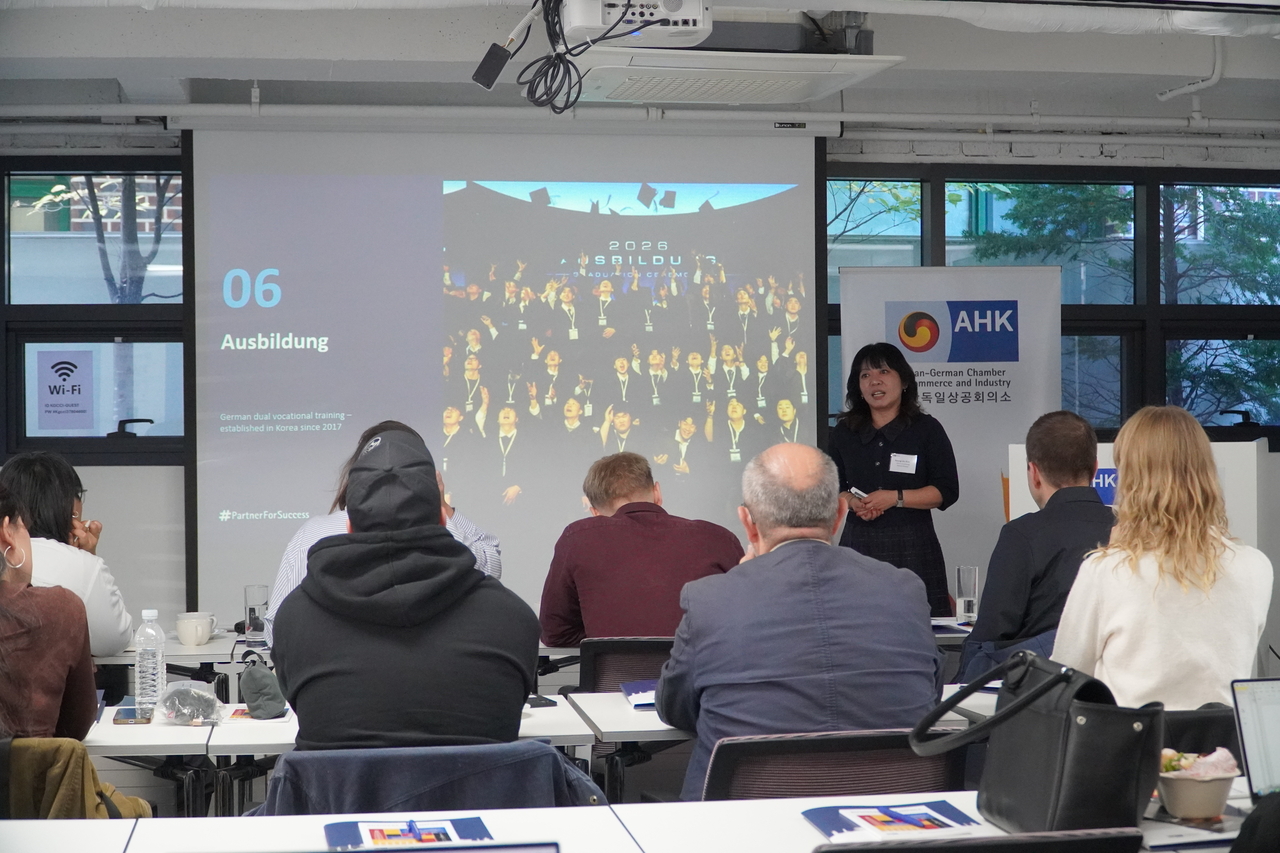
Ausbildung was introduced to Korea in 2017 by the Korean-German Chamber of Commerce and Industry (KGCCI) together with Mercedes-Benz Korea and BMW Group Korea. The company-tailored dual training system pairs 70 percent hands-on instruction at a workplace with 30 percent theoretical coursework at school, allowing students to acquire skills they can apply on the job immediately.
Kim Young-jin, deputy director general of KGCCI, said the program grew out of a fundamental question: "Could companies train the specialized talent they actually need from the outset?" Kim added that German executives proposed bringing the program to Korea as a way to develop skilled professionals locally.
Korea's Ausbildung program launched in 2017 with 86 participants and has since selected more than 800 trainees in total, including those scheduled for recruitment this year. Cumulative graduates, including this year's class, number 335. The program began with automotive maintenance and expanded to panel beating and painting in 2021, then to service advisers in 2023. Seven brands now participate: Mercedes-Benz, BMW, Volkswagen, Audi, Porsche, MAN Truck & Bus and Star Truck.
The curriculum runs 36 months in total. Trainees sign a formal employment contract with a dealer and spend 24 months at a service center and 12 months at a partner university. The three partner universities are Doowon Technical University College, Ajou Motor College and Yeungnam University College of Science & Technology. Male trainees may use the Military Manpower Administration's employment-linked specialist soldier program to fulfill their military service obligation. Upon completion, graduates receive both an associate degree and a certificate from the Association of German Chambers of Commerce and Industry (DIHK).
A defining feature of Ausbildung in Korea is that KGCCI manages educational quality against German standards, overseeing the entire process from recruitment and program operations to assessment exams. The chamber regularly monitors whether on-site corporate training and university coursework are proceeding properly, and coordinates communication among trainees, trainers, companies, schools and government ministries. "Korea's Ausbildung program is more than 95 percent equivalent to Germany's," Kim said.
'Fewer young people, more complex repairs': building a talent pool of 500-plus graduates
Mercedes-Benz Korea says Ausbildung gives it access to high-quality talent at a time when the youth population is shrinking sharply and the electrification shift is making vehicle maintenance increasingly complex, making hands-on training ever more critical.
"Dealers consistently need young technicians, but the number of births is falling and interest in working at small and medium-sized enterprises is declining," Kim Chang-ho said. "It currently takes three to five years to develop one skilled technician, and as the share of electric vehicles expands, the complexity of the work is also rising. Vocational education is needed to fill the workforce gap."
The AET program — a university-graduate technician development track — and Ausbildung are also contributing to Mercedes-Benz Korea's efforts to enhance the customer experience. AET, which marks its 20th anniversary this year, targets automotive-related university graduates and final-year students. Participants who complete 20 courses and assessments earn AET certification and a recognized systems technician qualification valid across the global Mercedes-Benz network.
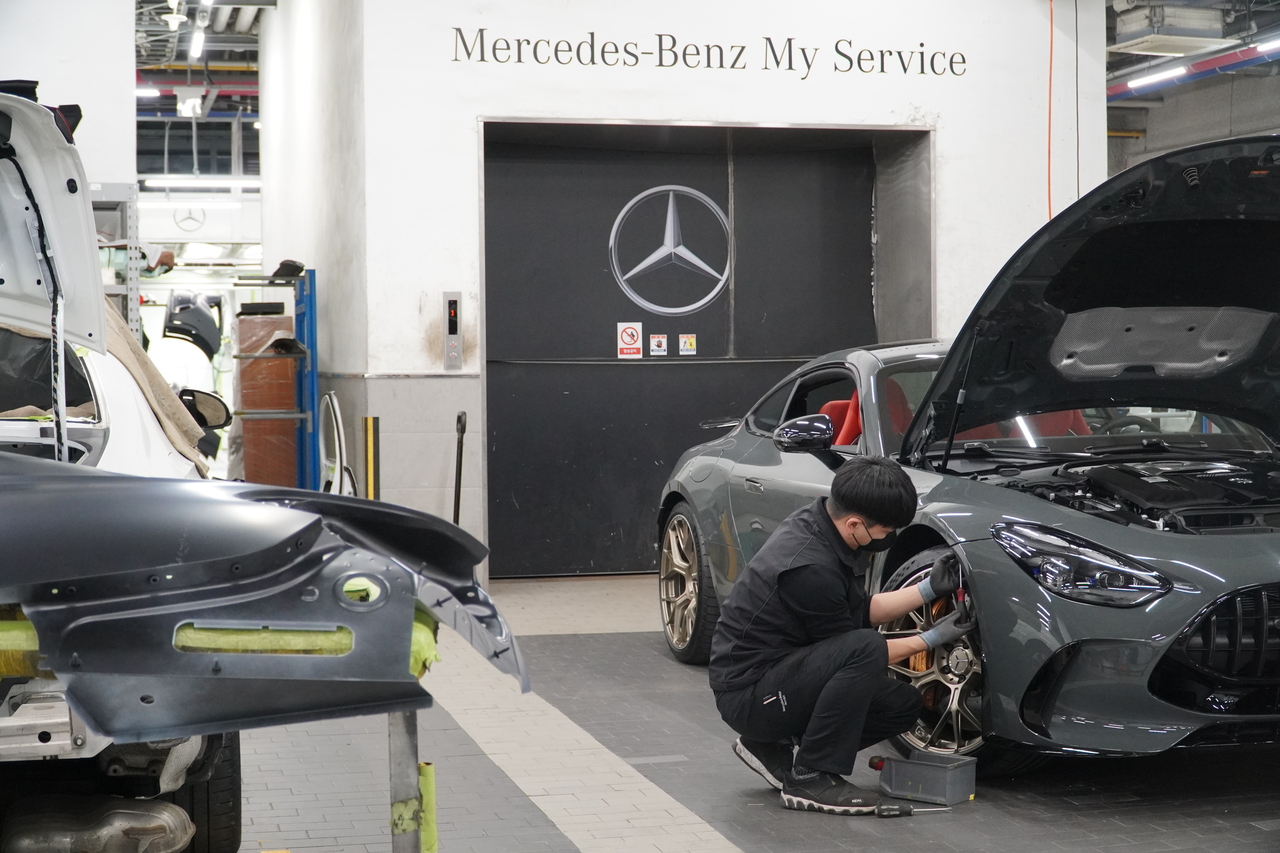
Mercedes-Benz Korea currently operates 74 official service centers nationwide. The Jukjeon center alone employs about 120 people.
Gong Hyeon-sang, senior managing director of the Mercedes-Benz Korea Training Academy, said building a service network is one of the biggest challenges for newer brands. "Through Ausbildung and other long-standing training systems, we are accumulating on-the-ground know-how," Gong said.
Kim Chang-ho said AET and Ausbildung have together produced more than 500 graduates, with about half currently working at Mercedes-Benz Korea or its dealers. "Even more of those trained remain in the automotive industry, meaning our vocational education programs are contributing to the broader Korean automotive ecosystem," Kim said.
eyre@heraldcorp.com




