Construction 97% complete but safety certification process delayed; city targets first-half 2027 opening
Seoul's long-awaited Wirye tram line will not open this year as planned. Despite construction reaching 97 percent completion, delays in mandatory safety certification procedures have pushed back the opening with no firm date yet set. The Seoul Metropolitan Government said it plans to complete the remaining steps and announce a first-half 2027 opening schedule.
The city announced Wednesday that it had resolved disagreements among relevant agencies and would move forward in earnest with safety certification and other procedures needed to open the Wirye tram line as soon as possible.
The Wirye line is a 5.4-kilometer tram route connecting Macheon Station on subway Line 5 with Bokjeong Station on Lines 8 and Suin-Bundang, and Nam Wirye Station on Line 8. The project has drawn a total budget of 350 billion won ($264 million). The line marks the return of trams to Seoul for the first time in roughly 60 years, since the last tram ran near Dongdaemun in 1968.
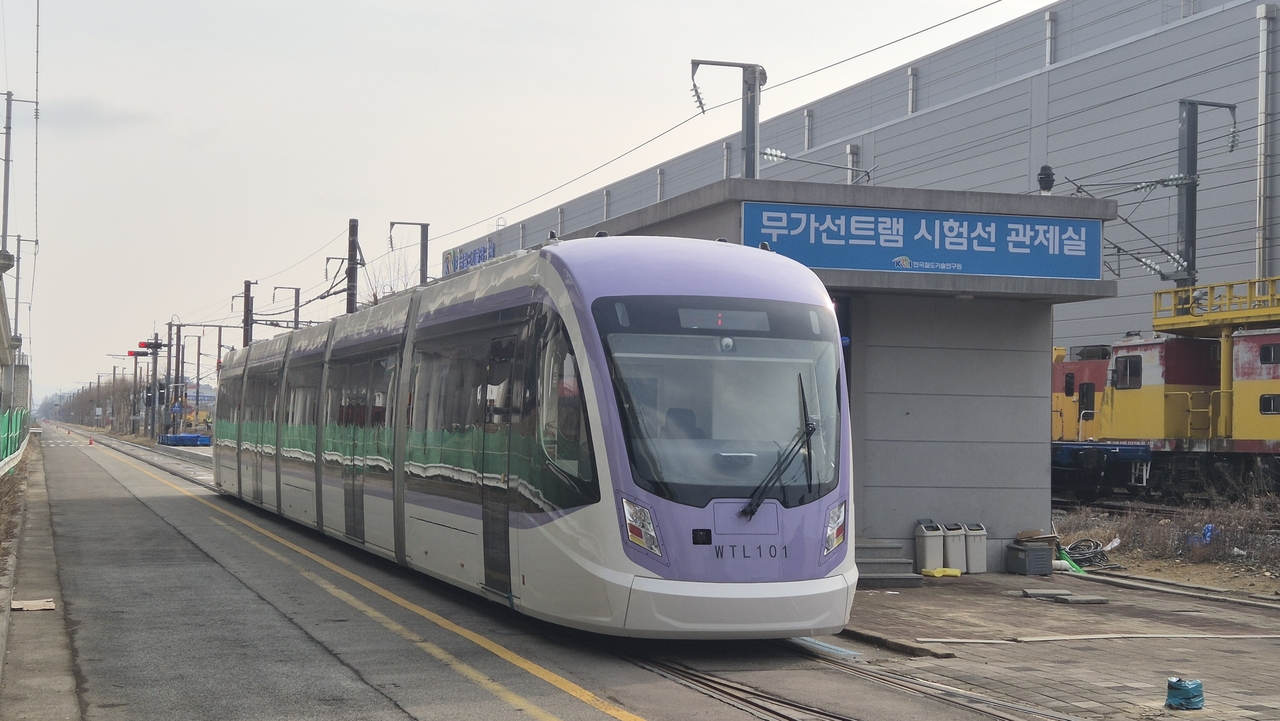
The line will be served by eight train sets stopping at 12 stations, with one depot. It is the first tram system in South Korea to run without overhead wires, drawing power instead from batteries mounted on the roof of each vehicle. The cars are also built with an ultra-low floor to improve accessibility for passengers with mobility difficulties. As of this month, overall construction stands at 97 percent, with track, stations and the depot all finished.
About 1.2 kilometers of the 5.4-kilometer route runs through sections shared with pedestrians, and the tram crosses 13 general road intersections where it shares space with cars and foot traffic. This has fueled a dispute among agencies over whether the tram corridor is legally classified as a road or a railway — a distinction that determines whether a traffic safety facility review is required.
The ambiguity stalled a traffic safety review by the Seoul Metropolitan Police Agency, a prerequisite for opening. Last month, the Metropolitan Area Transportation Commission under the Ministry of Land, Infrastructure and Transport mediated the dispute and directed the city to conduct a transportation facility safety assessment first, with the police agency's traffic safety review to follow based on the results.
The transportation facility safety assessment is a pre-opening procedure that identifies potential traffic accident risks and draws up countermeasures. Once complete, the Seoul Metropolitan Police Agency will conduct its traffic safety review, focusing on sections where tram tracks intersect with pedestrian and vehicle routes.
The city had been in talks with the Seoul Metropolitan Police Agency since August 2022 on how to install traffic safety facilities, in an effort to resolve the dispute and meet the original opening target. Last month, the commission's conflict mediation committee formally notified the city of an adjustment plan centered on conducting the safety assessment. The city subsequently completed road designation procedures and signed a contract with the Korea Road Traffic Authority on Oct. 14 to begin the assessment, formally launching the follow-up process.
Construction of the Wirye tram line is now in its final stage. Work on major infrastructure — including track, stations and the depot — is complete, and all 10 vehicles needed for service have been delivered. Facility verification tests to confirm the performance and safety of the railway systems are currently under way.
The city aims to complete the transportation facility safety assessment by March next year and plans to push through the remaining steps quickly. After the Seoul Metropolitan Police Agency completes its traffic safety review, the city will install any additional safety facilities required, then proceed through statutory steps including a comprehensive test-run before opening.
The city has asked the commission to form a task force that includes the Seoul Metropolitan Police Agency and other relevant bodies. By incorporating agency input from the safety assessment stage onward, the city hopes to resolve potential sticking points early and shorten the time needed for subsequent procedures.
In addition, given the tram's shared use of roads with pedestrians and vehicles, the city plans to continue discussions with the Ministry of Land, Infrastructure and Transport and other agencies on improving the relevant laws and regulations — including standards for traffic safety facilities and emergency response protocols in the event of an accident.
"We have made every effort to coordinate with relevant agencies and resolve institutional issues, and we will move swiftly through the remaining safety procedures to minimize any further delay in the opening," said Im Chun-geun, head of the Seoul Metropolitan Government's Urban Infrastructure Headquarters.
ikson@heraldcorp.com