Rising marriages, growing 30s population and shifting attitudes toward childbearing drive gains; cumulative births through August up 14.5% from last year; deaths still outnumber births
The number of babies born in South Korea in August exceeded 23,700, the highest figure for that month in seven years, as the country's birth recovery continued to gain momentum. Cumulative births through the first eight months of the year approached the 200,000 mark.
According to population trend data released Wednesday by the Ministry of Statistics, 23,703 babies were born in August, up 13.0 percent from the same month a year earlier. That is the highest August birth count since 2019, when 24,371 babies were born that month.
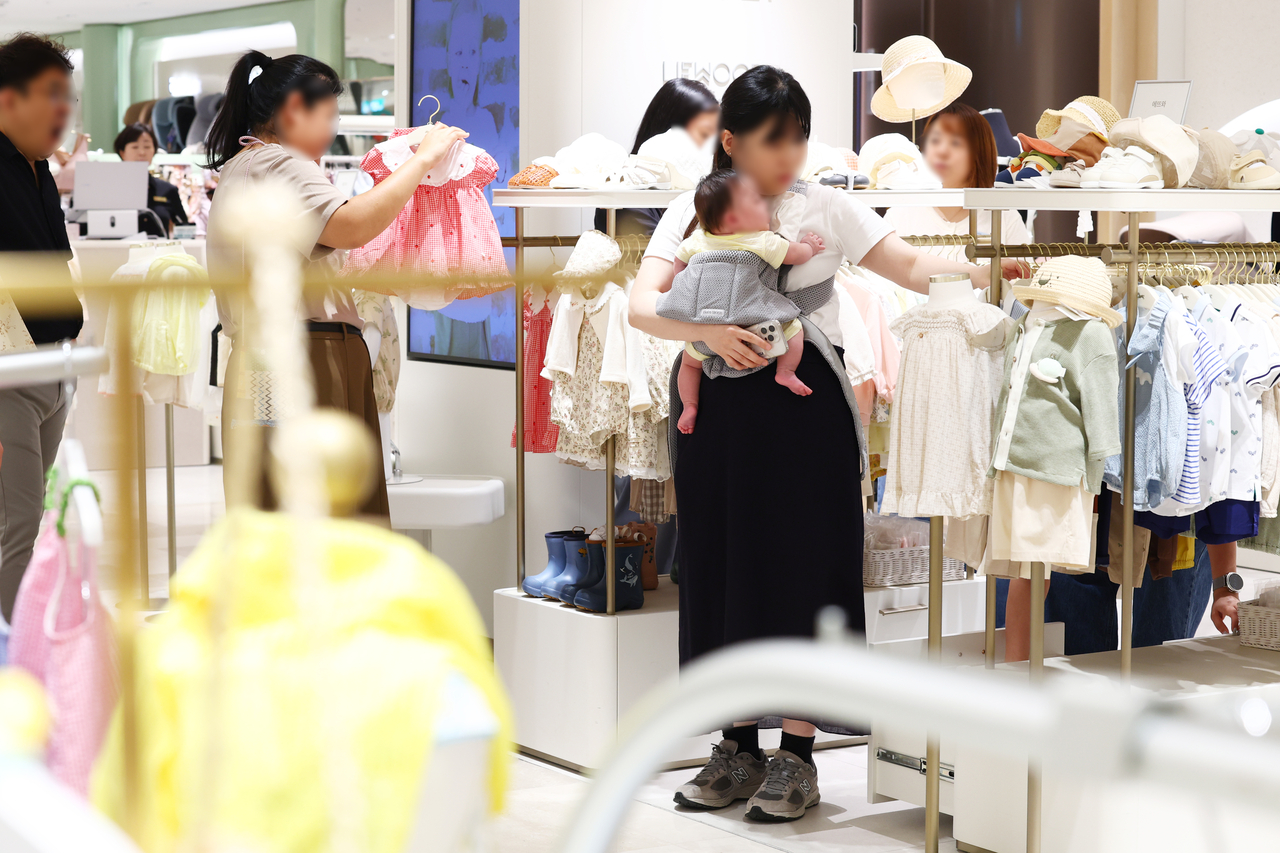
August births had declined steadily after 2019, falling below 20,000 in 2023. The trend reversed in 2024, and this year marked the third consecutive year in which August births exceeded the prior year's level.
Particularly notable was the pace of growth: the 13.0 percent year-on-year increase was the second highest on record for August, trailing only the 17.6 percent surge recorded in 2007 — the so-called "golden pig year," when a rare astrological combination spurred a spike in births.
A total of 193,783 babies were born between January and August this year, the highest cumulative figure for that period in seven years, since 208,018 were recorded over the same stretch in 2019. Compared with the 169,211 births logged in the first eight months of last year, the figure represents a 14.5 percent increase — the highest cumulative growth rate ever recorded.
The rise in births is attributed to a recent increase in marriages, a growing population in their 30s and improving public attitudes toward having children.
The total fertility rate, a key measure of birth levels, also rose. The rate stood at 0.87 in August, up 0.09 from the same month last year. The total fertility rate represents the average number of children a woman is expected to have over her lifetime. If the upward trend in births continues, analysts are watching whether the annual total fertility rate could climb into the 0.90 range.
By birth order, first children accounted for 63.8 percent of all births, up 1.6 percentage points from a year earlier. Second children made up 30.5 percent and third or higher-order births 5.7 percent, down 1.0 percentage point and 0.6 percentage point, respectively.
Marriages, a leading indicator of future births, fell in August. There were 19,218 marriages recorded, down 1.2 percent from the same month last year — the first monthly year-on-year decline since May, when marriages dropped 6.4 percent.
However, cumulative marriages from January through August totaled 165,874, up 5.2 percent from the same period a year earlier. By region, marriages increased in 13 cities and provinces, including Daejeon and Ulsan, while declining in three, including Gyeonggi Province and Sejong.
Divorces in August totaled 7,510, up 4.4 percent from a year earlier. Eleven cities and provinces, including Ulsan and Busan, saw increases, while five — including Sejong and North Gyeongsang Province — recorded declines.
Deaths reached 30,308, up 4.9 percent from the same month last year. Thirteen cities and provinces, including Sejong and Daegu, reported more deaths, while three — including Daejeon and North Gyeongsang Province — saw decreases.
Despite the recovery in births, deaths continued to outnumber them. In August, deaths exceeded births by 6,605, extending the country's streak of natural population decline.
By region, only four cities and provinces — including Sejong and Gyeonggi Province — recorded natural population increases, while 12, including North Jeolla Province and North Gyeongsang Province, continued to see natural declines.
y2k@heraldcorp.com