Q3 2026 earnings call
Kwak Noh-jung makes rare direct appearance
'Share fruits of investment with shareholders'
'AI growth to continue; supply shortage to last through 2030' — dismisses peak concerns
Record shareholder returns signaled; 'share price doesn't reflect earnings'
'Q4 HBM4 shipments and revenue share to surpass HBM3E'
On China's 4F²: 'Too early for commercialization — sticking with 6F² for now'
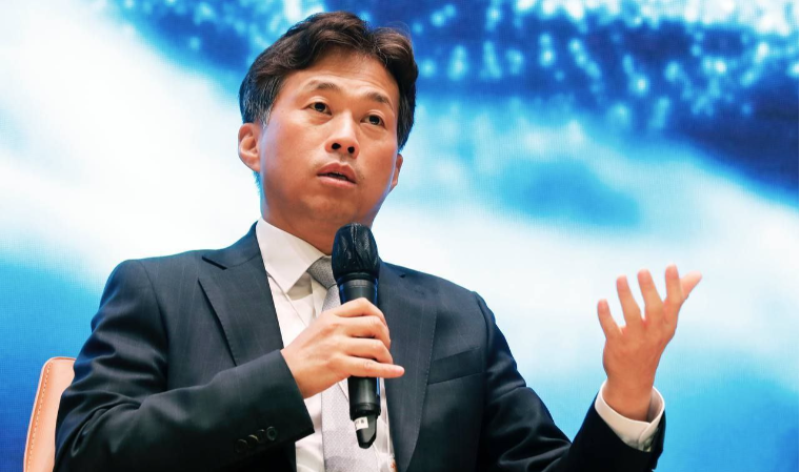
SK hynix said Wednesday that its DRAM and high-bandwidth memory (HBM) supply is effectively sold out for the next three years through 2029.
The company said the memory chip shortage will persist through 2030, driven by the expansion of AI services and rising infrastructure investment, pushing back against recent market concerns that the sector may have peaked.
On HBM4, the sixth-generation product where competition with Samsung Electronics is intensifying, the company expressed strong confidence, saying profitability next year will "far exceed the peak of past cycles" on the back of higher prices and improved mass-production yields.
In an unusual move, SK hynix President and CEO Kwak Noh-jung appeared directly on the third-quarter earnings conference call Wednesday morning, where he also explained the background behind the company's pursuit — and subsequent withdrawal — of an initial public offering for Solidigm, its US-based subsidiary.
Kwak repeatedly stressed the company's commitment to balancing future-growth investment with shareholder returns, focusing much of his remarks on reassuring shareholders who had raised objections over the dual-listing controversy surrounding the Solidigm IPO process.
CEO steps in directly to reassure shareholders
Kwak said Wednesday that Solidigm had been exploring ways to secure funding for growth investments, including expanding production facilities to meet rising demand. "We expected that tapping external capital through an IPO would ease the investment burden and also expand our capacity for shareholder returns," he said.
However, he said the company decided to halt its IPO review, citing recent volatility in financial markets and a correction in semiconductor share prices. "We concluded that it would be difficult at this point to fully achieve the effects we had originally anticipated through an IPO," he said.
Kwak went on to say that investment and financing plans would be pursued "in a direction that enhances the corporate and shareholder value of both Solidigm and SK hynix," reaffirming the principle of sharing the results of strategic investment with shareholders.
Returning at the close of the call, Kwak said: "As the business grows and investment results accumulate, the gains we share with our shareholders must grow alongside them. We will build trust in our future growth through sustained earnings, and share those gains with our shareholders."
Record shareholder returns pledged; 'share price undervalued — buybacks every quarter'
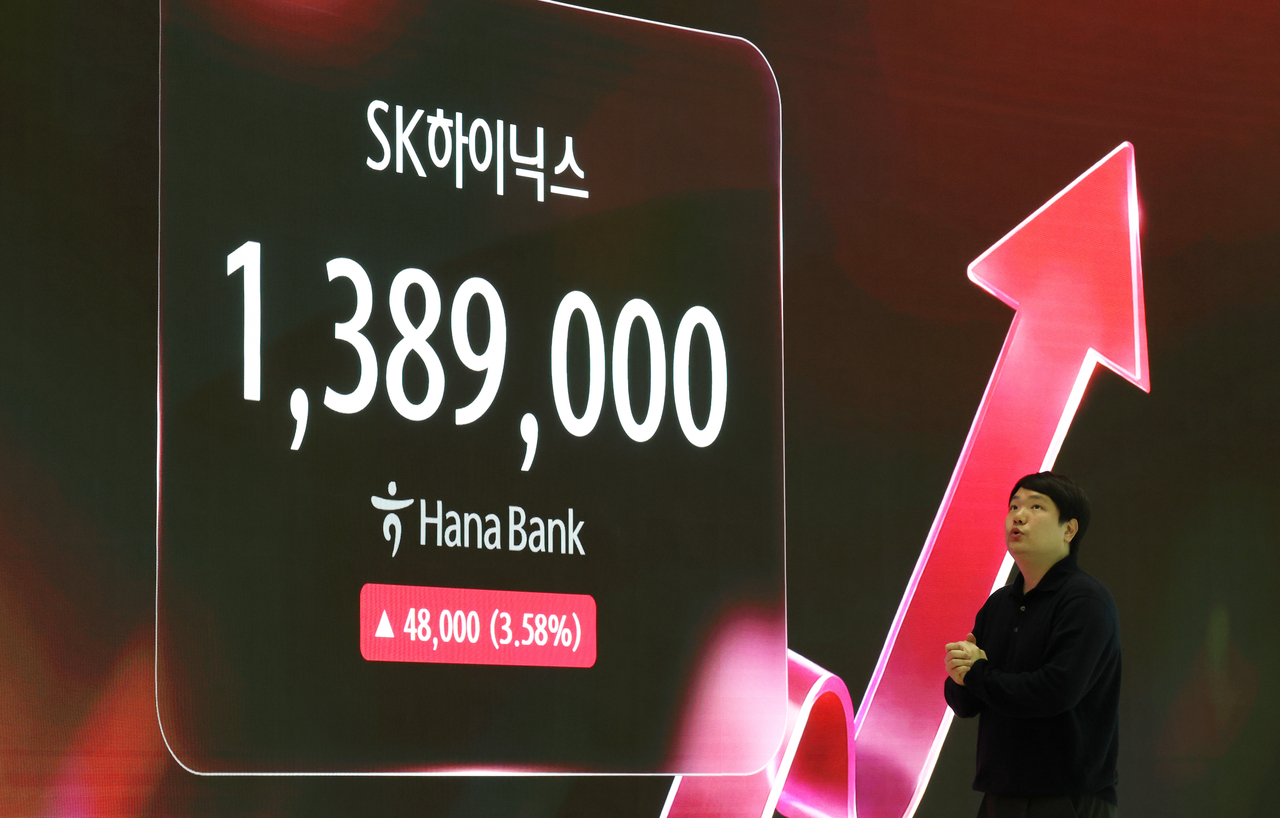
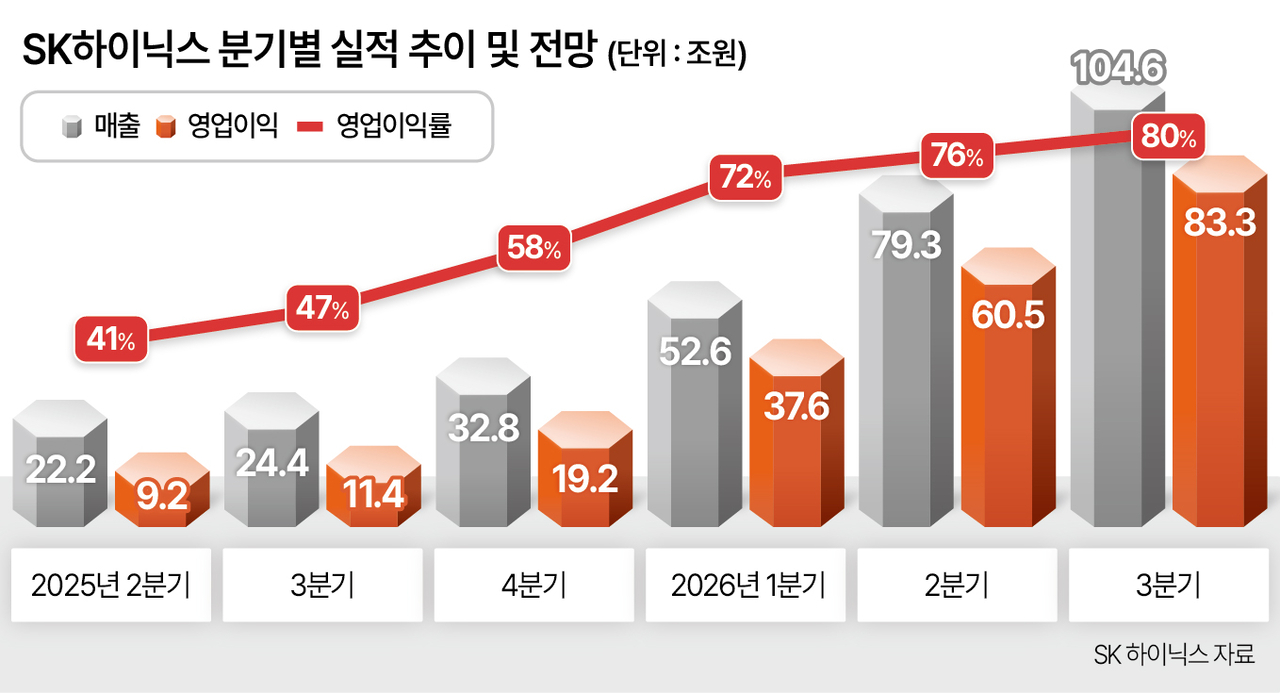
SK hynix reaffirmed its plan to deliver record shareholder returns to match what it described as its best-ever quarterly earnings.
The board approved a cash dividend of 14 trillion won ($10.6 billion) and a 20 trillion won buyback Wednesday. Excluding roughly 10 trillion won in shares earmarked for employee compensation, total shareholder returns for the third quarter stand at approximately 24 trillion won. Including a 40 trillion won buyback completed last week and slated for cancellation, total shareholder returns for fiscal year 2026 are expected to reach 100 trillion won.
SK hynix said it will return most of the proceeds from its Kioxia investment to shareholders through a special dividend — paying out a portion in the fourth quarter and including the remainder in the year-end dividend after fiscal 2026 results are finalized.
Chief Financial Officer Kim Woo-hyun said the company views its current share price as undervalued, saying it "does not sufficiently reflect earnings and cash flow." He added that "buying back and canceling treasury shares is the most effective way to boost per-share value under these circumstances."
Kim went on to say that the company plans to carry out buybacks consistently every quarter within its annual purchase target, with the quarterly amount to be determined by the board after weighing share price levels, valuation and cash flow.
HBM4 mass production on track; yields stable
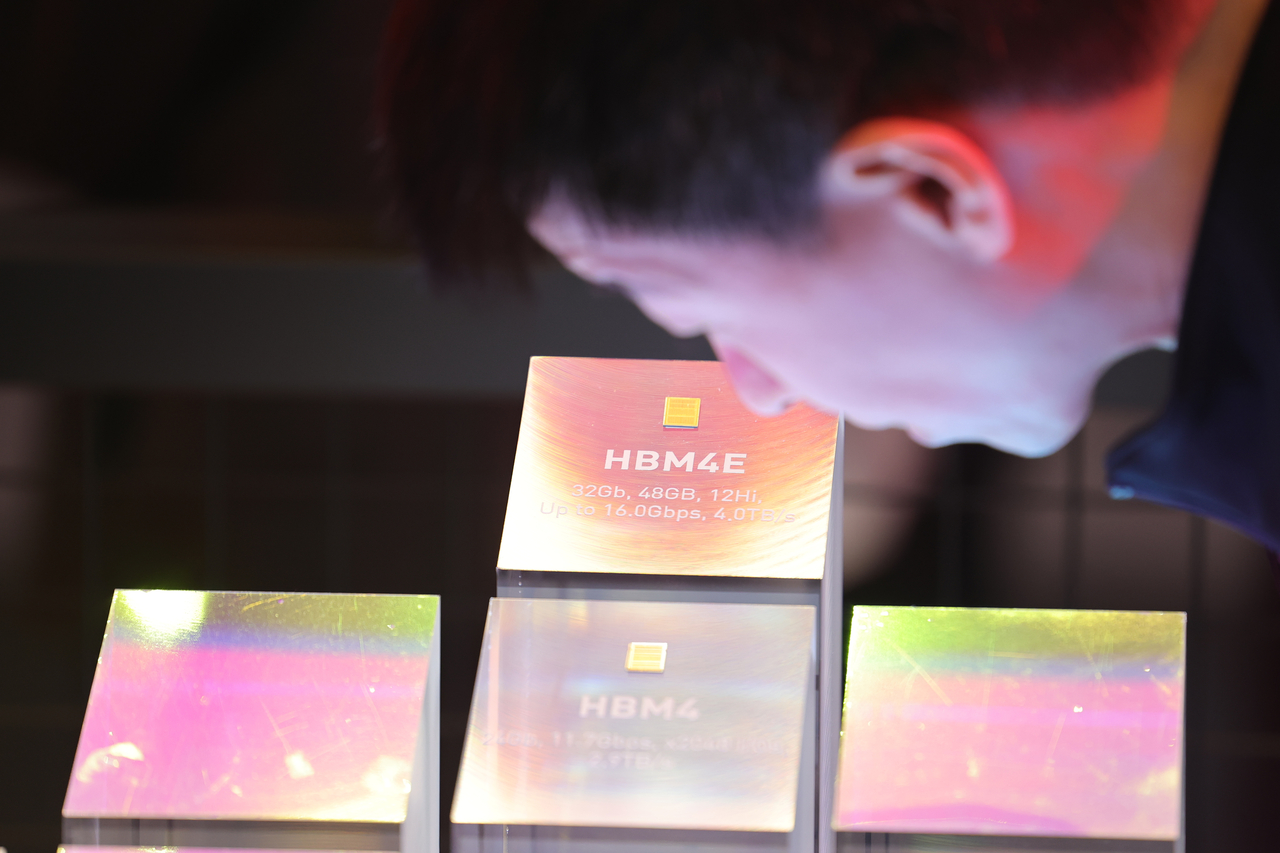
SK hynix said that when combining volumes already secured through long-term agreements (LTAs) with demand currently being negotiated with customers, its DRAM and HBM supply is effectively sold out for the next three years through 2029.
Volumes secured through existing LTAs already exceed half of total production capacity for 2027 and 2028, and the company said it plans to maintain a similar proportion of mid-to-long-term LTAs going forward.
Amid signs that Samsung Electronics is narrowing the gap in the HBM market, SK hynix said both mass production and yields for HBM4 remain stable.
Kim Ki-tae, executive vice president of HBM sales and marketing, said HBM4 yields have already surpassed initial targets, prompting the company to raise its goals, while HBM3E has also exceeded its originally planned mature yield. "In the fourth quarter, we expect HBM4 to overtake HBM3E in both shipment volume and revenue share," he said.
Next-generation product development is also proceeding smoothly, Kim said. "Development and qualification of HBM4E are both progressing well, and we are closely advancing custom HBM projects with customers," he said.
On recent requests from customers to supply lower-spec 8-layer HBM4 instead of 12-layer stacks, Kim said customers are trying to build more AI accelerators and systems with limited supply. "The strategy is to reduce the number of stacked layers in order to increase the number of cubes they can secure for the same total capacity," he said.
Kim added that reducing the number of layers does not mean total HBM capacity shrinks. "Even accounting for the possibility of spec adjustments, our mid-to-long-term HBM demand outlook remains unchanged. Current customer order volumes exceed twice what we are able to supply," he said.
'Memory shortage to last through 2030' — AI peak concerns dismissed
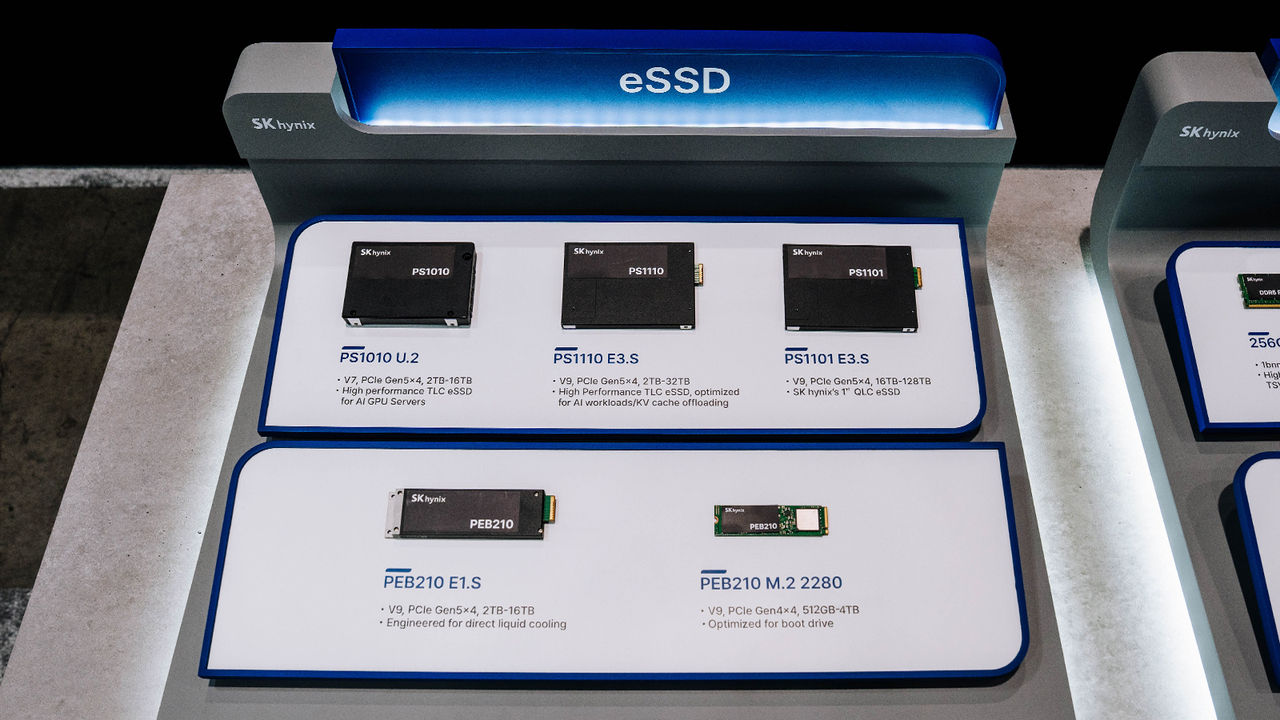
SK hynix said the current memory supply shortage — where demand outpaces supply — will persist through 2030, dismissing recent concerns that the AI industry may have reached its peak.
The company said the shortage will not be resolved quickly, given the rising technical difficulty of leading-edge processes and the long lead times required to build new production facilities.
Park Jun-deok, executive vice president of DRAM marketing, said AI-related revenue growth and financial performance among major customers are being confirmed across multiple fronts, including a consistent rise in paying users of AI services. "I believe the AI business revenue and cash flow of large customers will continue to improve, and the investment burden the market is concerned about will gradually stabilize as a result," he said.
Park also noted that the base of AI investors has broadened beyond the early stage dominated by a handful of large technology companies to now include general enterprises and national governments, supporting continued growth in the global AI data center infrastructure market.
"The intensity of AI investment and demand will remain sufficiently robust, grounded in actual business results and a diversifying investor base," Park said. "The memory market will also continue to see a structural supply-demand imbalance in which demand overwhelms supply for the foreseeable future."
On China's 4F²: 'Distinguish between technical achievement and commercialization — sticking with 6F² for now'
On the next-generation server DRAM architecture known as 4F² (4F-squared), which China's CXMT recently announced it plans to release within the year, SK hynix said "there is a need to distinguish between technical implementation and actual commercialization."
Park said that because each company's capacity for miniaturization, process environment and cost structure differ, the timing and strategy for adoption will also vary. "SK hynix is working to maximize the existing 6F² architecture through process maturity and stable technology platform operations, while developing the technology to transition to a 4F² or three-dimensional DRAM platform thereafter," he said.
Park added that the company has secured the technical headroom to further extend its current 6F² platform through EUV-based miniaturization process innovation. "At this point, we believe the most efficient strategy is to maximize the use of platforms whose mass-production stability and cost competitiveness have been proven, in order to strengthen product competitiveness," he said.
Park said applying a new cell structure to actual products requires securing not only performance but also yield, reliability and cost competitiveness, and then completing product design and customer qualification. He said the company plans to apply the new architecture to suitable products in line with its phased technology roadmap for next-generation DRAM, at the point when both completeness and economic viability are assured.
joze@heraldcorp.com
jeongwan@heraldcorp.com