Seoul's community child centers serve 11,281 children across the city
'Seoul Ai Deundeunhan Kki' program covers school-break lunches
Late-night care runs until midnight for parents working long hours
City holds annual festival to honor center workers
Oh vows to build a city where parents can raise children with peace of mind
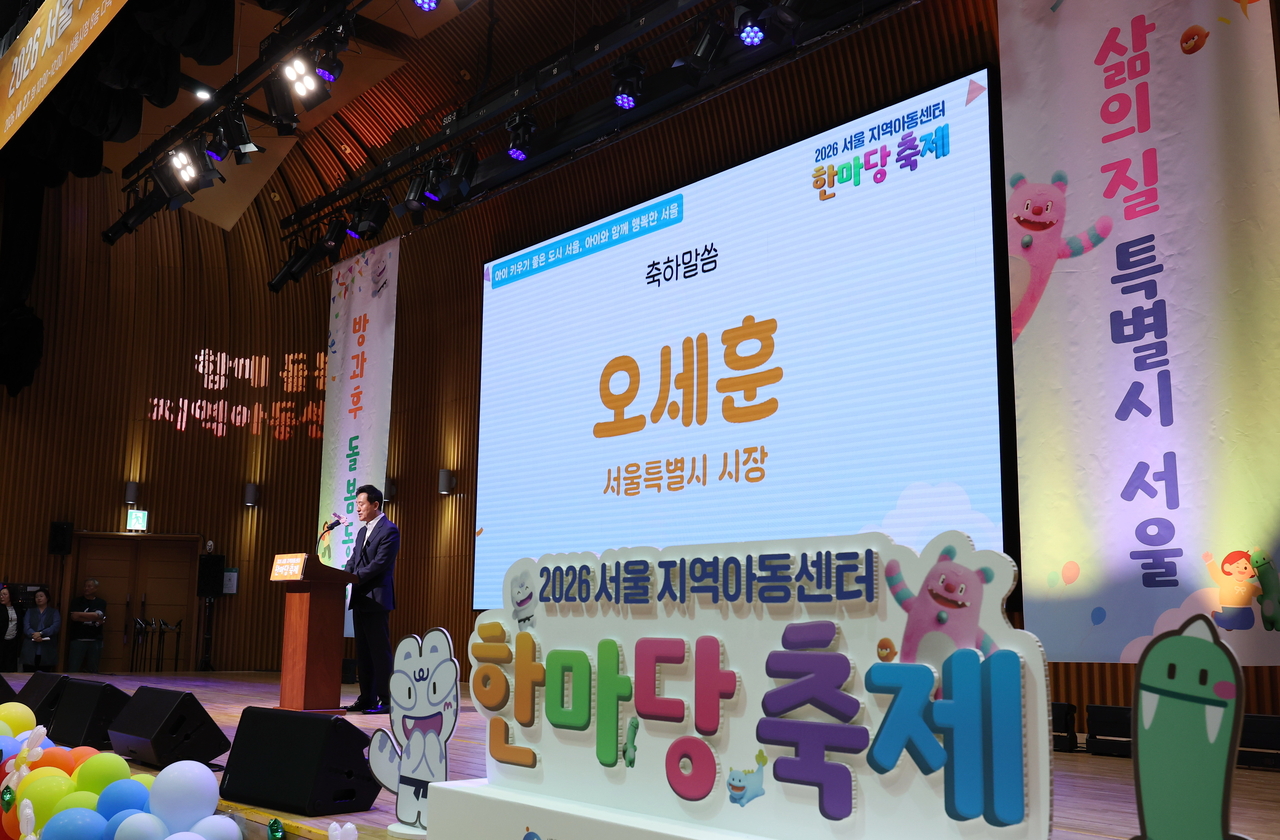
The Seoul Metropolitan Government said Tuesday that community child centers across the city are serving as a vital support system for parents juggling work and childcare.
Community child centers provide after-school care for children in need and trace their roots to privately run study rooms that emerged in the 1960s before being legally recognized as child welfare facilities in 2004. A total of 417 centers now operate across Seoul's 25 autonomous districts, serving 11,281 children. Any child under 18 enrolled in elementary or middle school is eligible to use the centers.
The city held the 2026 Seoul Community Child Center Workers Festival on Tuesday morning at the multipurpose hall on the eighth floor of Seoul City Hall's new annex, drawing about 500 attendees including center workers, children and parents.
During the opening ceremony, 27 commendations from Seoul Mayor Oh Se-hoon and 25 awards from the Seoul Metropolitan Council speaker were presented to workers recognized for their dedication to children's healthy development at after-school care sites.
In July, Seoul became the first city in the country to launch "Seoul Ai Deundeunhan Kki," a school-break lunch program designed to ease the burden on dual-income households and single-parent families who struggle to provide meals for their children during school vacations. Over the summer break, 226 community child centers and neighborhood care centers offered balanced meals and seasonal fruit alongside a range of activities including play, reading and hands-on experiences.
The city also runs gap-care services in the morning and at night for parents who start work early or finish late. During school breaks, 243 centers offer all-day care from 8 a.m. to 8 p.m. under a vacation gap-care program, while 57 centers provide late-night care from 10 p.m. to midnight.
When unexpected situations arise — such as a hospitalization or sudden overtime — elementary school students not registered at a community child center can receive free short-term care at the nearest one.
The city is also strengthening learning support alongside childcare. After providing funding to improve the learning environment at community child centers — including equipment for the city's online tutoring platform Seoul Learn — the city this month began piloting an in-person group mentoring program that extends Seoul Learn's online tutoring into the physical spaces where children actually study and spend their time.
Mayor Oh visited the Gajaeul Community Child Center in Seodaemun-gu in July to observe the school-break lunch program in action, encouraging frontline workers providing healthy lunches and safe care during the vacation period and listening to their feedback on how the program was running.
"The 'special city for quality of life' that Seoul aspires to be is one where children enjoy ample care and learning opportunities regardless of their circumstances, and where parents can raise their children with peace of mind," Oh said. "To build a Seoul where children are happy, we will expand emergency and temporary childcare as well as learning support at community child centers, and we will pay close attention to the working conditions and treatment of the dedicated staff."
ikson@heraldcorp.com