- Deputy Prime Minister Bae Kyung-hoon unveils three-pronged nuclear strategy
- Public and private sectors to focus efforts on SMR development and demonstration
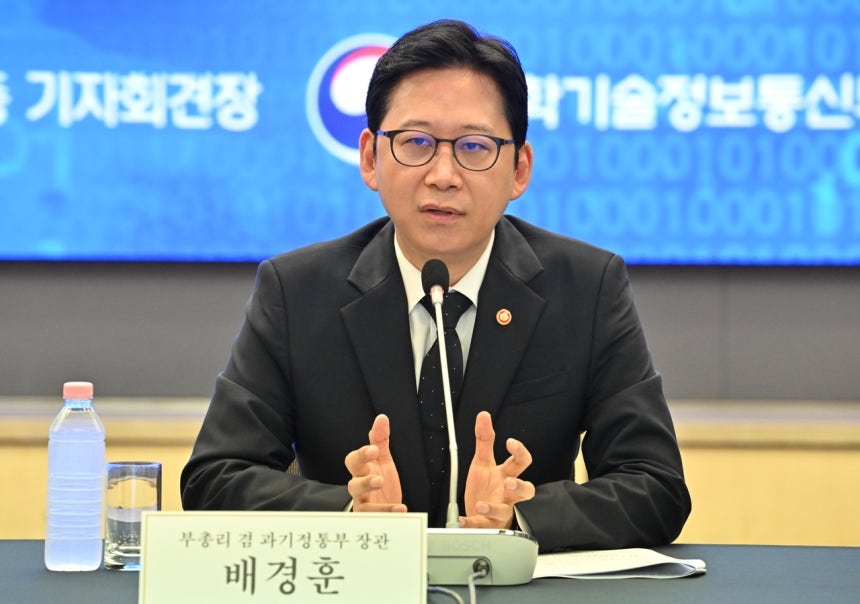
South Korea has laid out a blueprint to accelerate the development and demonstration of small modular reactors and position itself as a key global hub for nuclear energy production.
The Ministry of Science and ICT said Tuesday that the International Atomic Energy Agency Ministerial Conference on Nuclear Power opened at Songdo Convensia in Incheon.
The IAEA ministerial conference is a high-level international forum for discussing the peaceful use of nuclear energy and future policy directions. Being held in South Korea for the first time, the three-day conference runs through Thursday. Deputy Prime Minister and Minister of Science and ICT Bae Kyung-hoon chairs the event, which has drawn more than 800 participants — including representatives from 60 member-state governments, eight international organizations, and about 85 domestic and foreign companies.
In his keynote address, Bae outlined three policy directions: strengthening trust through safety and transparency, pursuing the safe development and demonstration of SMRs, and positioning South Korea as a global nuclear production hub.
On the SMR front, the government will concentrate public and private resources on development and demonstration. It plans to advance SMR technology tailored to a range of applications, including power supply for AI data centers, industrial heat production and ship propulsion. The government also intends to reinforce the foundations for regulatory research and safety verification while respecting independent regulatory frameworks, and to support the commercialization of technologies whose safety has been confirmed through legislative and institutional reforms.
In particular, the government plans to accelerate the development of next-generation reactor technology, drawing on a special SMR act and the "Seven SEED Projects."
South Korea will also work to strengthen the global competitiveness of its domestic nuclear industry. The strategy involves combining the country's nuclear manufacturing and construction capabilities with the design and development expertise of overseas nuclear firms to grow into a global production base.
AI and robotics will be applied to nuclear plant construction and operations to enhance safety and quality management. The country also plans to expand cooperation across the full nuclear cycle — from plant operation and decommissioning to radioactive waste management and next-generation nuclear fuel.
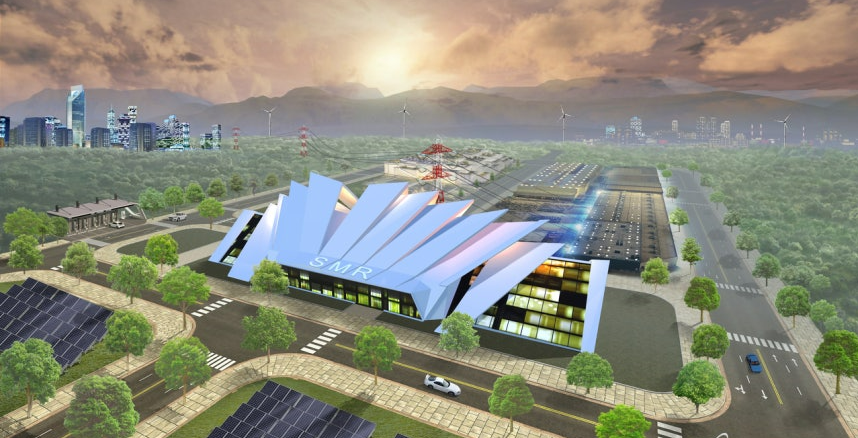
The conference will focus on international cooperation covering nuclear power adoption and regulation, SMR applications, energy security and carbon neutrality. South Korea will lead a session titled "A New Era of Nuclear Energy," presenting proposals on AI-based nuclear safety management and the expanded use of SMRs and marine nuclear power.
Nuclear industry cooperation between South Korea and the United States is also set to deepen.
The Ministry of Science and ICT co-hosted the "Korea-US Nuclear Industry Dialogue" with the US Embassy in Seoul on Monday, the day before the conference opened. Some 150 representatives from the two governments and 50 companies and institutions attended, discussing ways to enter the US nuclear market and strengthen supply chain cooperation.
Companies from both countries explored potential collaboration in areas including nuclear plant design and construction, equipment manufacturing, investment and nuclear fuel supply, and held one-on-one meetings to identify follow-on projects.
"We will rally public and private capabilities, grounded in the special SMR act and the Seven SEED Projects, to pursue the safe development and demonstration of SMRs," Bae said. "We will connect South Korea's manufacturing and construction capabilities to global nuclear demand to emerge as a global production hub, and grow into a model nuclear nation that upholds safety and trust."
nbgkoo@heraldcorp.com