Sub-fund returns range from -19.86% to 3.15%
Government, manager subordinate capital absorbs losses
80% of deployed funds flow into advanced strategic industries
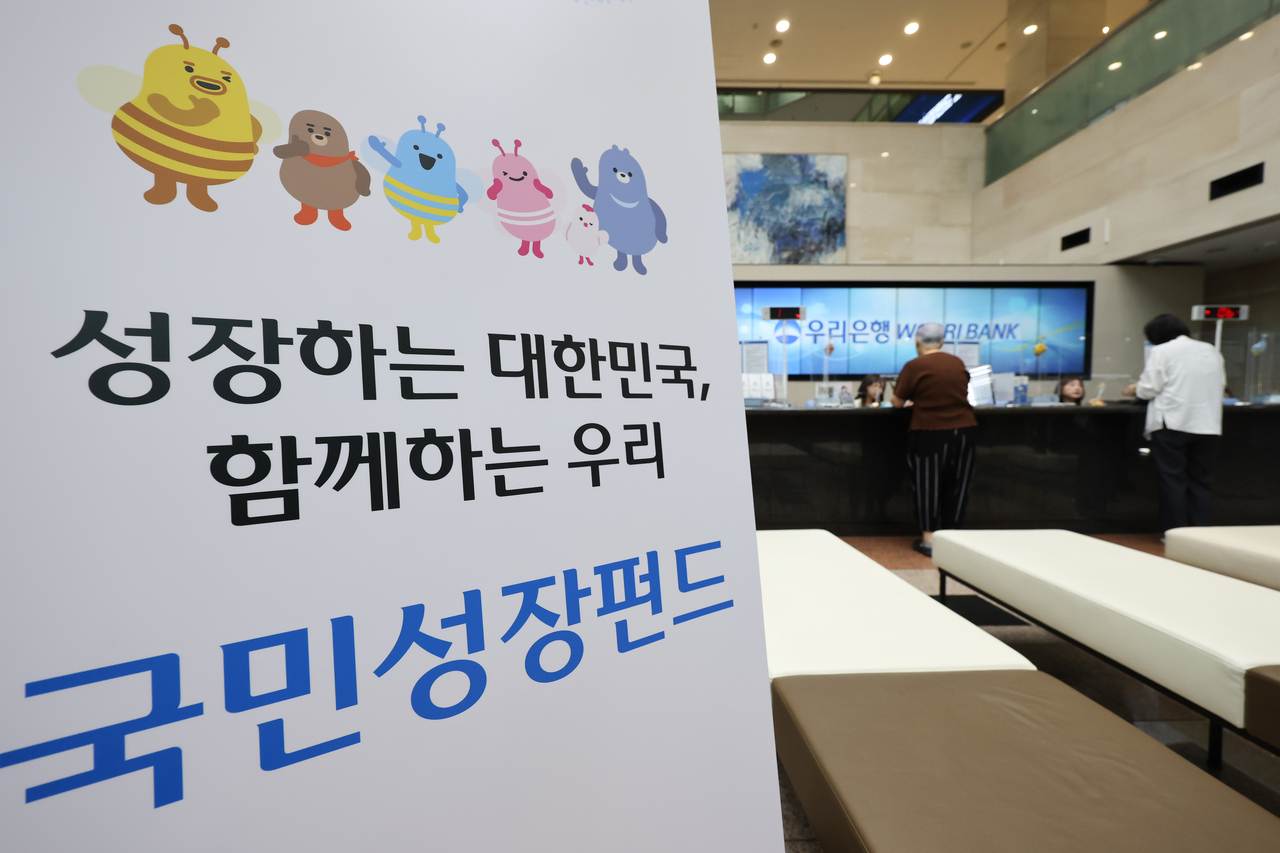
The first National Participation Growth Fund, launched in June, posted a 0.50% return in its debut performance report. Even as some sub-funds recorded double-digit losses, a subordinate capital structure backed by government fiscal funds and asset managers absorbed the damage first, shielding the overall fund's return.
Mirae Asset, Samsung and KB Asset Management disclosed the first asset management reports for the first National Participation Growth Fund, which was established in June, the Financial Services Commission said Monday. The report covers the fund's operating status, returns and key investment details as of Sept. 11, three months after the fund's launch.
The fund's three-month cumulative return as of Sept. 11 stood at approximately 0.50%. Returns across individual sub-funds, however, varied sharply — ranging from negative 19.86% to positive 3.15%. The divergence reflected unrealized losses on listed shares held by some sub-funds, driven by heightened market volatility since June and July.
The overall fund nonetheless stayed in positive territory because its loss-absorbing subordinate structure functioned as designed. The National Participation Growth Fund is structured so that subordinate capital contributed by the government and sub-fund managers bears losses of up to around 20% first, acting as a buffer that prevents losses in individual sub-funds from flowing directly to ordinary investors.
Investment deployment remains roughly halfway complete. From the launch of 10 sub-funds on June 15 through Sept. 11, approximately 46.3% of total capital had been invested. Cash and cash equivalents accounted for 49.7% of the remainder.
Deployed capital has been concentrated in advanced strategic industries. About 80% of invested funds — excluding cash equivalents — went into advanced strategic industries. Across the entire fund, the breakdown was: advanced strategic industries at 35.9%, other sectors at 7.9%, and bonds at 2.5%. By asset class, the fund was spread across listed shares at 28.4%, listed mezzanine at 10.1%, unlisted shares at 0.7%, and unlisted mezzanine at 4.6%.
Financial regulators cautioned, however, that judging the fund's success based solely on its first three months would be premature. The National Participation Growth Fund is a closed-end fund with a five-year maturity, and its portfolio includes not only listed shares but also unlisted equities and mezzanine instruments that are difficult to value immediately. "Because the timing of valuations differs by asset type, considerable time is needed before meaningful performance results emerge," the financial authorities said.
The asset managers plan to continuously review the holdings and investment ratios of each sub-fund and manage their portfolios in line with risk management procedures. Asset management reports will continue to be disclosed every three months.
Meanwhile, the second National Participation Growth Fund raised 519 billion won ($392 million) against a target of 600 billion won, achieving a subscription rate of 86.5%. Among Shinhan Securities subscribers, investors in their 20s and 30s accounted for 28.6% of accounts, though investors in their 70s recorded the highest average subscription amount per person.
rim@heraldcorp.com