From Avignon to Seoul, then Gyeonggi Province and Jeju
From 'Sacheon-ga' and 'Eokchuk-ga' to 'The Old Man and the Sea'
'Even younger Joseon singers pulled through — so can I'
"Ihihihihing—"
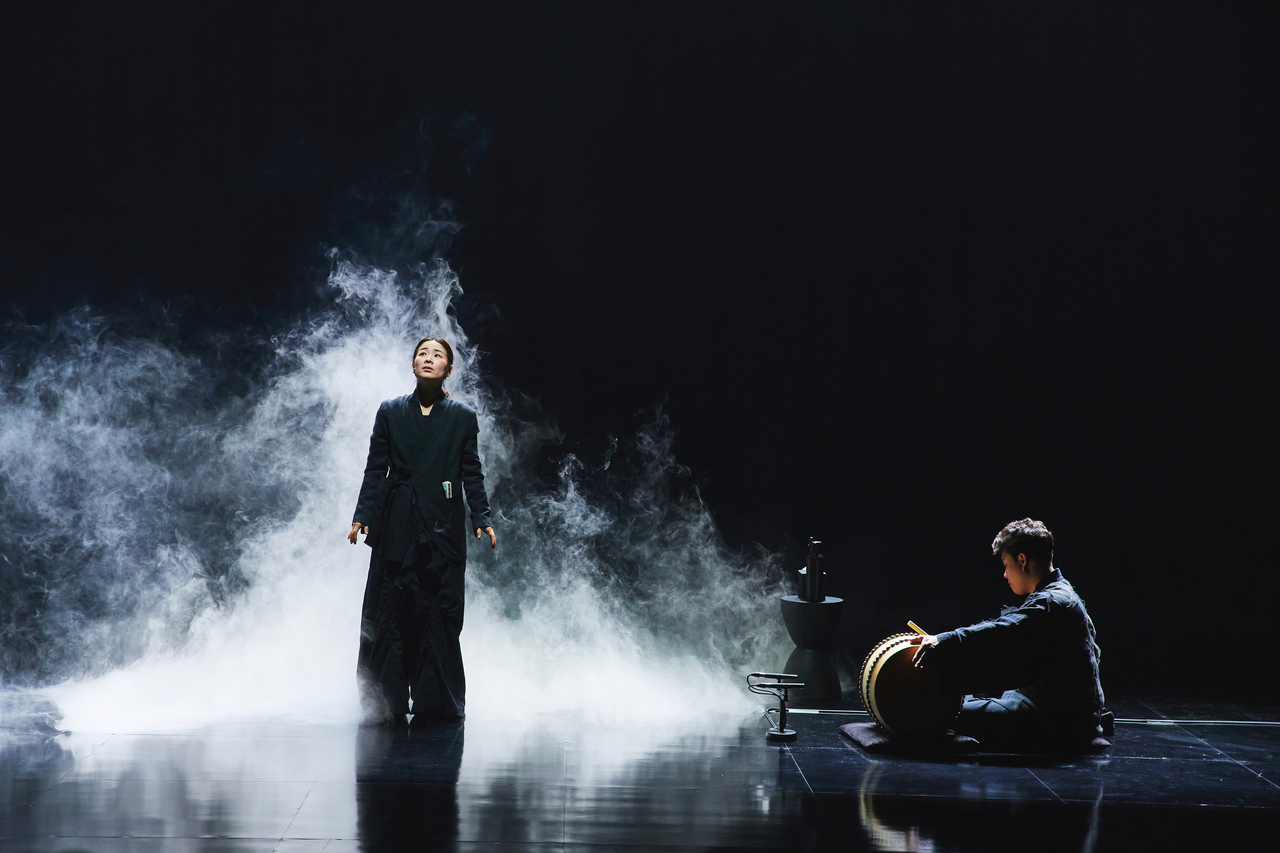
A horse's whinny scatters into the pitch-black void of an empty stage. Deep in a snowdrift, Zhety's legs buckle and give out. The frozen steppe grips her hooves and will not let go. Has she fallen into a snow pit? The image of her crunching happily on carrots flickers over her now-flailing form. With life and death hanging in the balance, pansori singer Lee Ja-ram has no time to rest. She snaps open a white fan and hands the roar of the blizzard to the audience, then darts ceaselessly between Vasili, Nikita and Zhety. In the heart of Seoul or the heat of Avignon, the stage becomes the frozen Russian steppe of the 19th century, regardless of the season outside.
Lee's "Snow, Snow, Snow," which premiered in 2025, was officially invited to the Avignon Festival in France this past summer — widely regarded as the world's premier performing arts festival. After wrapping its Seoul run (Oct. 23–24 at LG Arts Center), the production heads to Gyeonggi Province (Dec. 12–13 at Gyeonggi Arts Center) and then Jeju.
Lee, who spoke with The Korea Herald both before and after the Avignon run, said she still gets nervous before every performance. "Even so, I feel like my body has been steadily building up the readiness to stand on big stages," she added.
From Avignon back to han: 'Are you "neige, neige, neige"?'
Instead of the traditional Korean cheer "eolssu," the crowd erupted with "oulala." When Lee opened her fan, French audiences from the first floor to the fourth responded with a collective "shhhh," conjuring the sound of a blizzard. Lee laughed recalling how the house "buzzed with energy, as if everyone wanted to build the performance together." The Avignon summer was electric. "Wherever you went, more than 80 percent of the people were artists or people who love art," she said. "It felt like a dreamland."
"After the technical rehearsal, I went to a shop the next day and the staff were whispering among themselves. Then they came up to me and asked, 'Are you neige, neige, neige?' — neige being the French word for snow. They said friends who had seen the rehearsal told them about it and they were trying to get tickets. That was the moment I truly felt, 'Ah, this is a place where there is always an audience.'"
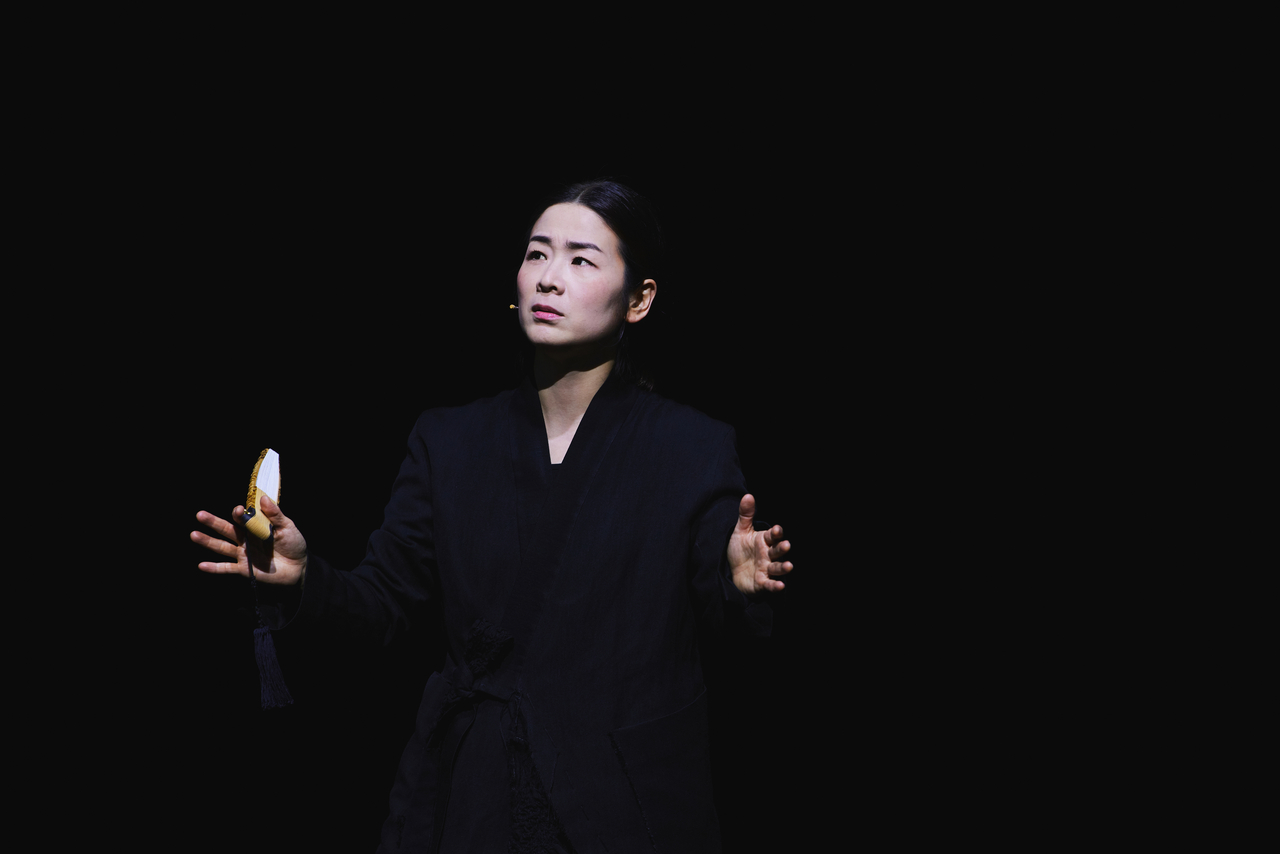
Now in its 80th edition, the Avignon Festival selected Korean as an official invited language this year, and "Snow, Snow, Snow" took the stage at the Opéra Grand Avignon, a venue seating roughly 700. Among the options the organizers offered was the Palais des Papes — the festival's iconic stage. But after visiting it in person, Lee chose a theater that was both safer and better suited to the work.
"A single performance burns as much energy as a week of office work, compressed into one go. The Palais des Papes was a year's worth of that. The faces of people sitting at the far end looked tiny. I could not afford to burn through four years of myself just to do four nights there."
Pansori is a genre that lives and dies by the flavor and nuance of the Korean language — more so than almost any other form. Lee's performances are especially rich in inventive expressions, onomatopoeia and mimetic words that interweave with her acting and singing. Concerns about the language barrier loomed before the Avignon run. Yet the deep theatricality of pansori disarmed local audiences entirely. "On stage I draw enormously on the power of imagination," Lee said, "and that imagination moves like an engine — the audience supplies the gasoline of their own imaginations."
Not every night brought the same response. On the third performance, the audience was so quiet that Lee began to wonder whether things were going well. Director Park Ji-hye reassured her: "This is a country where intellectual and cultural things matter deeply — they are concentrating intensely on where the characters and the drama are headed, so trust it and keep going." When the final song ended, the house sprang to its feet. "That was the moment I understood what the director had meant," Lee said.
"As we go through life, we cycle between exhaustion and renewed energy, and along the way we lose things. I think art is what gives people back what they lost — more often, through unexpected moments. In an age when so much is being reduced to black and white, the effort to restore even a flash of color — that is what I hope stage art can do."
Only when the heart truly accepts — the story opens
"Honestly, at first I deeply hated Vasili."
Based on Tolstoy's short story "Master and Man," "Snow, Snow, Snow" traces the life-and-death arc of a greedy merchant named Vasili, his loyal servant Nikita, and Vasili's horse Zhety, stranded together in a blizzard.
"I watched this story by projecting onto Vasili all the powerful people I despise," Lee confessed. As she struggled to find her footing, dramaturg Howard Blenning shared a story from his own experience on the subway: a woman who gave up her seat was not an angel — she had simply done what any human being would ordinarily do. Vasili, he suggested, was no different. "That only made me more confused," Lee said. The breakthrough came in an unexpected moment. One day, alone in her room rehearsing Vasili's lines, she was suddenly overcome with emotion. "That was the day Vasili walked into me. There are things the mind understands but the heart absolutely refuses to accept. I needed the moment when the heart truly gave its permission."
Howard's words came into sharp focus on stage. The more she told the story in front of audiences, the clearer the meaning became. "I think we are living in an age when we are losing the things that humanity should naturally do. That is why this story resonates so deeply, and why it has received more love than I ever imagined."
Lee has built a singular creative territory by transposing Western literary classics — Tolstoy, Brecht, García Márquez and others — into Korean pansori. Brecht's "The Good Person of Szechwan" became "Sacheon-ga" (2007), and "Mother Courage and Her Children" was reborn as "Eokchuk-ga" (2011). Pansori has traditionally centered on five canonical works — Chunhyang-ga, Simcheong-ga, Heungbo-ga, Jeokbyeok-ga and Sugung-ga — but Lee early on began unearthing material from both East and West and breathing new life into it. There is a reason her gaze as a singer has reached beyond Korea to foreign lands.
"Pansori is a genre that uses the purely physical texture of sound to pull distant stories close and lay them bare," Lee said. "When you tell a story of grief or crisis, the emotional intensity deepens and expands."
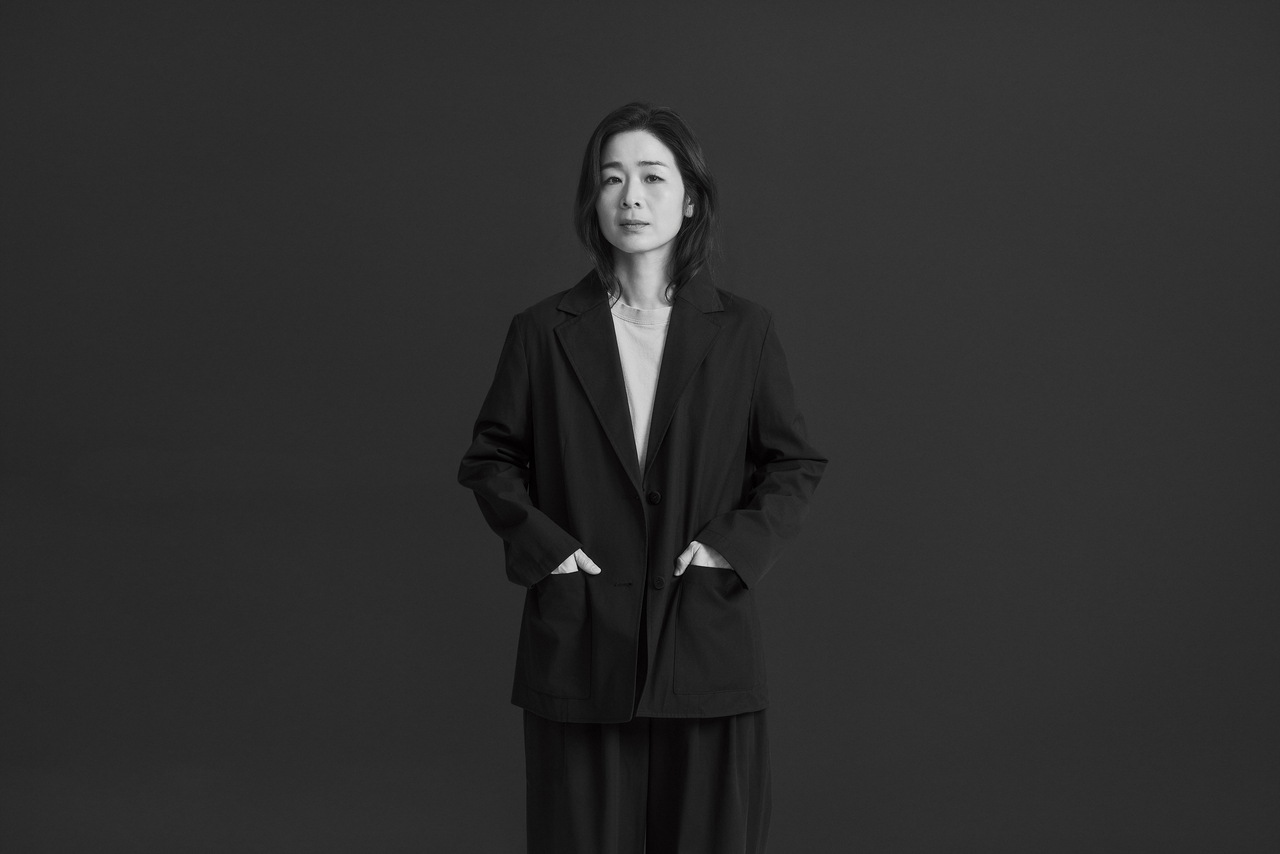
"Modern Korean fiction feels too close to my own skin to contain in pansori. It becomes excessive. That excess could be a strength, of course — but I experienced it as fatigue, and I do not want to pass that fatigue on to the audience. For now, I think the right approach is to draw from distant classics and find in them stories that speak to who we are today. That could change later."
Each work demands a long, grueling gestation before it reaches the stage. For "Snow, Snow, Snow," Lee did not stop at reading a Korean translation — she tracked down a reliable English translation and compared the two, probing every nuance. She also went word by word using Google Translate. Having first encountered the source text in January 2024, she spent a year and three months on it before the work premiered last April. Her pieces typically take one to two years to come into being.
"Whenever the word 'samovar' appeared — it's a word from 'Master and Man' — I kept watching YouTube videos of samovars being heated. I realized that the samovar has to be boiling continuously to keep the whole house warm, and that people brew and drink tea together from it. I was trying to deeply understand the atmosphere and culture the author wanted to convey through that one kettle."
She may look like a born storyteller whose creative well never runs dry, but Lee readily admits her pockets are always empty of stories. She is not the type to stockpile ideas she wants to tell. Instead, while reading a play or a novel, she is suddenly struck — like a bolt of lightning — by the conviction that she must tell this story right now. The creative process is grueling. Lee describes making a work as "a process of hitting rock bottom and clawing back up." The journey takes the same shape every time, but the work only emerges after she has touched that bottom at least once.
"When I was writing 'Ibangineui Norae' (Song of a Stranger), I struggled for a long time because I could not understand the character Lasara. Then one day, Lasara suddenly overlapped with the image of my tenacious older sister, and I burst into tears. When you find that moment, the work gets better. Next year I will have forgotten all of this again. Then through some other work I will discover it again, and cry again. Making a work feels like a spiritual practice to me."
'Tradition is not a shackle — only practice can save me'
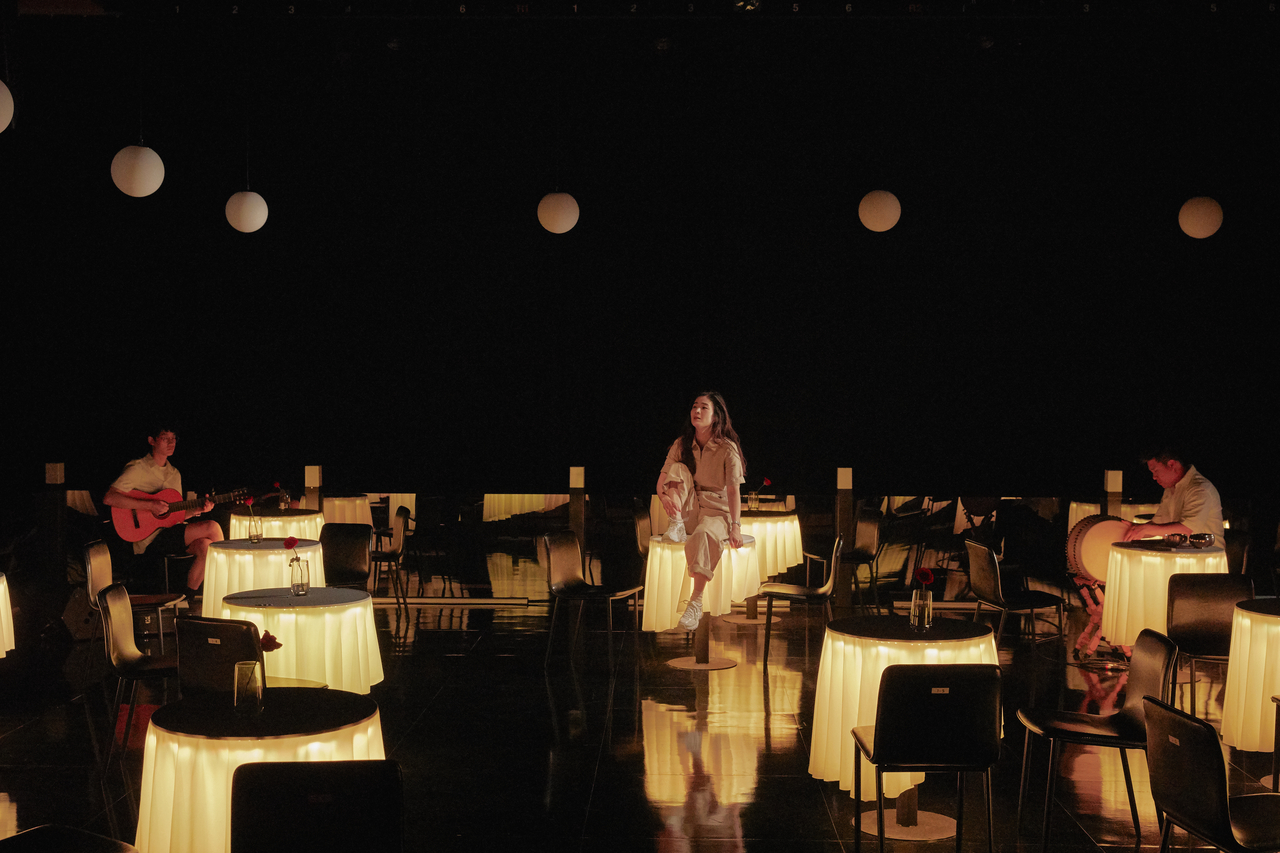
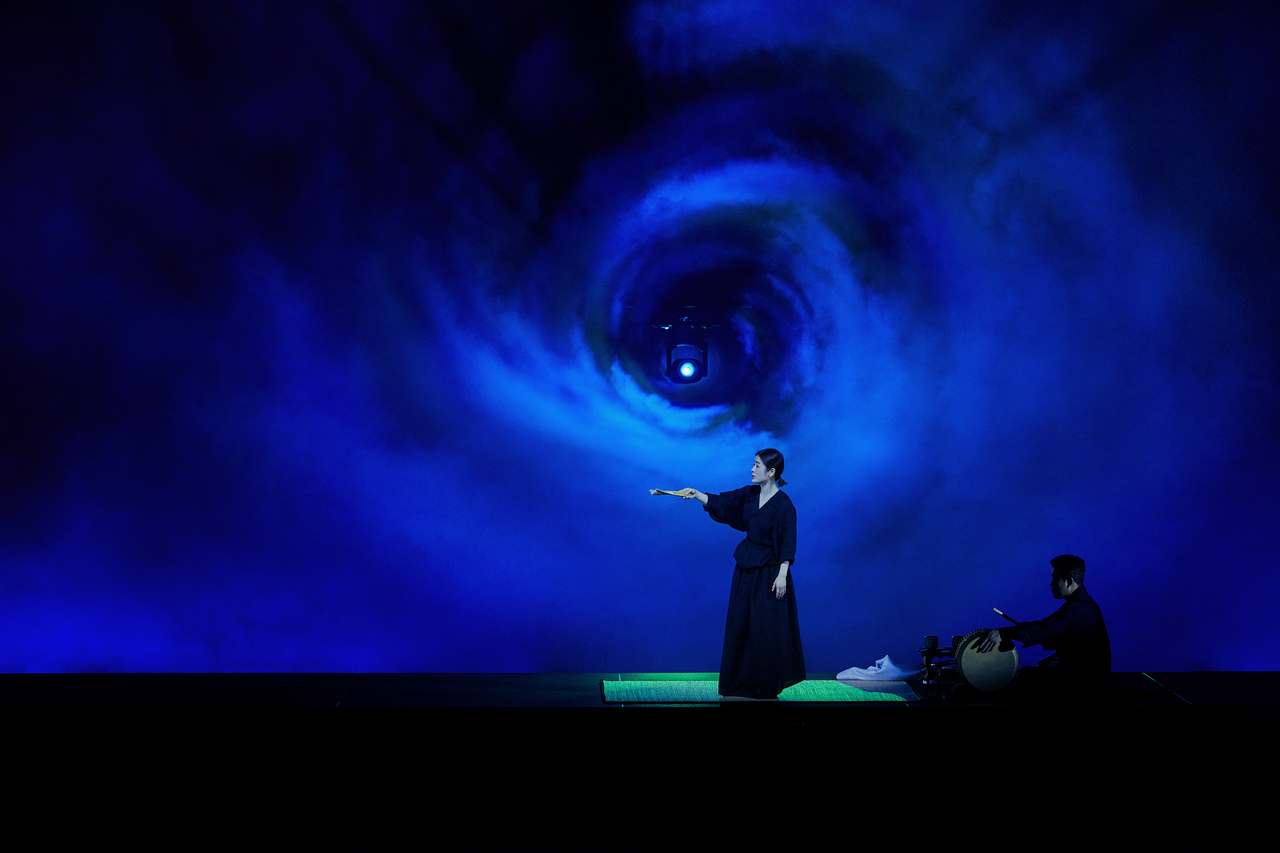
From "Sacheon-ga," which filled the stage with a band sound drawn from percussion, bass and a range of Western instruments, to "Eokchuk-ga," which conjured the spectacle of wartime with a massive cart and an array of props, to "The Old Man and the Sea," which shaped a vast open ocean from nothing but a singer's fan and the beat of a drum —
Over time, Lee's stage has been emptied out. Her artistic world has moved toward a "poetics of negative space" — not adding, but ceaselessly subtracting. A bare stage, stripped of mise-en-scène, is held taut by nothing but the singer's craft and the audience's imagination. It is the result of shedding fear and learning to trust deeply in the essential nature of pansori as a form.
"I used to be very afraid. I worried that pansori alone would look meager, that audiences would not be satisfied, so I felt I needed the staging and the instruments. But somewhere around 'The Old Man and the Sea,' I began to think: pansori is enough on its own. Pansori is a great tree — magnificent even when it stands alone. Even now, when I feel the urge to add something, I question it. An instrument that enters because the work needs it is fine. But I ask myself: am I bringing it in because I lack confidence, or because I feel lonely?"
Her approach to composing the music has evolved as well. In the past, she would complete the script, set it to music, and only revise after the premiere. Since "The Old Man and the Sea," she puts out the script and the musical composition quickly and revises repeatedly throughout the rehearsal period. "Pansori is something you can only understand by doing it," she said. "You have to sing it yourself, feel the rhythm — and then you sense, 'No, this rhythm isn't right.' What I used to fix after the premiere, I now bring inside the rehearsal period."
The shift — emptying the stage and changing her compositional method — began with "The Old Man and the Sea" in 2019, the work she considers the period of her greatest growth as a singer. It was also when she learned to take care of her own body on stage.
"'The Old Man and the Sea' trained me to be a performer who also watches over her own body while on stage. Before that, I just performed regardless of what was happening to my body. From that point on, I became a performer who could also monitor my own condition, and my technique improved a great deal."
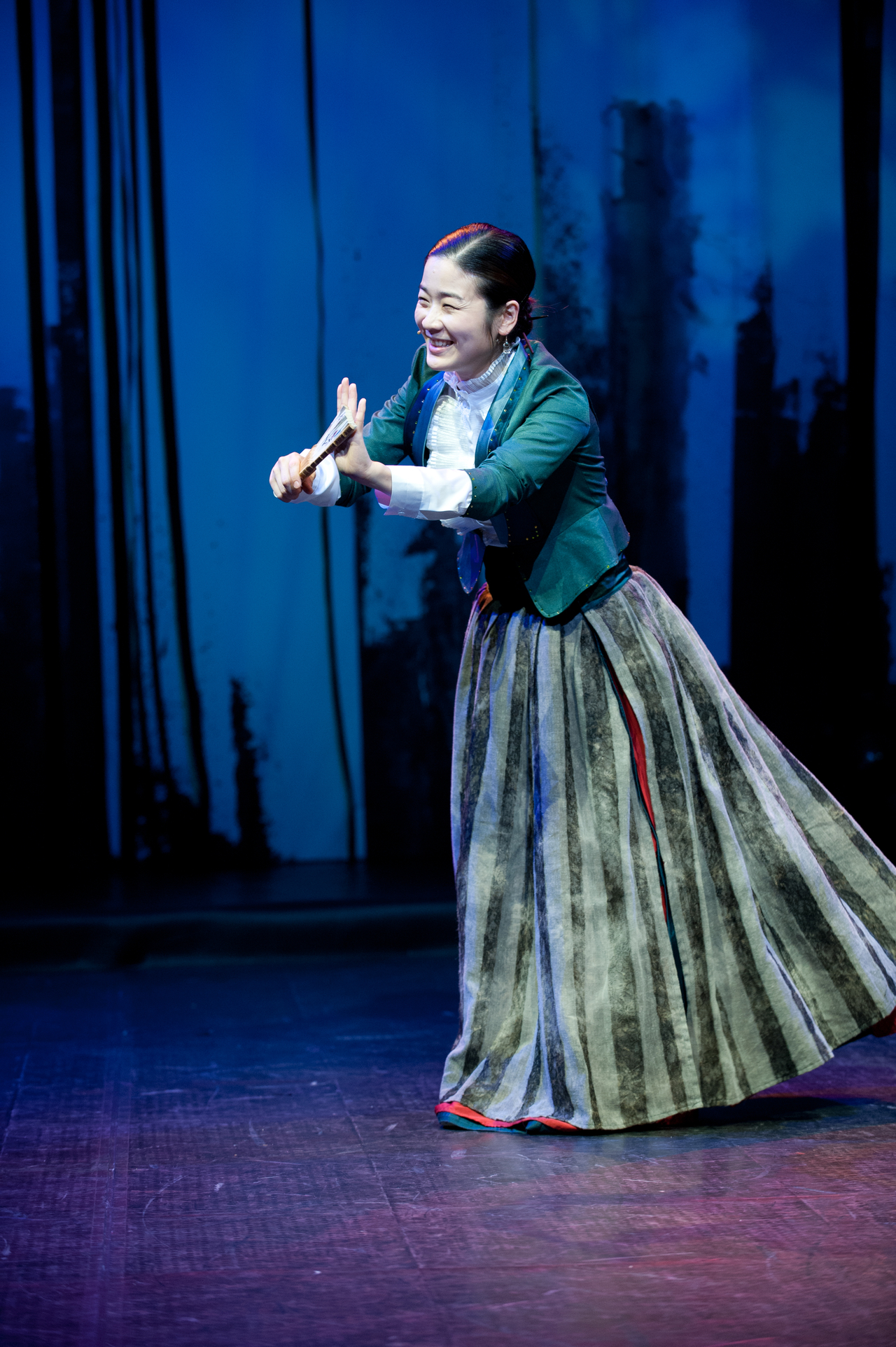
She first became known as "Yesol" — the child so lovingly called for in the children's song "My Name Is Yesol-a" — at just five years old. Around the age of ten, she began studying pansori under master singer Eun Hee-jin and has walked the singer's path for more than 30 years. For Lee, pansori has never once been a museum relic. She looks at stories from the past through a contemporary lens, kneading characters that had hardened into fixed forms until they become three-dimensional. The weight of carrying on a tradition as a 21st-century creator could easily crush a person, but Lee reframes it as a welcome solidarity across time.
"When I hit a wall writing a script, I imagine: how bleak must it have been for Joseon-era pansori singers when they took 'Romance of the Three Kingdoms' and tried to shape it into 'Jeokbyeok-ga'? They must have tormented themselves under the shadow of the great masters who came before them. Thinking that way gives me a strange comfort. I am not inventing something entirely new — I am simply doing pansori. Tradition, in the end, is something someone made."
Even now, Lee finds herself surprised by pansori. "It is almost uncanny to think that this art form was created in the Joseon era," she said. Pansori is a genre that, by its very nature, speaks directly to the audience and crosses the fourth wall. Lee calls this "a remarkable theatricality stretching back 400 years."
"People always ask me where I learned to act. I learned it from pansori. The precision of rhythm embedded in a singer's cells — down to a ten-thousandth of a second — I would dare call it the finest in the world. The techniques that theater practitioners work so hard to find through training are already all contained within pansori."
She carries a constant mix of reverence and vigilance toward the tradition — a genre she has practiced and admired her entire life. They say that seven years of dedication makes anyone an expert, but Lee insists that is not nearly enough for pansori. "It has too much to give." Even now, she says, practicing traditional pansori keeps yielding new discoveries, and she calls it "a monstrous genre." Admiration deepens into wonder, wonder into awe, awe into something close to fear. Each time, Lee pulls herself back with a positive thought.
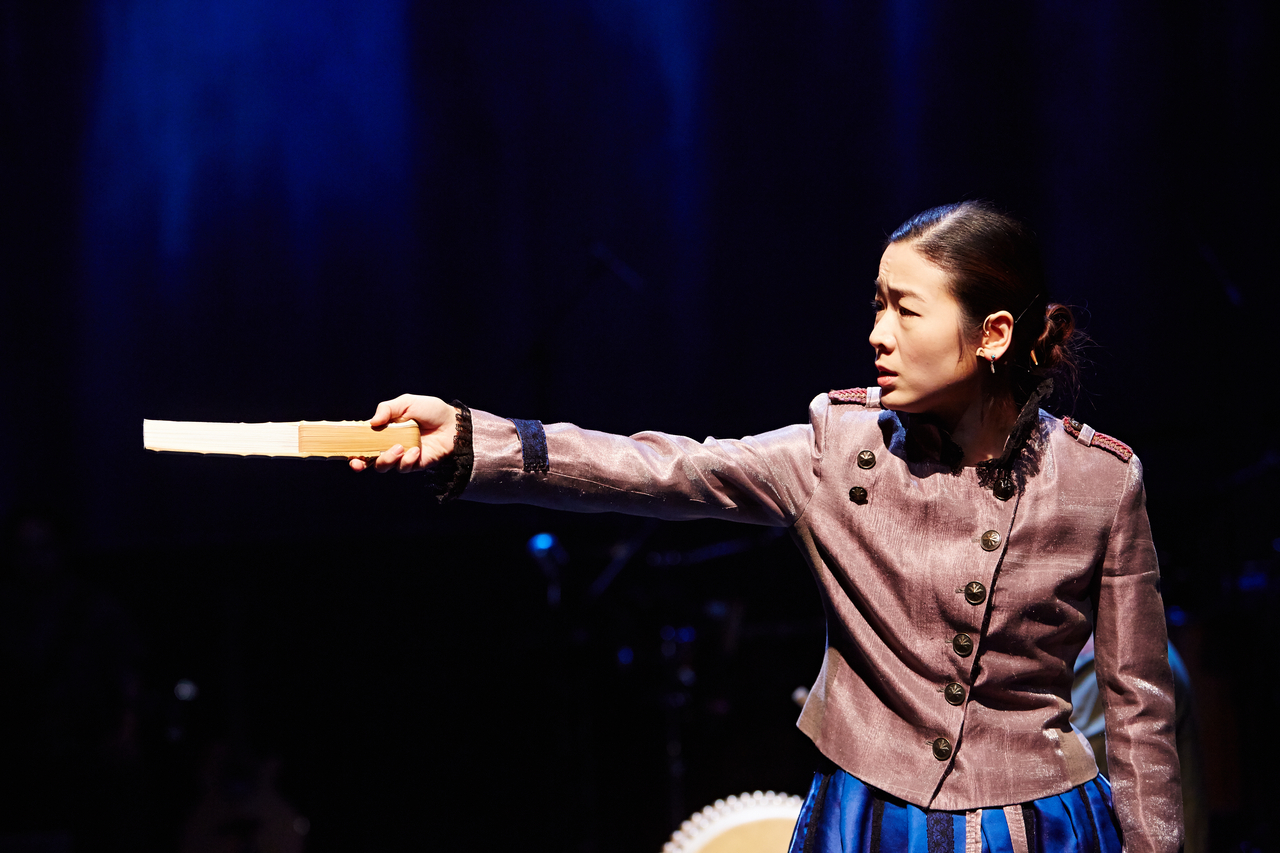
"For me, pansori is a love-hate relationship. It wrecks my body so badly I could resent it — but it gives back just as much. Whenever the tradition feels like it is pressing down on me, I tell myself: singers younger than me in the Joseon era pushed through it too. So can I."
For all the stages she has stood on, Lee admits she is shaken countless times before each performance. The one lifeline that steadies her is, simply, practice. "Whether my heart is wavering, my condition is off, or I feel scattered — I practice," she said.
"All of us with smartphones feel that sense of worthlessness — 'I'm the only one who's falling behind, I'm the only one who's useless.' When that feeling gets bad, I practice. I build up the one thing only I can do well. Even when I don't want to start, I just do it. And I believe in it as I go. Even when I'm trembling before I walk on stage, I tell myself: 'You have the hours of quiet practice behind you.' And when I go on with that, those hours come to my aid up there."
The stage is Lee's best practice room. Even 100 days of practice at home — one encounter with an audience on stage is worth all of it. Because she performs alone, her condition and state of mind become the condition of the work itself. "I am not someone who chases growth," she said, "but I tell myself: don't fall behind. Because if I fall behind, the work falls behind with me."
On the days she trembles, the words Lee reaches for are simple. "There is a phrase I say a lot when I'm nervous: 'Let's do it the way we always do, Junhyeong (drummer Lee Jun-hyeong). Let's do it the way we practiced.' And to the audience — I hope they can enjoy this pansori I savor so much, and savor it right along with me."
shee@heraldcorp.com