National Assembly audit of interior ministry, Monday
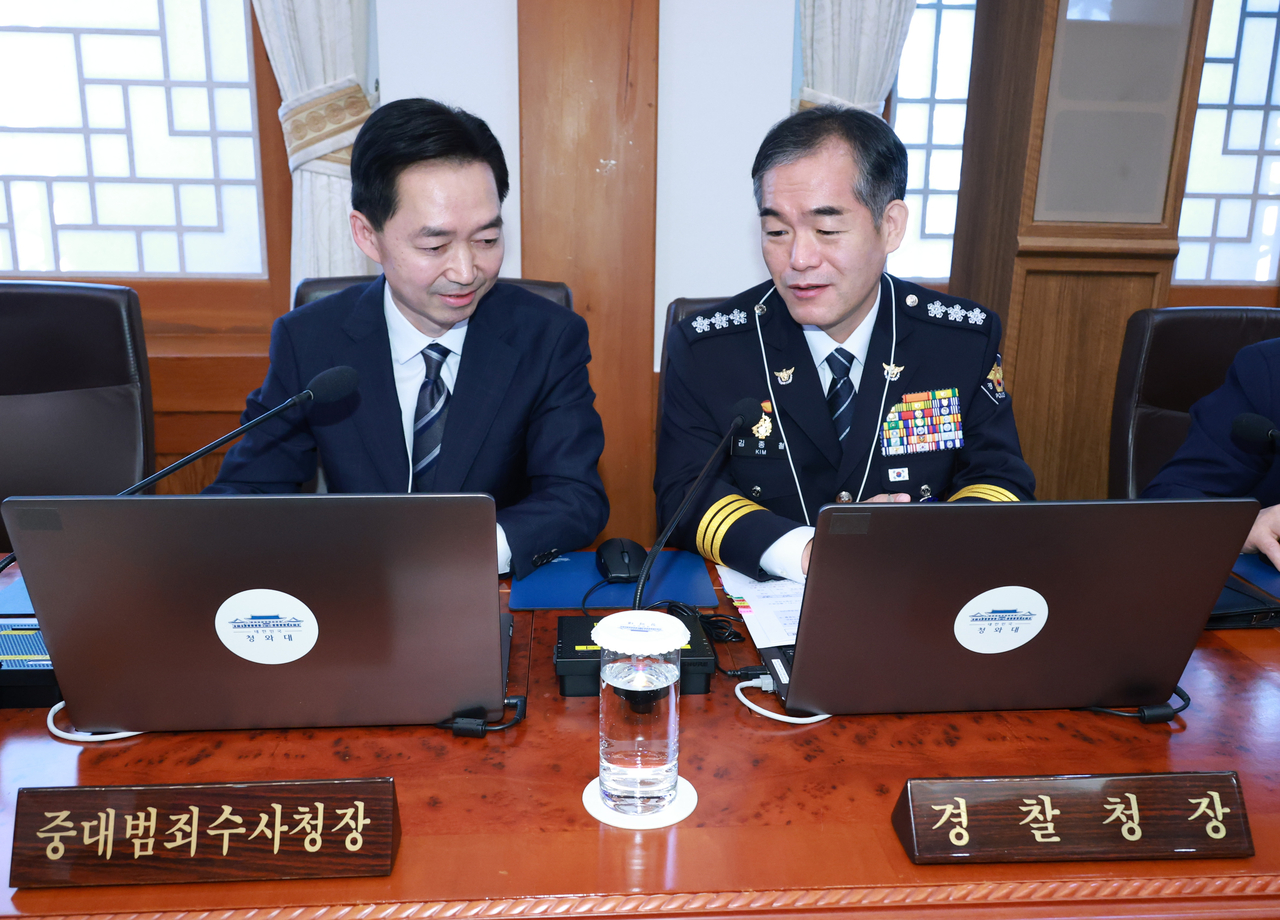
Acting Korean National Police Agency chief Kim Jong-cheol has rebuffed concerns that the regular attendance of investigative agency heads at Cabinet meetings could compromise investigative neutrality, saying no specific cases had ever come up at the sessions.
At a comprehensive audit of the National Assembly's Interior and Safety Committee on Monday, People Power Party lawmaker Kwon Young-jin asked whether Kim had considered the concern that routine Cabinet attendance could undermine investigative neutrality. Kim said he shared the concern but that "not once has an individual case been mentioned."
Kwon noted that from 2003 to 2025, the police chief attended Cabinet meetings only seven times — and only when there was an important matter that specifically required the chief's presence. When Kwon asked whether Kim, as acting chief, was attending on a regular basis, Kim confirmed that he was.
Kwon also cited commentary from People's Solidarity for Participatory Democracy and other civic groups calling on investigative agency heads to refrain from attending Cabinet meetings as a routine practice.
People's Solidarity for Participatory Democracy said on Oct. 15 that having the heads of investigative and prosecutorial agencies regularly attend a meeting chaired by the president — sharing the administration's policy direction and priorities — creates political pressure and undermines the appearance of impartiality even without any direct instructions on specific cases. The group urged that attendance be kept to a minimum and limited to genuinely necessary occasions.
Kwon pressed further, asking whether Kim could be confident he would decline to answer if the president privately asked about a specific case, and whether he could request that the president reconsider his attendance at Cabinet meetings to avoid any perception of political bias. "The public's trust in the fairness of South Korea's criminal justice system is at stake," Kwon said.
A counter-argument emerged, however, that Cabinet attendance itself was not inherently problematic. Democratic Party of Korea lawmaker Yang Bu-nam said that while the prosecutor general had not attended Cabinet meetings, the prosecution had ultimately failed to maintain its neutrality and faded into the wrong side of history. "Neutrality is not a matter of whether one attends Cabinet meetings," Yang said, "but of respecting the neutrality of the president who gives direction, and of law and institutional design." Serious Crimes Investigation Agency chief Kim Ji-yong said he agreed.
Yang added that having investigative agency heads attend Cabinet meetings could allow them to share policy issues and align with the administration's policy direction. "It doesn't have to be seen negatively — it can be a positive thing. Please keep that in mind," he said.
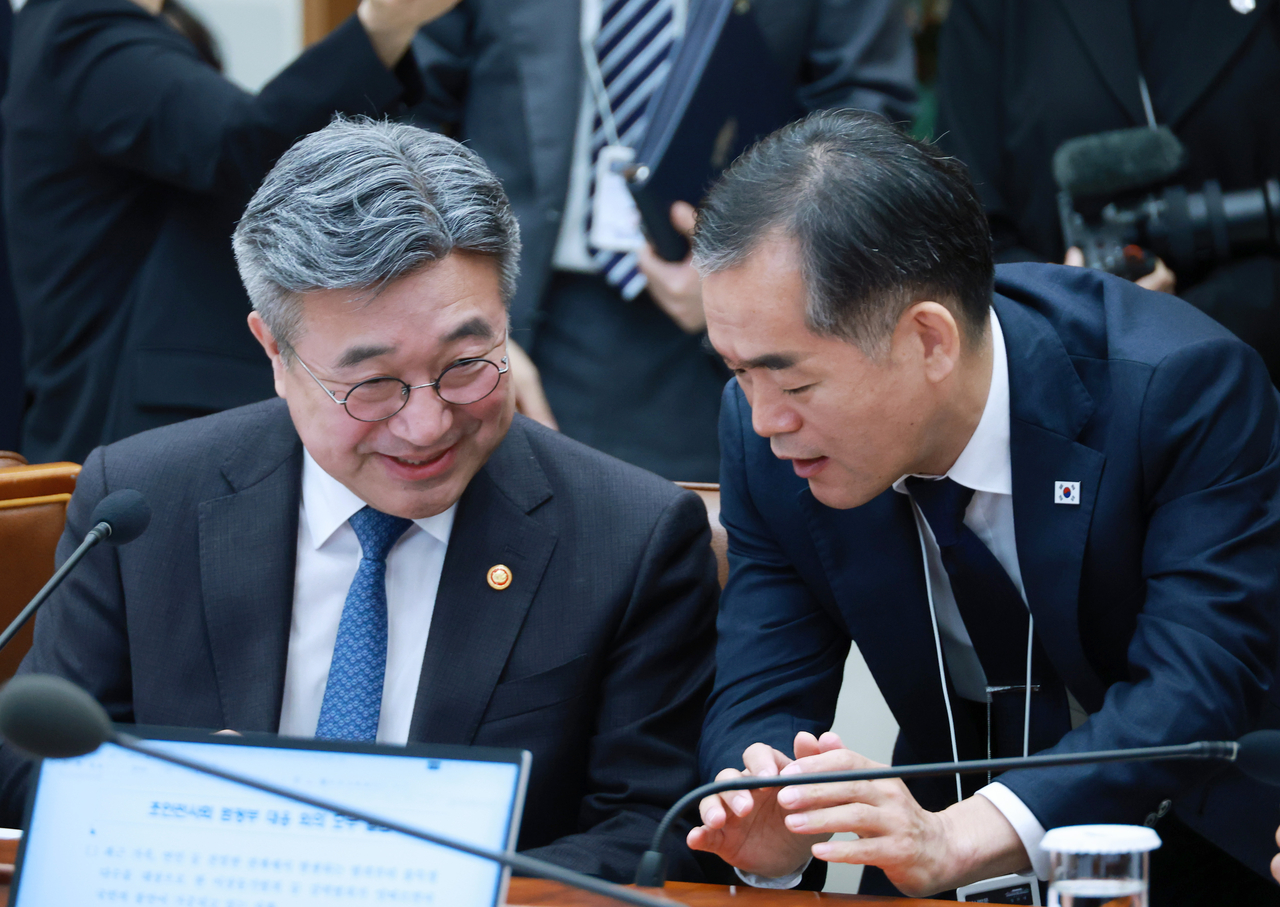
Amid the controversy, President Lee Jae Myung weighed in on Wednesday on his X account, formerly Twitter, citing a response from the AI chatbot Gemini to argue that "the claim that attendance is impermissible is an unconstitutional stretch." He added that "correcting the mistaken perception and practice of treating investigative agencies as a special category is also part of normalizing the abnormal," and said the Serious Crimes Investigation Agency and the public prosecution office are each simply one agency whose chief answers to the president, the prime minister and ministers.
Lee also said he would not direct investigations into specific cases, just as he does not issue specific licensing instructions to ministers, and that there was no need for concern.
The following day, Lee posted again on X, saying that "abandoning oversight of the Serious Crimes Investigation Agency would violate the Constitution and the Government Organization Act and constitute grounds for impeachment, as well as a criminal offense of dereliction of duty." He asked, "Are you telling me to violate the Constitution and the law by refusing to oversee the agency?"
arin@heraldcorp.com