'Laundering violations through legislation': existing levies must be handled under current law, People Power Party lawmaker says
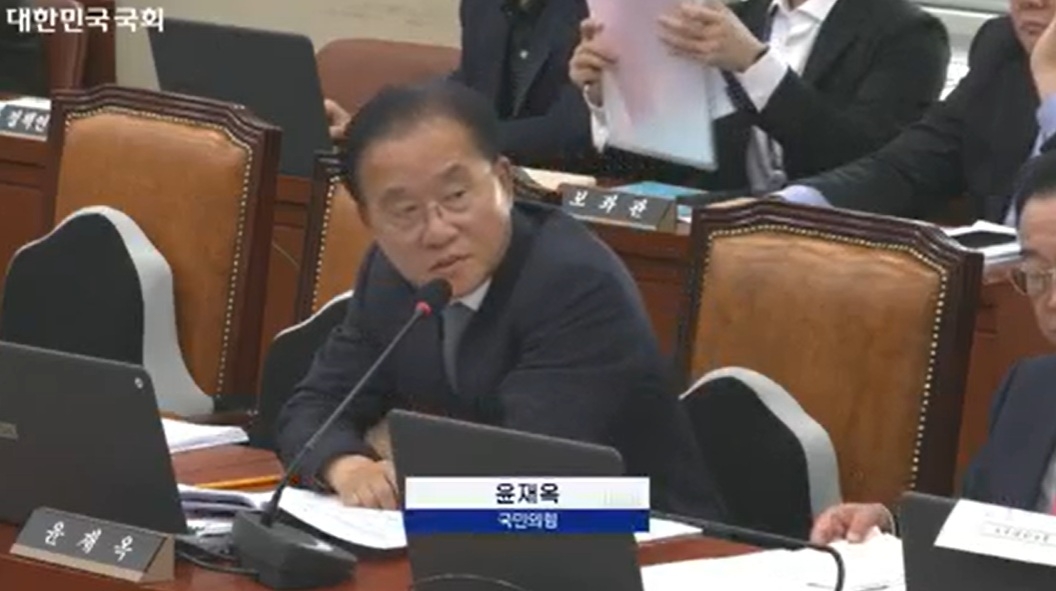
South Korea's Ministry of Climate, Environment and Energy has ignored a government inspection finding that it owes about 92.2 billion won ($69.6 million) in farmland conservation levies for illegal land conversion, and has instead been pursuing legislative changes to retroactively eliminate the payment obligation, a lawmaker said Monday.
According to People Power Party lawmaker Yoon Jae-ok, a member of the National Assembly's Climate, Energy, Environment and Labor Committee, the ministry converted roughly 33 million square meters of farmland without the required permits while developing "riparian ecological belts" from 2000 through August 2024.
Riparian ecological belts are projects that use watershed management funds to purchase land along rivers and create forests and wetlands to improve upstream water quality.
A joint government inspection in April last year found that the ministry should retroactively obtain farmland conversion permits, pay about 92.2 billion won in farmland conservation levies, and put measures in place to prevent recurrence.
Yet Yoon said the ministry had not even filed an application for a farmland conversion permit in the year and a half since, nor had it paid the levies.
Yoon said the ministry had in fact been working to secure an exemption from the levies even after the joint inspection concluded.
The ministry asked the Office for Government Policy Coordination in May last year to adjust the scope of the levy obligation. In January this year, it sent an official letter to the Ministry of Agriculture, Food and Rural Affairs arguing that riparian ecological belts qualify as "national land conservation facilities" and calling for a full 100 percent exemption from the farmland conservation levy.
An internal ministry document from August last year laid out a specific plan for pursuing the exemption.
After negotiations with the Ministry of Agriculture, Food and Rural Affairs stalled, the ministry concluded that pursuing the exemption "through National Assembly legislation is the realistic approach" and that it would be "somewhat easier" to enshrine the exemption in its own Four Major Rivers watershed laws than to amend the Farmland Act — effectively routing around the normal legislative process. That bill is now moving through the Assembly.
The Office for Government Policy Coordination, the Ministry of Agriculture, Food and Rural Affairs and other relevant agencies have opposed the ministry's position.
"The ministry knew as far back as 2012 that farmland conversion permits were required, yet failed to correct the situation for more than a decade," Yoon said. "Even after the joint government inspection began, it prioritized seeking a levy exemption over compliance. Once the payment obligation was officially confirmed, it moved to erase even past obligations through its own legislation — laundering its violations through the law."
Yoon added that whether to reduce future levies in recognition of the public-interest value of riparian ecological belts was open to discussion, but said future policy reform and remedying existing legal violations were separate issues that must not be conflated.
thlee@heraldcorp.com