Six projects totaling 175.6 billion won span advanced energy industries, Yeongsan River waterfront facilities and an agriculture expo
City calls for national investment to strengthen energy competitiveness and expand foundations for growth in tourism and agriculture
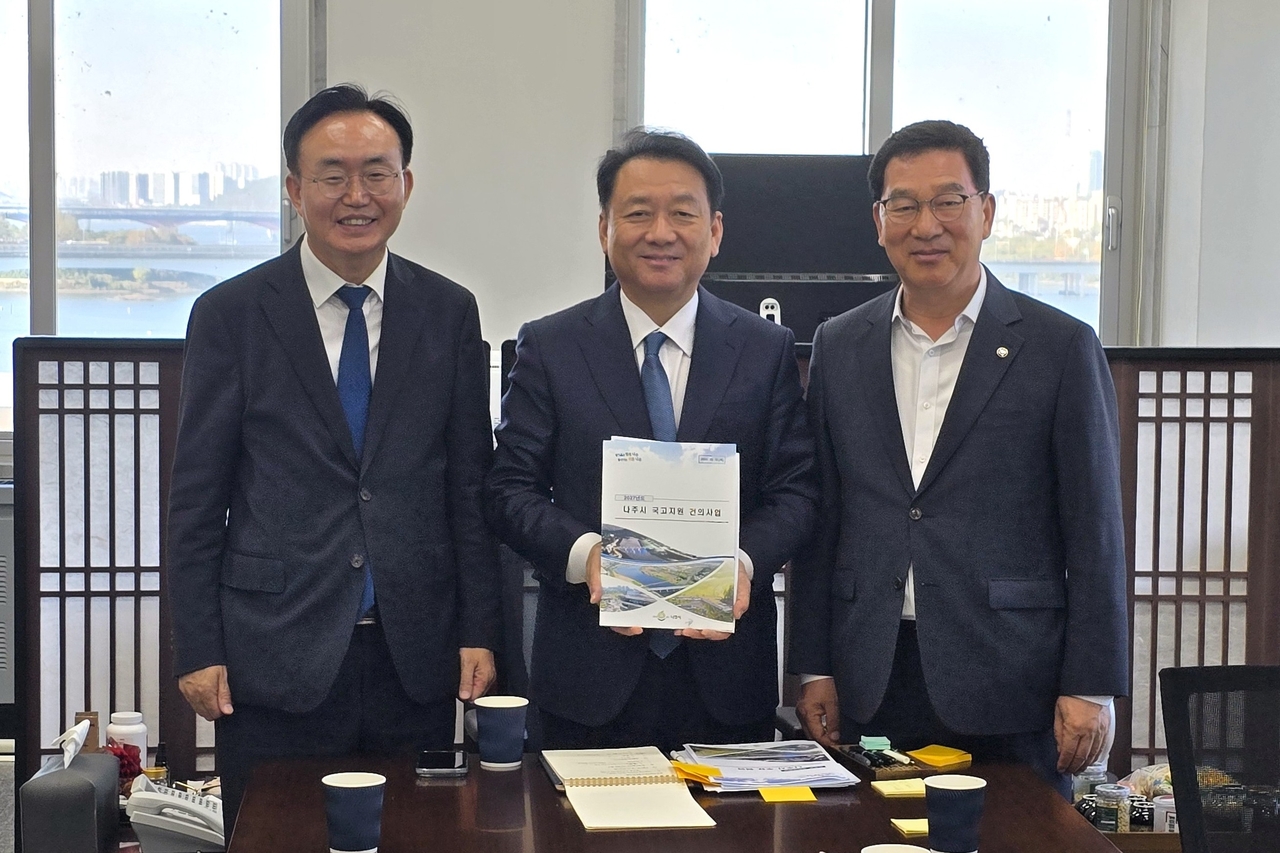
Naju is ramping up efforts to secure national government funding for key projects ahead of the National Assembly's review of the 2027 budget proposal, targeting initiatives in future energy industries, tourism infrastructure along the Yeongsan River and agricultural competitiveness.
The city said Monday that Mayor Yoon Byung-tae recently visited the National Assembly, where he met with Lee Gwang-jae, chairman of the Assembly's Special Committee on Budget and Accounts, alongside local lawmaker Shin Jeong-hun, who represents the Naju-Hwasun constituency. Yoon explained the need for the city's major projects and requested active support during the budget deliberation process.
The visit was arranged to secure national funding for projects that Naju sees as key drivers of its future growth, ahead of the Assembly's full-scale budget review.
The six projects Naju put forward total 175.6 billion won ($133 million) in combined project costs. They include building infrastructure for high-power semiconductor modules and supporting related businesses (45 billion won); developing a GX·AX platform for the autonomous development of climate-tech materials and components (46 billion won); establishing an energy community cloud-sharing platform covering information strategy and master planning (49.8 billion won); building a commercialization support base for key power equipment used in advanced industries (25 billion won); connecting a premium cycling path through the Yeongsan River waterfront flower complex (2 billion won); and supporting the hosting of the 2027 International Agriculture Expo (7.8 billion won).
Yoon said sustained national-level investment is needed to strengthen South Korea's competitiveness in future energy industries, pointing to Naju's advantage as a hub where energy public institutions and companies — including Korea Electric Power Corporation and the Korea Institute of Energy Technology (KENTECH) — are concentrated.
The high-power semiconductor module infrastructure project aims to build a foundation for strengthening technological competitiveness in the high-power semiconductor sector, which is essential for future power and advanced industries, while supporting research, development and commercialization by related companies.
The project to build a commercialization support base for key power equipment in advanced industries focuses on boosting the competitiveness of Naju's energy industry ecosystem — responding to growing demand for power facilities driven by the expansion of advanced industries and supporting the development and commercialization of core equipment.
Yoon also outlined the need to build a new energy industry foundation that integrates climate technology with digital capabilities.
The GX·AX platform for climate-tech materials and components would enhance AI- and digital technology-driven development capabilities, while the energy community cloud-sharing platform would create the infrastructure needed to efficiently link and utilize the region's energy data and resources.
Naju expects these projects to go beyond standalone research and development, generating technological innovation, commercialization, investment and job creation among local companies — ultimately strengthening South Korea's energy industry as a whole.
Yoon also raised key issues in tourism and agriculture.
The Yeongsan River waterfront cycling path project would connect a gap in the cycling route running through the riverside park along the nationally managed Yeongsan River, improving continuity of existing waterfront facilities and enhancing convenience and safety for residents and visitors alike.
Yoon also requested national funding for the successful hosting of the 2027 International Agriculture Expo, explaining the need to link Naju's agricultural and rural resources with future farming technologies to boost agricultural competitiveness and stimulate the local economy.
Following this National Assembly visit, Naju plans to closely monitor progress on each project and continue strengthening cooperation with local politicians, central government ministries and the Assembly until the budget review is complete.
"The projects we proposed are core initiatives for creating new growth engines for the region, so I will work closely with Assembly member Shin Jeong-hun and continue visiting central ministries and the National Assembly to make the case for them — ensuring they are fully reflected in national policy and the budget," Yoon said. "I will do everything I can to secure the maximum possible national funding right through to the final stage of the Assembly's budget deliberations."
kkm9971@heraldcorp.com