Information-sharing lag with US raises concerns over unequal burden on domestic investors
Ruling party bill ties tax start date to data-exchange timeline
Repeated delays fuel debate over credibility of tax policy
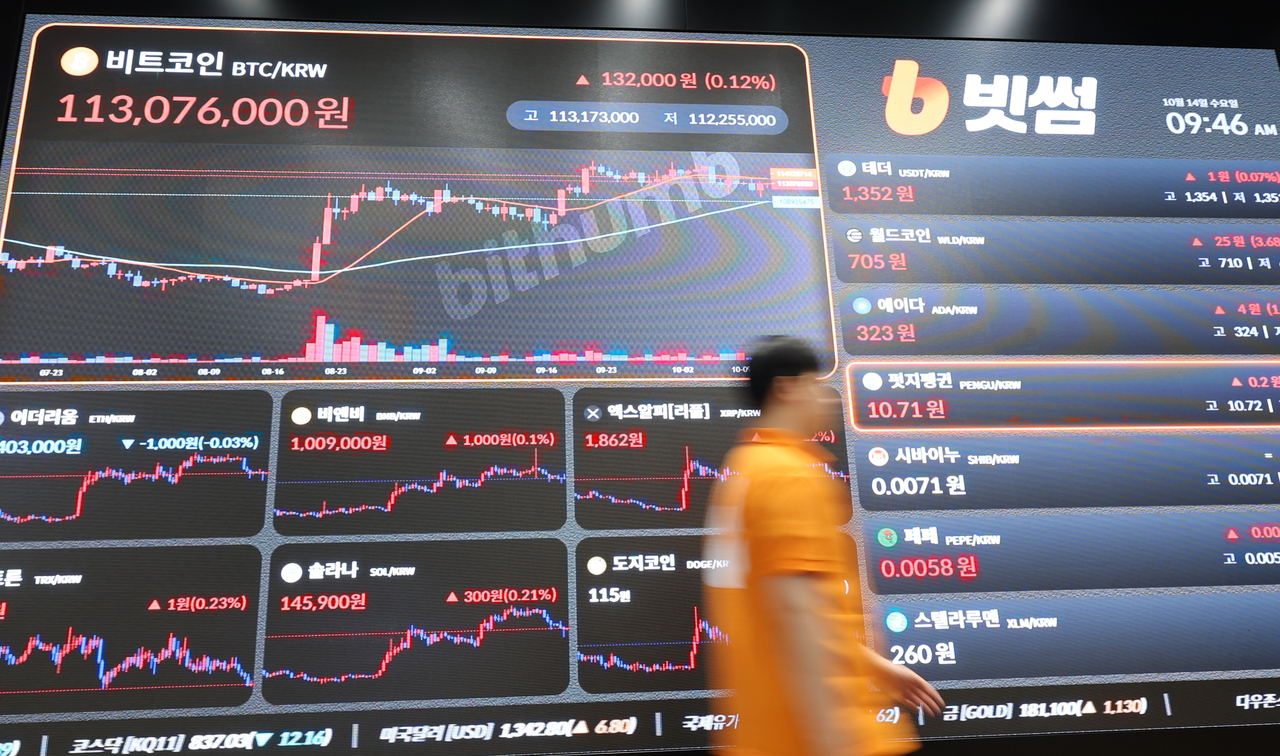
South Korea's government is moving toward postponing a virtual asset tax set to take effect in January, raising the prospect of a fourth consecutive delay. Officials and lawmakers cite concerns that proceeding with the tax while the country still lacks automatic access to transaction data from the United States could place a disproportionate burden on users of domestic exchanges. Youth sentiment is also being weighed as a political factor. With proposals now circulating to push the start date back to 2029, the likelihood of another deferral is growing — though critics warn that repeated delays are eroding the predictability and credibility of tax policy.
Cheong Wa Dae is leaning toward suspending the tax again and is reviewing options, according to government officials and political sources Monday. On Sunday, the presidential office said in a press notice that it was considering another deferral but that no decision had been made.
The virtual asset tax was introduced through an amendment to the income tax law in 2020. Under the scheme, gains from the transfer or lending of virtual assets — after deducting acquisition costs and other necessary expenses — are taxed at 22 percent (including local income tax) on amounts exceeding the basic deduction of 2.5 million won ($1,890) per year. Originally scheduled to take effect in 2022, the tax has been delayed three times due to inadequate taxation infrastructure and insufficient investor protections, pushing the start date back to January 2027.
The central argument for another delay is that the United States will begin exchanging virtual asset transaction data with South Korea later than other countries. Under the OECD's Crypto-Asset Reporting Framework (CARF), South Korea and 45 other countries are set to begin exchanging information next year. Canada, Switzerland, Singapore, Hong Kong and 25 other countries will join in 2028, while the US will not participate until 2029. Imposing the tax before automatic access to US transaction data is available, critics argue, would unfairly concentrate the tax burden on users of domestic exchanges.
Political calculations tied to youth opinion are also said to be a factor. With the government looking for ways to reverse a slide in approval ratings, some observers suggest officials are wary of alienating younger voters who are particularly sensitive to asset-related policies.
Legislative efforts to delay the tax are gaining momentum. Democratic Party of Korea lawmaker Park Min-gyu and 13 colleagues introduced a bill on Oct. 16 that would set the tax start date two years after the first year in which cross-border virtual asset transaction data is exchanged. If the first exchange occurs in 2027 as expected, the tax would not take effect until 2029. The People Power Party also supports a delay, citing inadequate taxation infrastructure, and has introduced its own bills proposing a start date of 2029 or 2030.
Within the ruling camp, however, opinion is divided between those who favor proceeding on schedule and those who say the regulatory framework must be strengthened first. Democratic Party of Korea leader Kim Min-seok said Thursday on the party's YouTube channel that the party would hold intensive discussions on whether to proceed as planned or revise the system, and would reach a conclusion before the end of the year.
The virtual asset industry has welcomed the prospect of a delay, arguing that imposing the tax now could push investors toward overseas exchanges or decentralized finance platforms, and that more time is needed to build the infrastructure required to track transaction data and calculate acquisition costs.
Critics, however, say repeated deferrals are undermining tax equity and policy credibility. Given that the United States, the United Kingdom, Japan and other major economies already tax virtual asset income, they argue South Korea should proceed with implementation while working to improve the system — even if obtaining overseas transaction data remains difficult.
People's Solidarity for Participatory Democracy's Tax and Fiscal Reform Center issued a statement Sunday urging the government to proceed with the tax as scheduled, warning that repeatedly delaying it for political and electoral reasons would damage the consistency and predictability of tax policy.
The government and the ruling party are expected to hold consultations soon to discuss whether to defer the tax again. A final decision on the deferral and the specific start date is expected to emerge from National Assembly deliberations on amending the income tax law, with a conclusion anticipated in late November or early December.
y2k@heraldcorp.com