Plant Protection Act revised, effective April 28, 2027
Government permit to allow pathogen use in research, pesticide manufacturing
Unauthorized release of pests punishable by up to 3 years in prison
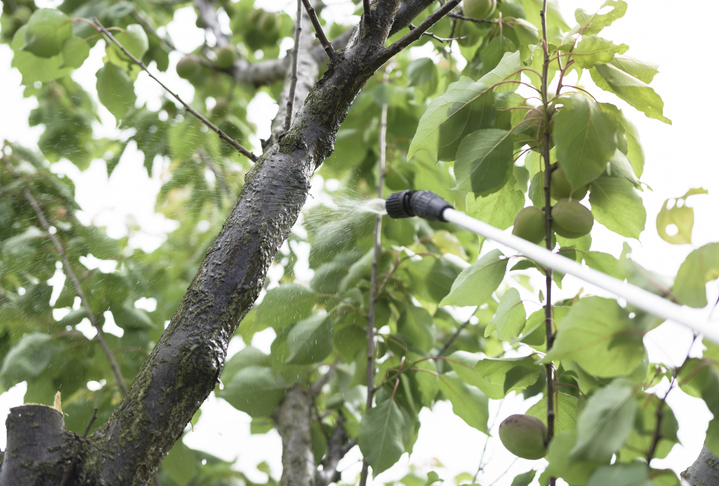
South Korea is opening the door to developing homegrown pesticides against fire blight, a bacterial disease that kills apple and pear trees. Pathogens subject to mandatory control under the law — including the fire blight bacterium — had long been off-limits for research and product development. Under a revised law, researchers and manufacturers will be able to use such pathogens with government approval.
The Ministry of Agriculture, Food and Rural Affairs announced Monday that the revised Plant Protection Act will be promulgated Tuesday and take effect April 28, 2027.
The core change is a new legal basis allowing controlled pests to be used in research and development. With approval from the agriculture minister, institutions and companies may use the pathogens for testing, research or pesticide manufacturing.
Fire blight is the primary target. The bacterial disease affects apples, pears and other fruit trees, turning infected tissue black as if scorched by fire. In severe cases the entire tree can die, and the disease is subject to government-mandated control under the Plant Protection Act.
Because fire blight has been classified as a pest requiring mandatory eradication, domestic research institutions and companies have faced significant barriers to using the pathogen in pesticide development.
The pesticides currently used to control fire blight rely on imported active ingredients — the compounds responsible for a pesticide's efficacy. Even when pesticides are produced domestically, the key raw materials must be sourced from abroad.
The government expects the legal revision to spur research and development of domestically produced pesticides. Once homegrown products reach commercialization, officials said, South Korea could reduce its dependence on imported active ingredients, give farmers a wider range of control options and cut the cost of government-funded eradication programs.
However, strict safety obligations will apply even to those granted permits to use pathogens for research and development.
Permit holders are prohibited from releasing or removing approved pathogens outside their facilities and must destroy them once research or manufacturing use is complete. Violations carry a penalty of up to three years in prison or a fine of up to 30 million won ($22,600).
The revision also establishes a framework for re-delegating permit-processing authority to improve efficiency. The agriculture minister may re-delegate to the heads of agencies such as the National Institute of Agricultural Science the authority originally delegated to the Rural Development Administration commissioner.
The Ministry of Agriculture, Food and Rural Affairs plans to finalize the subordinate regulations needed to govern permit procedures and safety management in time for the law's entry into force next April.
"We expect this revision to the Plant Protection Act to invigorate research and development related to pest control and to allow the results of domestic pesticide development to be applied more quickly in the field," said Jeong Hye-ryeon, the ministry's food policy director general. "We will prepare the subordinate regulations and ensure the system operates smoothly from the moment the law takes effect."
adastra@heraldcorp.com