Standard taxi base fare to rise to 4,800 won from Sunday; average increase of 11.4% reflects rising operating costs and public affordability
Daejeon city announced Monday that it will raise taxi fares by an average of 11.4 percent starting Sunday — the first adjustment in about three years since the standard taxi base fare was last increased in July 2023.
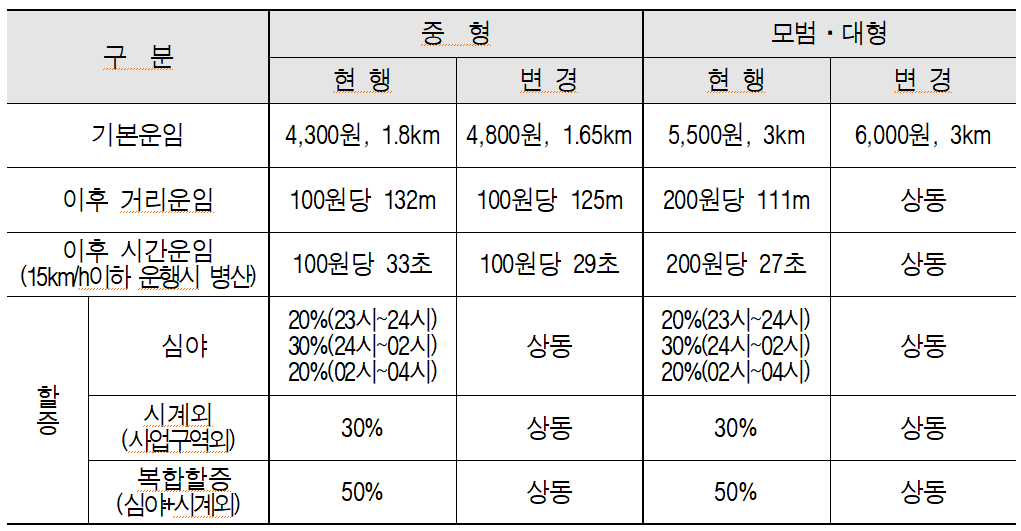
Under the new rates, the base fare for standard taxis will rise from 4,300 won to 4,800 won, while the initial distance covered by the base fare will shorten from 1.8 kilometers to 1.65 kilometers. The per-unit distance rate will also tighten, from 132 meters per 100 won to 125 meters, and the time rate will move from 33 seconds per 100 won to 29 seconds.
For premium and large taxis, the base fare will increase from 5,500 won to 6,000 won, with the initial distance remaining at 3.0 kilometers. Their distance and time rates will stay unchanged at 111 meters and 27 seconds per 200 won, respectively.
The city said it weighed rising operating costs, the financial conditions of the taxi industry, and the economic burden on residents when determining the scope of adjustments to the base, distance, and time rates.
A cost-analysis study found that current fares warranted a 13.5 percent increase, and the taxi industry had requested an average rise of 12.1 percent. In response, the city set the average increase at 11.4 percent for standard taxis and 2.8 percent for premium and large taxis, taking into account the impact on household finances and consumer prices. The decision was finalized after reviews by the transportation committee on Sept. 22 and the consumer policy committee on Oct. 15.
In connection with the fare increase, labor and management in the general taxi sector agreed to maintain current transport revenue standards for six months to help stabilize drivers' incomes and improve working conditions. Both sides also committed to improving service quality, including courteous and safe driving.
In addition, the city said it plans to work with the taxi industry to improve service through courteous and safe operations, while continuing to strengthen monitoring of road conduct and enforcement of traffic regulations.
"As the fare increase places a greater burden on residents, service improvements must follow in kind," said Park Seung-won, head of Daejeon's transportation bureau. "We will work with the taxi industry to create a friendly and safe operating environment so that residents can experience a noticeably better taxi service."
kwonhl@heraldcorp.com