Gene scissors restore sodium transport function
Approach may work regardless of patient-specific mutations
South Korean researchers have successfully corrected a genetic defect underlying Gitelman syndrome, a rare hereditary kidney disease, and restored tubular function in the kidney — raising hopes for a new treatment that could work regardless of the specific mutation a patient carries.
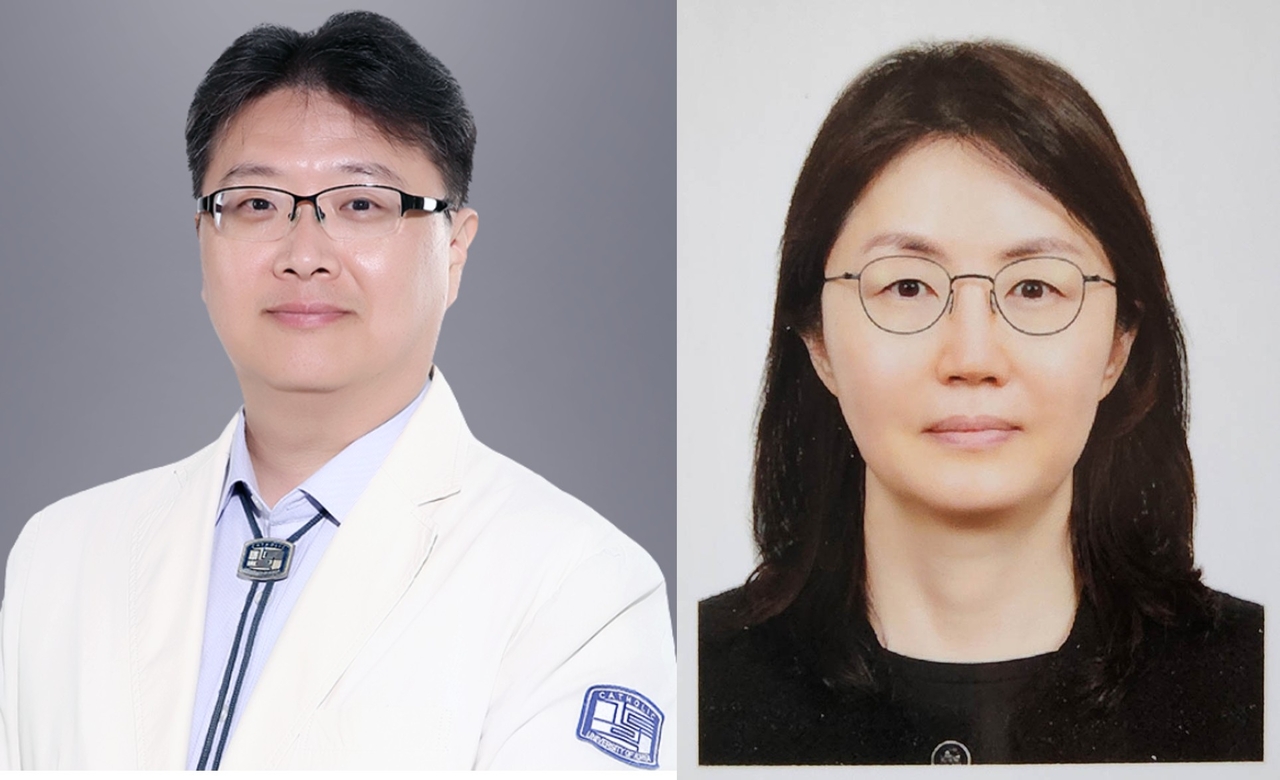
Seoul St. Mary's Hospital of the Catholic University of Korea announced Monday that a research team led by Chung Byung-ha, a professor in the nephrology department, used CRISPR gene-editing technology to correct the genetic defect in cells from Gitelman syndrome patients and confirmed the recovery of sodium transport function in kidney organoids.
Gitelman syndrome is a rare hereditary kidney disease that affects roughly one in every 40,000 people. It is caused by mutations in the SLC12A3 gene, which encodes a transporter responsible for the reabsorption of sodium and chloride in the kidneys.
The defect causes excessive salt loss through urine, leading to electrolyte imbalances such as hypokalemia and hypomagnesemia. If left untreated, chronic electrolyte imbalance can progress to serious complications including fatigue, lethargy, arrhythmia, cardiac arrest and muscle paralysis.
No treatment targeting the root genetic cause has been available, leaving patients dependent on symptomatic care through electrolyte supplementation.
The research team used CRISPR/Cas9 gene-editing technology to insert a functional copy of the gene. They derived induced pluripotent stem cells from the blood of two patients carrying different mutations, then inserted the entire normal SLC12A3 gene at a specific chromosomal location.
Rather than correcting each patient's unique mutation individually, the approach inserts a complete functional gene — making it broadly applicable across a wide range of mutations.
The team then differentiated the gene-corrected stem cells into kidney organoids, which partially replicate the structure and function of real kidneys, and observed the resulting changes.
The amount of protein responsible for transporting sodium and chloride recovered to near-normal levels. Using normal organoids as a baseline of 100, the two patients' organoids scored 55 and 59 before correction; after correction, those figures rose to 89 and 93.
Sodium transport function was also restored. Signaling pathways that had failed to respond to angiotensin II — a hormone involved in blood pressure regulation — before gene correction began functioning similarly to normal organoids afterward. The organoids also recovered their response to thiazide diuretics, which inhibit sodium transport.
The research team said the study is significant for demonstrating the potential of a fundamental treatment for hereditary kidney disease. However, the findings remain at the proof-of-concept stage, confirmed in patient-derived cells and kidney organoids, and further research will be needed before an actual therapy can be developed.
"This research is meaningful in that it combined gene-editing technology, patient-specific stem cells and kidney organoid technology to demonstrate the potential for a fundamental treatment of hereditary kidney disease," Chung said. "Further research is needed to advance gene delivery technology and physiological gene expression regulation, and to verify long-term safety and efficacy in animal models."
Lim Sun-woo of the Catholic University of Korea's Transplantation Research Institute served as the study's first author, and the research was conducted jointly with a team led by Lee Jae-young, a professor at Sungkyunkwan University's Samsung Advanced Institute for Health Sciences and Technology, among others. The study was supported by the National Research Foundation of Korea and the Korea Health Industry Development Institute, and the findings were published in the international journal Stem Cell Research & Therapy in October 2026.
Chung's research team also recently received the 2026 36th Science and Technology Excellence Paper Award for a separate study identifying the mechanism behind antibody formation in kidney transplant patients. That research revealed that Th17 cells and the IL-17 signaling pathway, in addition to B cells, are involved in the antibody formation process — pointing to new immunomodulatory targets for preventing kidney transplant rejection.
woo@heraldcorp.com