Korea Federation of SMEs surveys 1,000 young Koreans on job market perceptions
56.5% say wages and work environment matter more than company size
Poor working conditions, low pay cited as top reasons for avoiding SMEs
40.3% expect fewer hiring opportunities next year
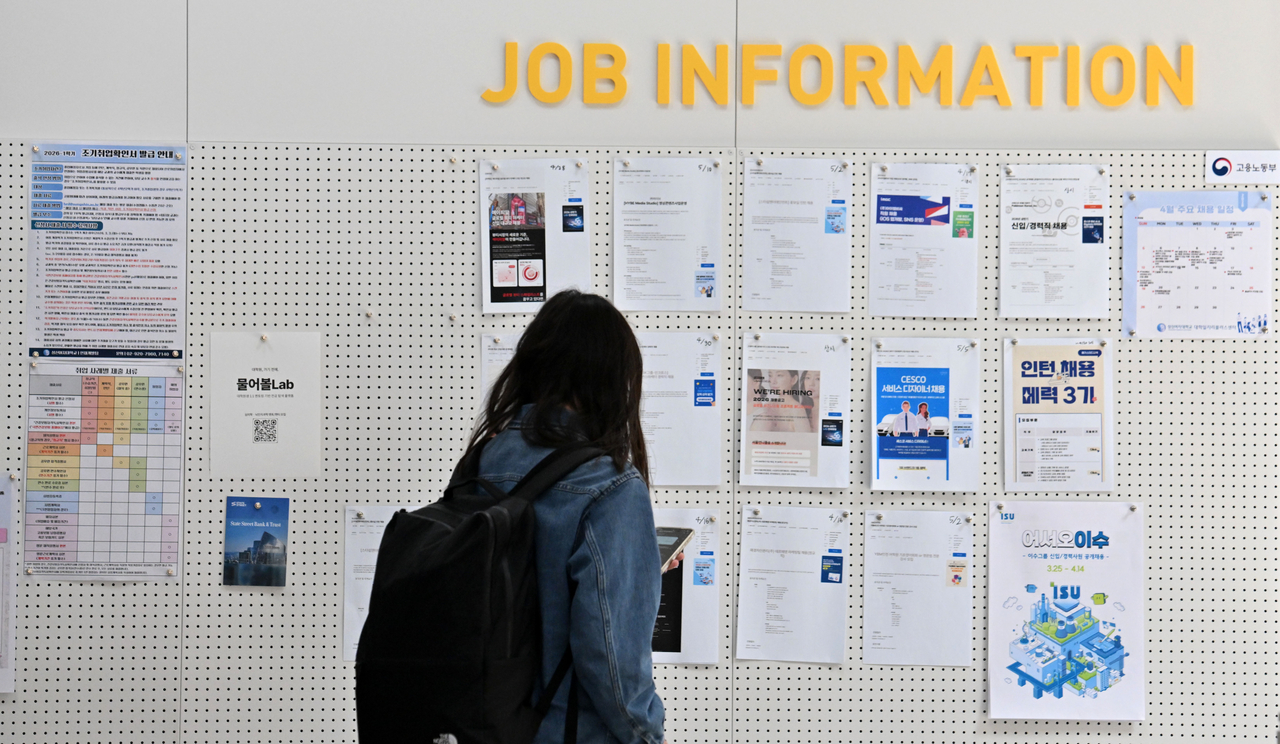
Six in 10 young Koreans say they want a minimum monthly salary of at least 2.5 million won ($1,890) before taxes, and most prioritize practical working conditions — wages and work environment — over company size when looking for a job, a new survey shows.
According to a survey on young people's perceptions of small and medium-sized enterprise jobs released Sunday by the Korea Federation of SMEs, the most common minimum salary expectation was between 2.5 million and 3 million won, cited by 35.6 percent of respondents. That was followed by 2.2 million to 2.5 million won (28.2 percent), 3 million to 3.5 million won (18.3 percent), 3.5 million won or more (9.5 percent), and under 2.2 million won (8.4 percent). In total, 63.4 percent of all respondents said they wanted a minimum monthly salary of at least 2.5 million won.
The survey was conducted from Aug. 26 to Sept. 9 among 1,000 young people between the ages of 19 and 39. The sample included 300 job seekers, 400 currently employed, 200 who were neither working nor seeking work, and 100 others.
When asked what factors matter most in choosing a job, respondents ranked wage level first at 64.7 percent, followed by working hours (51.9 percent) and job security (50.9 percent).
Asked whether company size or actual working conditions mattered more, 56.5 percent chose practical factors such as wages, work environment and growth potential. Among young people already working at small and medium-sized enterprises, that figure rose to 64.5 percent — 8 percentage points above the overall average.
Poor working conditions top reason young people avoid SMEs
The leading reason young people avoid working at small and medium-sized enterprises was poor working conditions and organizational culture, cited by 52.3 percent of respondents. Low wages came second at 49.8 percent, followed by uncertainty about career development and growth potential (36.4 percent) and concerns about job security (36.3 percent).
Among young people currently employed at small and medium-sized enterprises, 46.7 percent said they intended to stay. Among those not working at such firms, only 30.6 percent said they would consider taking a job at one.
Of 191 young people who had previously worked at a small or medium-sized enterprise, 58.7 percent said their total tenure had been less than one year. The most common reason for leaving was low pay, cited by 41.4 percent, followed by poor working conditions (37.2 percent) and excessive workload or long hours (37.2 percent).
The overlap between reasons for avoiding SMEs and reasons for quitting them — wages and working conditions — points to a broader challenge: expanding youth employment at smaller firms will require not only attracting new workers but also improving conditions that encourage them to stay.
40.3% of young Koreans expect fewer job opportunities next year
Young Koreans also painted a bleak picture of the current job market. Some 46.6 percent said hiring opportunities this year had decreased compared with last year, outpacing the 7.0 percent who said opportunities had expanded — a gap of 39.6 percentage points.
The outlook for next year was equally gloomy. Some 40.3 percent expected hiring opportunities in 2027 to decrease, far exceeding the 9.4 percent who expected them to grow.
The biggest difficulty young people reported facing in the job market was employers requiring prior work experience or practical skills even for entry-level positions, cited by 52.0 percent. The growing prevalence of mid-career, open-recruitment hiring was also flagged as a major obstacle by 48.7 percent.
More than half of respondents said they would consider working at a small or medium-sized enterprise outside the greater Seoul area under the right conditions. Overall, 55.3 percent said they would be willing to take such a job if wages, benefits and the nature of the work were suitable.
Among the conditions needed to make that a realistic option, housing support ranked first at 55.2 percent, followed by wages competitive with those in the greater Seoul area (47.5 percent) and commuting or transportation assistance (43.9 percent).
On the question of what the government should prioritize to improve the quality of SME jobs, 62.0 percent of respondents chose support for raising wages and welfare benefits for young workers already employed at such firms. That was followed by subsidies for hiring costs and social insurance contributions for new young employees (44.1 percent) and funding for job training and on-site skills development (41.6 percent).
Yang Ok-seok, head of the workforce policy division at the Korea Federation of SMEs, said narrowing the wage and benefits gap with large corporations and improving work environments and organizational culture were essential to drawing young people to smaller firms and keeping them there. "We will also work to strengthen long-term employment support so young people can settle stably at small and medium-sized enterprises, and improve living conditions — including housing and transportation — to help ease the labor shortages facing regional SMEs," Yang said.
boo@heraldcorp.com