Sales-linked fines needed for probe obstruction
Domestic firms face higher fine rates than foreign ones
Internal audit underway over alleged Hanwha probe leak
Fair Trade Commission Chairman Joo Byung-ki said Sunday that Coupang Inc is "no longer a lightweight" but "a heavyweight representing South Korea," warning that when such a company wields its market power, it becomes "like a weapon against economically vulnerable small business owners."
Joo made the remarks during an appearance on KBS1's Sunday Diagnosis Live, saying Coupang must "act responsibly in accordance with its weight class."
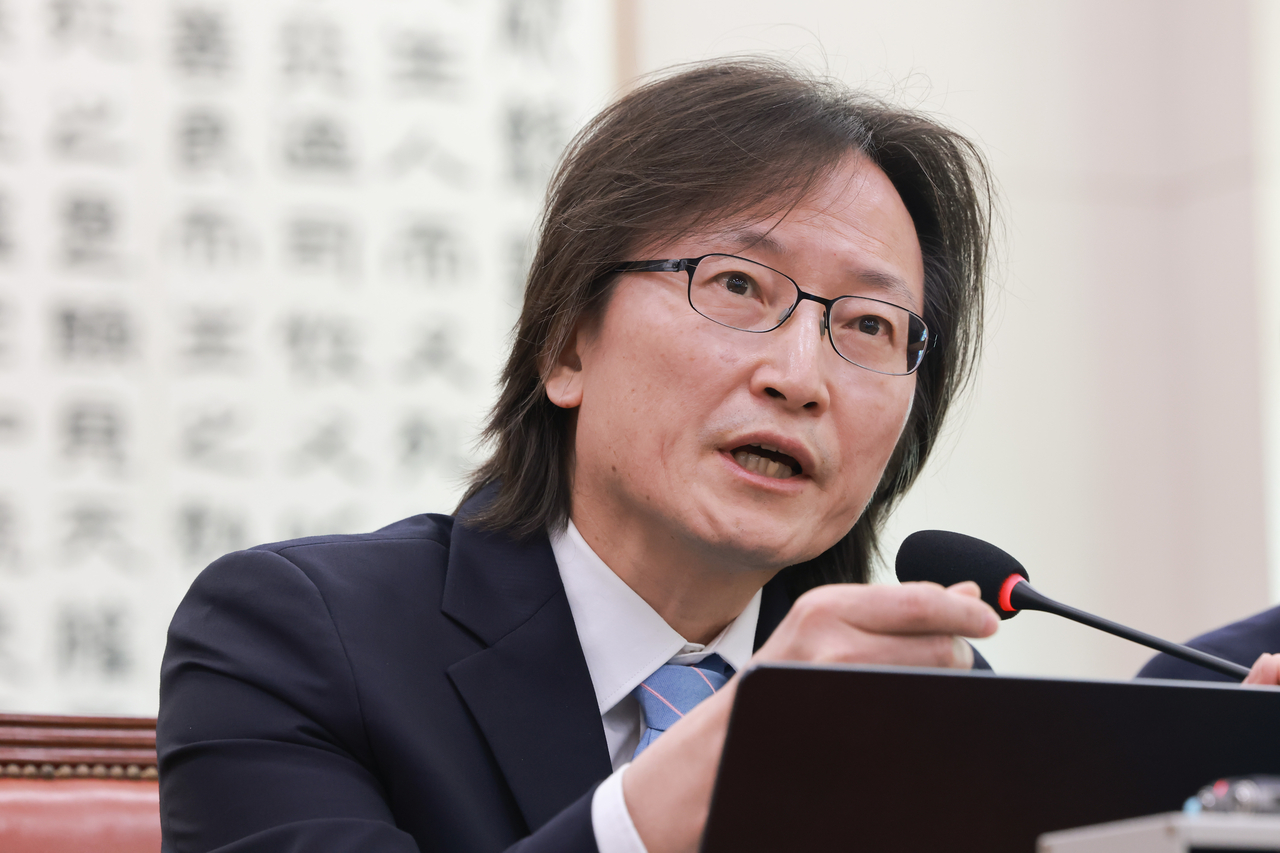
Joo said preventing such conduct is the FTC's duty, with administrative investigations as its starting point. He added that the commission has sent a review report recommending a fine for obstruction of its probe and that deliberation proceedings are now underway.
Asked whether the current penalties for refusing or obstructing investigations are too weak, Joo said South Korea's competition laws "are backward-country laws" that must be brought up to advanced-nation standards.
He said other competition laws allow for surcharges and compulsory performance fines for obstruction, as well as criminal sanctions. "The law must be amended so that surcharges can be imposed and so that compulsory performance fines can be levied when a party fails to comply with a document-submission order," he said.
On whether the FTC should be granted compulsory investigative powers, Joo said most businesses cooperate with the commission's administrative investigations and that "there is no major obstacle to law enforcement with administrative investigative authority alone at this point."
He added that strengthening investigative powers so that a surcharge of, for example, 1 percent of total sales can be imposed when a company refuses an investigation would be "far more efficient for law enforcement" than the current approach.
Joo rebuffed US concerns that the FTC's investigation of Coupang Inc discriminates against American companies. "The FTC's law enforcement does not discriminate by nationality," he said. "Enforcement is applied to companies of all countries without discrimination."
He said a comparison of past sanctions shows that domestic companies actually face higher surcharge rates than foreign ones. "The reason the absolute fine amounts for foreign companies are high is that the overseas firms we sanction are enormous companies like Google and Microsoft," he said.
On allegations that investigation information was leaked ahead of the FTC's probe of Hanwha Group, Joo said the commission became aware of signs of obstruction during the on-site investigation. "Given that allegations of an information leak have been raised, we are conducting an internal audit," he said.
Asked whether the leak was an individual's misconduct, he said, "That has not been confirmed — the audit is ongoing."
Joo rebuffed suggestions that a high rate of court-granted stays of FTC dispositions indicates the commission is imposing excessive sanctions. "A decision to grant a stay of execution is not a ruling that the FTC's disposition is unlawful," he said. "The purpose of granting a stay is to prevent harm that would be difficult to remedy."
On the structure in which the FTC handles both investigation and adjudication while appeals against its dispositions operate under a two-tier court system, Joo said most OECD member countries operate under the same framework. "The adjudication and investigation arms are run with strict separation," he said.
He added that dragging out judicial proceedings excessively "ultimately causes great hardship for economically vulnerable parties," and that adding a first-instance trial, extending proceedings by one to two years, "would cause enormous disruption to the management of small and medium-sized enterprises."
Asked why the newly launched Special Investigation Planning Unit chose food companies as its first target, Joo said food is "closely tied to people's daily lives" and that many market sectors affecting ordinary citizens — not just food — have become monopolized or oligopolized in South Korea.
He went on to say that addressing these issues urgently and conducting such investigations would also serve as "a wake-up call to other producers in sectors closely affecting people's lives."
On cartel sanctions, Joo said collusion has persisted because penalties through law enforcement have in many cases fallen short of the illicit gains. "As seen in the flour and sugar cartel cases, we are trying to set surcharge levels that sufficiently exceed the illicit profits," he said.
He said that under existing regulations, even serious cartels could have their surcharges reduced to as low as 0.5 percent. "Through a revision to the guidelines, we have amended the rules so that 0.5 percent is no longer the floor for serious cartels — it must be at least 10 percent," he said.
Joo also raised the need for separate legislation on online platform regulation. "South Korea has a larger online platform economy as a share of its total economy than any other country in the world," he said, adding that South Korea's online food delivery market is twice the size of Japan's and larger than those of the United Kingdom and Germany combined.
He said revamping the regulatory framework to fit the characteristics of the platform economy is "the most urgent task," adding that doing so requires legislative amendments and new laws, including a dedicated online platform act and a special act on online food delivery.
Addressing the view that platform regulation could stifle corporate innovation, Joo said competition law is designed to prevent large, economically powerful companies from using excessive market power to obstruct the innovative efforts of others. "Regulation of platforms actually helps invigorate competition among platforms and build a more innovative platform ecosystem," he said.
On a proposal to raise the mandatory shareholding threshold for listed subsidiaries of holding companies from the current 30 percent to 50 percent, Joo said the more precise framing is not a raise but a rollback of a discount. "The 30 percent rate was a reduced threshold granted specifically for listed companies," he said. "Listed companies should be held to a higher standard of accountability. There is no reason for the discount."
He went on to say that the intent of the legislative amendment is to require responsible investment without relying on other people's money, adding that the change would also reduce the incentive for duplicate listings.
y2k@heraldcorp.com