Ministry of Land, Infrastructure and Transport finalizes winter schedule; Gimhae, Cheongju airports to see expanded slots
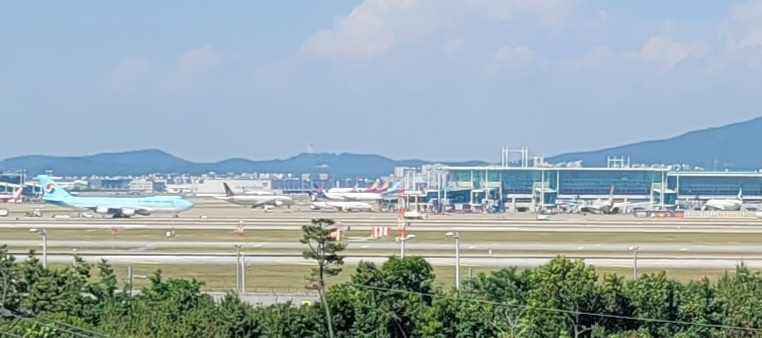
Flights at Gimhae and Cheongju airports will increase during the winter season beginning Sunday. The expansion is expected to improve travel convenience for local residents and broaden their choice of air services. Flights to and from major cities in Japan and China, where demand has been rising, will also grow by 546 per week.
The Ministry of Land, Infrastructure and Transport finalized the schedule for regular international and domestic flights covering the winter season from Oct. 25 through March 27 next year, saying travelers will feel the difference.
The most notable change is an increase in slot capacity — the number of aircraft operations permitted per hour — at Gimhae and Cheongju airports. At Gimhae, daily slots will rise from 354 to 370 on weekdays and from 486 to 540 on weekends. At Cheongju, the figures will go from 132 to 149 on weekdays and from 144 to 180 on weekends.
On international routes, 84 airlines — 11 domestic and 73 foreign — will operate up to 5,353 weekly flights across 264 routes in 44 countries, up 380 from the 4,973 weekly flights recorded during last year's winter season.
By country, the increases are concentrated on Japan and China, where inbound demand has grown. Flights to Japan will rise by 314 per week compared with the same period last year, while those to China will increase by 232. Six new nonstop routes to Chinese airports will also launch for the first time, including Incheon–Ningbo (Air Premia), Incheon–Linyi (Trinity), Busan–Guangzhou (Air Busan), Cheongju–Xiamen (Eastar Jet) and Jeju–Shijiazhuang (Spring Airlines).
On domestic routes, airlines will operate up to 1,735 weekly flights across 20 routes — 13 serving Jeju and seven connecting inland cities. The Incheon–Jeju route, which resumed service in May, will expand from two to three flights per week on the back of strong market demand.
The ministry said it carefully reviewed route operation plans to ensure passengers are not inconvenienced by the merger of Korean Air and Asiana Airlines, scheduled for Dec. 17 during this winter season, and actively supported the airlines in obtaining approvals from overseas aviation authorities.
The ministry added that it thoroughly reviewed airlines' safety management plans, including changes in operating scale and aircraft deployment compared with the previous season, to ensure safe flight operations going forward.
Jeong Chae-gyo, director general of the ministry's aviation policy office, said Incheon Airport's international passenger traffic ranked first in the world for the first time since the airport opened, in the first half of this year. He said aggressive policies to revitalize regional airports have also driven a sharp rise in passenger numbers at those facilities. "We will continue working to expand the public's travel choices and improve their convenience day by day, while redoubling our efforts to ensure airlines operate safely," he said.
Among domestic airports, Incheon serves the most international destinations this winter with 164 routes, followed by Gimhae with 40, Jeju with 25, Cheongju with 21, Daegu with 14 and Gimpo with eight.
smh@heraldcorp.com