Mixed results on Korea Inclusive Finance Agency's loan-matching platform
Gap between credit data and individual lenders' screening criteria drives divergent outcomes
Actual application counts and approval rates remain undisclosed
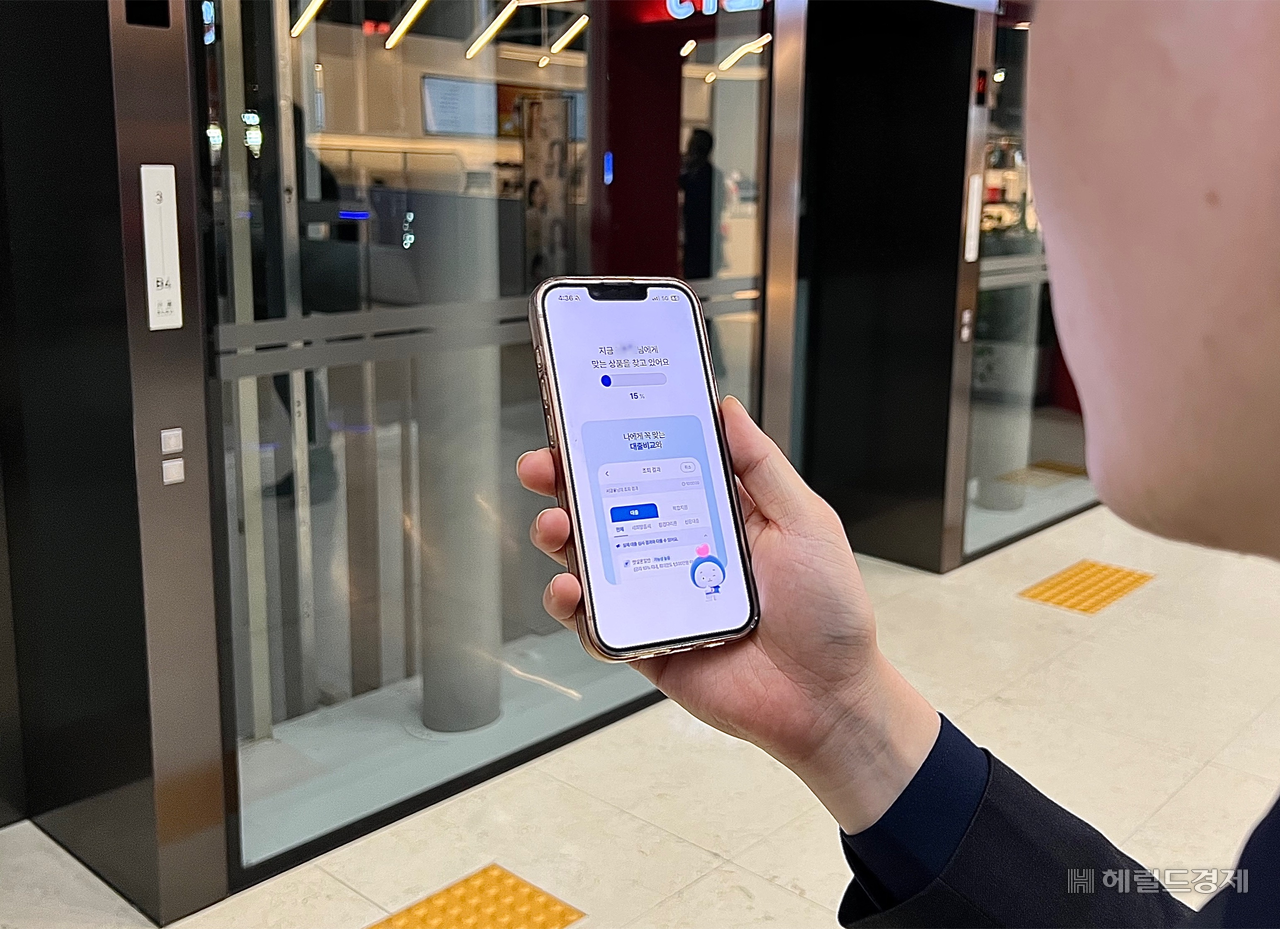
"Every other loan comparison app rejected me, but through this platform I was able to borrow 10 million won ($7,550)."
In September, a user identified only as A borrowed 10 million won from a savings bank through the Korea Inclusive Finance Agency's loan-matching platform. While other apps had turned him down, he cleared both the preliminary and final screening stages on the platform. "The final review came back at the full 10 million won — no reduction," he said.
Another user, identified as B, had a different experience. "A Busan Bank bridging loan product showed up in my search results, but I couldn't actually apply because of restrictions on opening a new account," B said. A separate user was shown a preliminary credit limit of 30 million won, only to be rejected when the formal review came through.
The diverging outcomes illustrate a broader pattern: whether a loan inquiry on the platform translates into an actual disbursement varies widely from user to user.
According to data submitted to Democratic Party of Korea lawmaker Park Min-gyu of the National Assembly's Political Affairs Committee, the platform recorded 1,498,168 loan referrals in the first half of this year. Actual loan disbursements totaled 60,082 cases — an execution rate of roughly 4 percent against total referrals. The rate was 2.5 percent for banks and 4.3 percent for non-bank financial institutions.
The Korea Inclusive Finance Agency cautioned, however, that the figure should not be read as an approval rate. When a user searches for loan products, the platform simultaneously queries multiple lenders and presents all eligible options. If 10 products are returned for a single user, that counts as 10 referrals. Even if the user applies for and receives just one of them, the execution rate works out to only 10 percent — a structural quirk that makes the ratio appear lower than it is.
"Referrals are generated in the process of finding the most suitable loan products for each customer," an agency official said. "Because multiple steps — application, approval and disbursement — follow after a product is presented, a simple comparison of referral counts and disbursement counts can make the lending outcomes look worse than they are."
The actual volume of loans brokered through the platform has grown. According to data the agency released in August, loans arranged through the platform in the first half of this year totaled 329.4 billion won, up 10.2 percent from the same period a year earlier. Over the same period, the platform also connected about 36,000 users to composite support services covering employment, welfare and debt restructuring. Beyond government-backed loan products, the platform also offers general credit loans from private lenders and dormant-deposit inquiries, positioning itself as a one-stop financial service.
Even so, a product appearing as available in a preliminary search does not guarantee an actual loan. The credit data the platform uses and the information individual lenders apply in their final underwriting can differ significantly.
According to the agency, the platform draws on data from credit bureaus NICE Evaluation Information and Korea Credit Bureau, along with income records, to show users which products they may qualify for at each lender, along with estimated rates and limits. When a user formally applies, the lender runs its own credit-scoring model. That process can factor in additional information — such as the applicant's existing loan history or delinquency record with that specific lender — that the preliminary search cannot fully capture, leading to a different result.
"We try to present products as accurately as possible using basic income and credit data, but it is difficult to verify every loan or delinquency record held by individual banks," an agency official said. "That is why the preliminary search result and the final lending decision can diverge."
The lack of publicly available data on actual application counts and approval or rejection rates also makes it hard to assess the platform's true performance. "There are many reasons a loan may not go through — a user may choose not to apply after seeing the results, or may apply and not be approved," an agency official said.
Differences in underwriting standards and lending strategies across financial institutions add another layer of complexity. With financial regulators having recently tightened household lending oversight, banks have grown more cautious across the board, and the criteria and available capacity vary from product to product.
"As household lending management has tightened recently, banks are applying stricter screening," a banking industry official said. "Because each bank has its own underwriting standards and lending strategy, whether a product that shows up as available on a platform ultimately gets approved can differ."

snsd@heraldcorp.com