Agriculture minister visits Hansik Festa at National Museum of Korea on Saturday, with events running through Sunday
Encourages kimchi and namul masters, samples K-food products from Korean companies
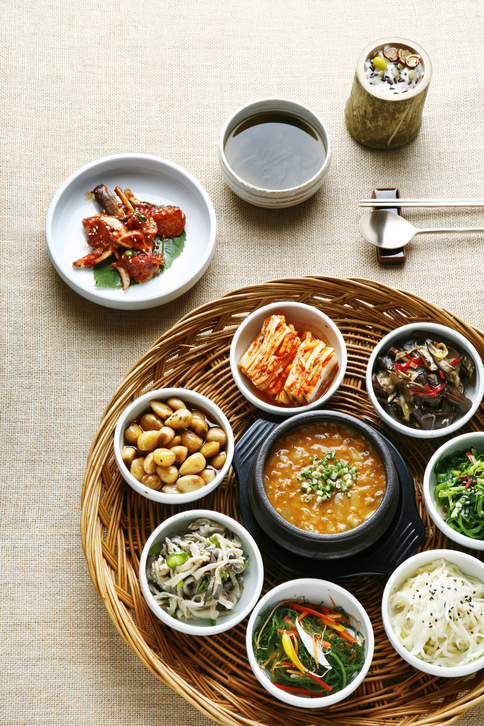
A hansik festival opened at the National Museum of Korea in Seoul to mark the first official legal holiday dedicated to Korean cuisine. Agriculture Minister Song Mi-ryeong made traditional rice cakes with foreign visitors and met with masters of kimchi and namul to promote the appeal of Korean produce and food.
The Ministry of Agriculture, Food and Rural Affairs said Song visited the 2026 Hansik Festa on Saturday at the National Museum of Korea, where she took part in hands-on food experiences and encouraged food masters and representatives of hansik companies.
This year's festival was organized to celebrate Hansik Day — Oct. 24 — which is being observed as a legal holiday for the first time. Running from Friday through Sunday around the Mirror Pond area of the National Museum of Korea, the event features hansik experience programs, cooking demonstrations, corporate promotional booths and pop-up restaurants.
Song first visited the booths of kimchi master Lee Ha-yeon and namul master Ko Hwa-soon, where she examined products made with kimchi and namul. She encouraged the masters who have preserved the flavors and techniques of traditional Korean food, and personally handed out samples to visitors to introduce traditional Korean food products.
At a hansik cooking class, Song made and tasted baramtteok — a traditional rice cake — together with foreign visitors, sharing a moment of cultural exchange through food.
Song also toured the corporate promotional booths. At Queens Bucket, which showcased sesame and perilla oils, she explored the potential of domestically grown ingredients. At the Seolbom booth, she tried rice cakes made with traditional liquor and hansik desserts. At the CJ CheilJedang booth, she looked over K-food products — including mandu and kimchi — being marketed overseas.
Song also stopped by booths promoting fresh domestic produce and traditional Korean liquor, introducing visitors to shine muscat grapes and cherry tomatoes and encouraging them to try samples.
"It is meaningful to see citizens and foreign visitors making and enjoying hansik together on this first Hansik Day," Song said. "I am grateful to the food masters who have preserved the traditions and values of hansik over the years, and to the company representatives showcasing new dimensions of Korean cuisine through creative endeavors."
She added that hansik is "a precious cultural heritage that embodies the nature and seasons of our land and the wisdom of our people's lives," and expressed hope that the occasion would inspire Koreans to rediscover the value of hansik in their daily lives while bringing people around the world closer to Korean food culture by making and enjoying it firsthand.
adastra@heraldcorp.com