Supreme Court upholds 13-year prison term handed down by lower courts
"Had a responsibility to protect and raise the victim more than anyone"
"The victim had no ability to resist … was only 42 days old"
"Culpability is very grave and the degree of social condemnation is significant"
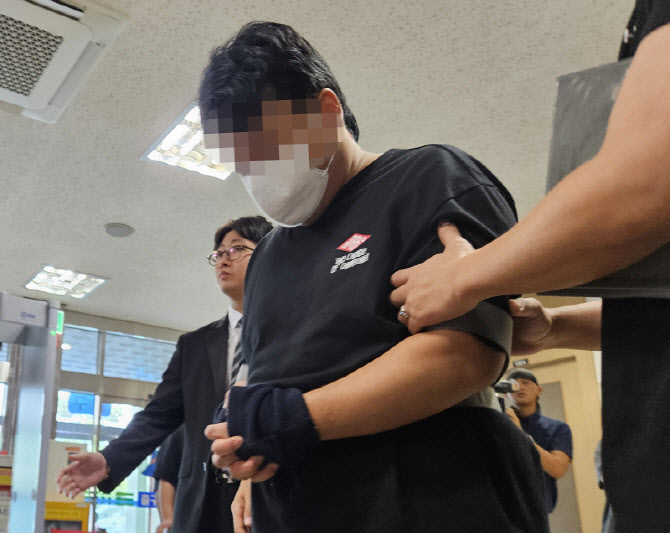
A father who beat his 42-day-old son to death because the infant was crying and fussing, then buried the body in a field, has had his 13-year prison sentence confirmed by the Supreme Court.
The Supreme Court's First Division, presided over by Justice Ma Yong-ju, upheld the lower court ruling against the man, identified only as A, who was charged under the Child Abuse Punishment Act with child abuse homicide and abandonment of a corpse. The court said the lower court's reasoning contained no violation of the rules of logic and experience and no misapplication of the law governing child abuse homicide.
A struck his infant son hard on the back of the head at the family's home in Daegu at around 10 p.m. on Sept. 10 last year because the child would not sleep and was fussing. The boy died of traumatic brain hemorrhage. A also faces charges of abandoning a corpse after burying the child's body in a nearby field.
The first trial, held in March, sentenced A to 13 years in prison. The court found that A had acted with dolus eventualis — an awareness that his actions could result in death — ruling that "it is reasonable to conclude that at the time of the assault, he recognized or foresaw at least the possibility or risk that his actions could cause the victim's death, yet proceeded anyway."
The court also condemned A's conduct in strong terms. "The defendant, as the victim's biological father, had a responsibility more than anyone to safely protect and raise the victim," it said. "Despite this, he struck the back of the head of a victim who had no ability to resist and was only 42 days old, simply because the child was crying and fussing, causing the victim's death. His culpability is very grave and the degree of social condemnation is significant."
According to the facts established by the court, after the assault A did not call emergency services even as his son lost consciousness and showed signs of abnormal breathing. To conceal the crime, he wrapped the body in towels, a waterproof pad and plastic sheeting, placed it in a burlap sack and loaded it into his vehicle. He then searched for a place to dispose of the body. In the early hours of the following morning he retrieved a shovel from a construction site, dug a hole in a nearby field and buried the child.
Evidence also emerged that A had been abusing his son before the fatal assault. Messages sent by A's wife — the child's biological mother, identified as B — to a friend in September last year revealed that A had repositioned a home security camera or moved to areas without camera coverage before hitting the child. B also told the friend that the boy had bruises on his cheek and side, and that A had asked her to apply bruise-concealing cream — referred to as KREAM in the messages — before a hospital visit for vaccinations, fearing the abuse would be discovered.
At trial, A acknowledged striking his son hard on the head but maintained he had no intent to kill. He also denied any prior abuse, arguing the charge of child abuse homicide could not stand. The court rejected both claims.
The appeals court, ruling in July, reached the same conclusion. It said it could find no reasonable grounds to conclude that the lower court's assessment of the evidence was clearly wrong or that its reasoning violated the rules of logic and experience to a degree that would make upholding the original ruling manifestly unjust.
yg@heraldcorp.com