Monthly rent hits 57% of new Seoul apartment leases
Districts where rent leads jeonse jump from 8 to 24 in a year
New jeonse contracts plunge 34% as 'semi-jeonse' becomes the norm
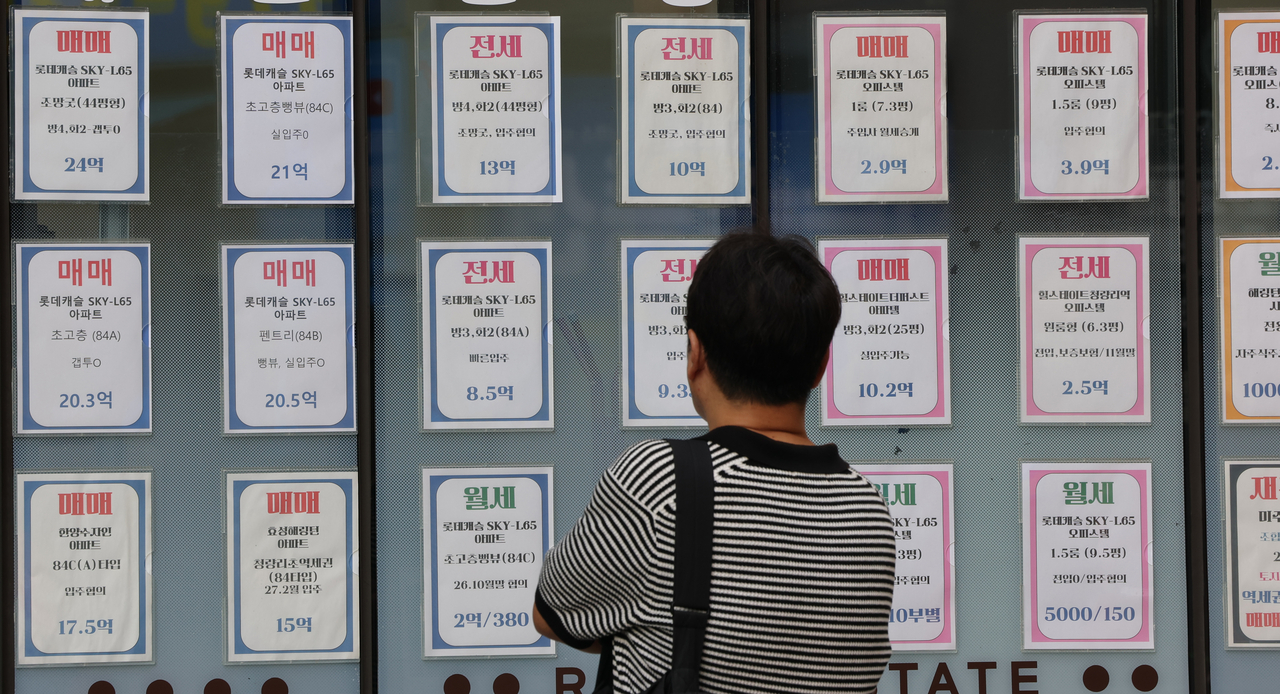
The share of monthly rent contracts in new Seoul apartment leases jumped 10 percentage points in a year to reach 57 percent, as jeonse deals plunged amid a wave of conversions to deposit-backed monthly rent arrangements. Jungnang-gu, on the outskirts of the capital, saw the monthly rent share of new leases soar to nearly 80 percent — the highest of any district in the city.
New monthly rent contracts down 0.18% while jeonse plunges 33.91%
According to the Ministry of Land, Infrastructure and Transport's actual transaction price disclosure system, new jeonse and monthly rent contracts for Seoul apartments totaled 90,230 from January through September this year. Of those, 51,427 — or 57 percent — were monthly rent deals, up sharply from 46.74 percent in the same period last year.
The volume of monthly rent transactions was little changed from a year earlier (51,522 contracts), but a steep drop in new jeonse agreements drove the shift in proportions. New jeonse contracts fell from 58,715 in the first nine months of last year to 38,803 over the same stretch this year — a decline of 33.91 percent. Jeonse accounted for roughly 99 percent of the total drop in new lease contracts, effectively shrinking the jeonse market and weighing on the broader rental sector.
Renewed jeonse contracts also declined, falling 10.13 percent from 48,015 to 43,151, though the drop was steeper in the new-contract market. Analysts attributed the trend to a shortage of jeonse listings, rising deposits that have increased the cost of moving, and tighter lending regulations that have made it harder for tenants to secure financing for new jeonse arrangements.
Yangcheon-gu the only district where jeonse still leads in new leases
The shift was even more pronounced at the district level. Of Seoul's 25 districts, only Yangcheon-gu recorded a monthly rent share below 50 percent — at 48.17 percent — in new lease contracts from January through September. Last year, 17 districts still had more jeonse than monthly rent contracts; this year just one remains.
Seongbuk-gu and Dongdaemun-gu saw new jeonse contracts fall by more than half in a single year. Seongbuk-gu posted the steepest decline of any district, with new jeonse contracts dropping 53.47 percent from 2,648 to 1,232. Monthly rent contracts in the district also fell 32.44 percent — from 2,164 to 1,462 — yet the monthly rent share still rose from 44.97 percent to 54.27 percent.
Dongdaemun-gu likewise saw new jeonse contracts plunge 51.44 percent, from 3,050 to 1,481. Monthly rent had already accounted for a majority at 52.16 percent last year, but that share climbed a further 12.41 percentage points to 64.57 percent this year.
Dobong-gu, Seocho-gu and Gangdong-gu also recorded declines in both jeonse and monthly rent contracts, but jeonse fell faster in each case, pushing the monthly rent share higher. The monthly rent share of new contracts rose from 39.44 percent to 50.88 percent in Dobong-gu, from 44.47 percent to 56.60 percent in Seocho-gu, and from 46.83 percent to 57.56 percent in Gangdong-gu.
Jungnang-gu recorded the highest monthly rent share in Seoul this year at 76.95 percent. The surge was driven largely by move-ins at youth public rental housing complexes in the district — including Mukdong Eight Place and Seijium Taereung Station — which pushed monthly rent contracts up from 1,439 to 2,661.
Average Seoul apartment monthly rent hits record 1.66 million won; experts warn of heavier housing burden
Conversions to so-called "semi-jeonse" — deposit-backed monthly rent arrangements in which a monthly payment is added onto an existing jeonse contract at renewal — have also become increasingly common. With new jeonse deals shrinking and existing contracts being converted to monthly rent, the shift toward rent-based leasing is spreading across both the new and renewal segments of the market.
Of the 35,161 renewed monthly rent contracts for Seoul apartments recorded from January through September this year, 3,472 — or 9.87 percent — involved cases where the previous monthly rent had been zero but a deposit was in place, meaning roughly one in 10 renewed monthly rent contracts had originally been a jeonse arrangement. Of those, 2,366 cases, or 68.15 percent, involved the original jeonse deposit being kept intact while a monthly rent payment was added on top. Another 464 contracts, or 13.35 percent, saw both the deposit and the monthly rent increase simultaneously.
While jeonse tenants bear the financial cost of raising a lump-sum deposit, semi-jeonse arrangements add a fixed monthly outlay on top of that, significantly increasing the overall housing burden. According to the Korea Real Estate Board, the average monthly rent for a Seoul apartment reached a record 1.66 million won ($1,250) last month — up 218,000 won from 1.44 million won in September last year.
Experts said the trend toward monthly rent is likely to persist, placing a growing strain on ordinary households. "Demand for jeonse in Seoul remains strong, but supply has fallen sharply due to regulations and other factors, and landlords prefer deposit-backed monthly rent arrangements," said Yoo Sun-jong, a real estate professor at Konkuk University. "From the tenant's perspective, disposable income shrinks and the cost of living inevitably rises."
shy@heraldcorp.com
hss@heraldcorp.com