Firm stance amid calls to resign, disciplinary controversies
Party restructuring centered on rank-and-file members
Fluctuating approval ratings raise concerns over reliance on hard-line base
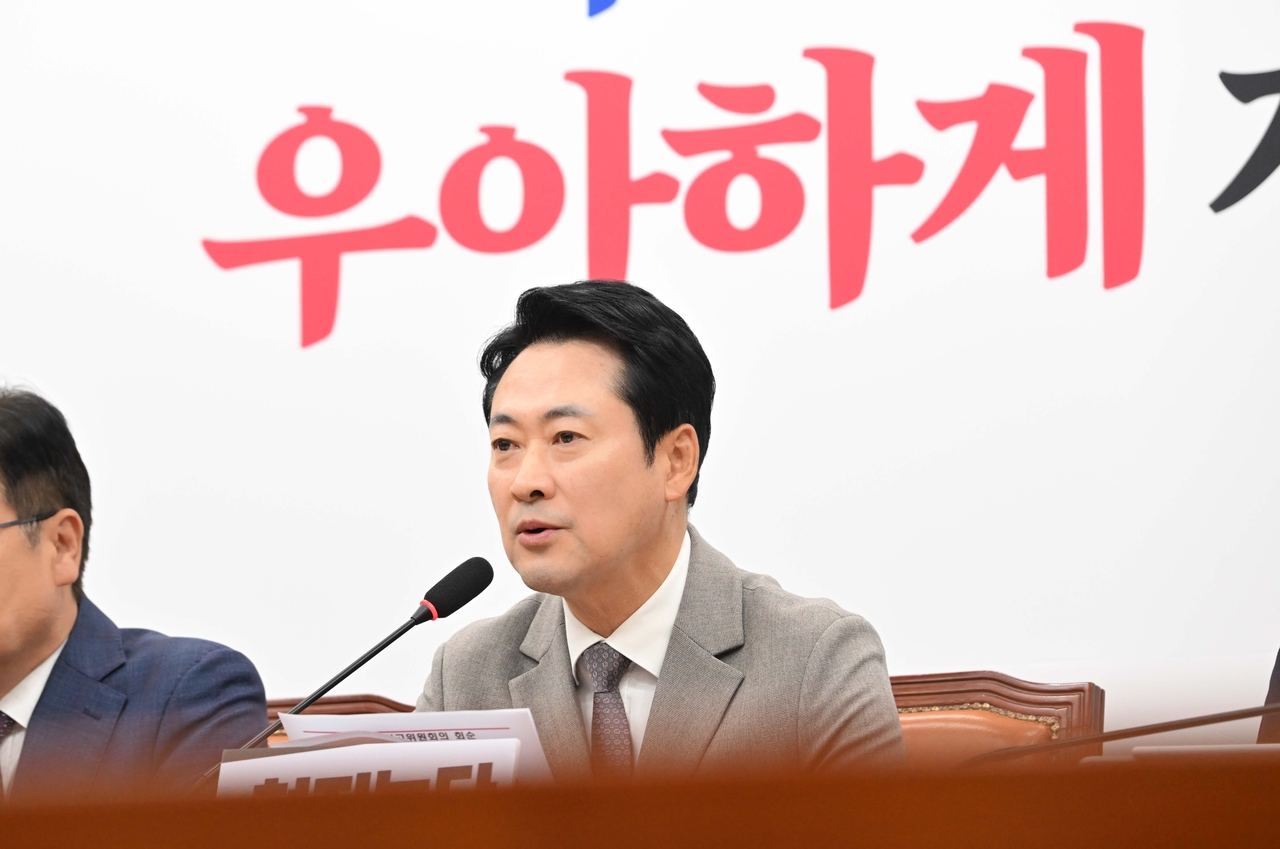
People Power Party leader Jang Dong-hyeok is on the verge of becoming the longest-serving party leader since the PPP's founding. Despite facing repeated calls to resign from the outset of his tenure — over factional disputes and demands that he apologize for the emergency martial law declaration — he has held on by pushing through a member-centered organizational overhaul and efforts to broaden the party's appeal. Healing internal divisions and expanding the party's support base toward the political center remain the key challenges for his remaining term.
Jang will surpass Sunday the 424-day tenure of former party leader Lee Jun-seok, becoming the longest-serving PPP leader since the party was founded in 2020. His predecessors fell short: former leader Kim Ki-hyun resigned after the party lost the Gangseo-gu district office by-election, and former leader Han Dong-hoon was unable to complete his term after the entire supreme council resigned en masse amid the political crisis surrounding former President Yoon Suk Yeol's impeachment.
Jang's tenure has been a near-constant succession of calls for accountability. Almost immediately after he defeated candidate Kim Moon-soo to win the party leadership last August, he faced demands for a clean break from former President Yoon — a stance his critics labeled "jeol-yun," or political severance. In December last year, controversy deepened when he declined to accept calls to apologize on the first anniversary of the emergency martial law declaration. Calls for his resignation resurfaced after the party's defeat in the June 3 local elections this year.
Jang's responses to the repeated resignation demands grew increasingly firm over time. When criticism mounted over the severance issue last December, he appealed for party unity, asking members to "help fill what is lacking." But after calls to step down intensified following the expulsion of former leader Han in February, he signaled the possibility of a party-wide membership vote and went on the offensive. After the local election defeat, he shrugged off questions about his future, saying whether he stayed on was "a matter for party members to decide." Last August, he drew a line, declaring there would be "no confidence vote or party convention" before his term ends next year. A senior party leadership official said the focus for the remainder of his term would be on expanding the party's reach.
Jang built a two-pillar leadership structure — first with former floor leader Song Eon-seog and then with floor leader Jeong Jeom-sik — reinforcing a governing approach centered on rank-and-file party members. Differences with the floor leadership emerged along the way. He and Song clashed over the question of apologizing for the emergency martial law declaration, with Jang characterizing the declaration at the time as "martial law to counter parliamentary tyranny."
After Jeong took over as floor leader in June, the party accelerated its member-centered restructuring. The leadership pushed to fully re-elect the chairs of all 254 local party chapters nationwide through direct membership votes. Facing strong internal resistance, the plan was scaled back to apply direct elections only to a subset of chapters deemed dysfunctional. The full re-election scheme was curtailed, but the underlying principle — giving rank-and-file members greater say over how the party is run — remained intact.
Since the local elections, Jang has also invested effort in broadening the party's appeal. In the immediate aftermath of the ballot paper shortage controversy, he made a series of visits to Olympic Park in Seoul, signaling outreach toward centrist and younger voters. Within the party, he launched initiatives including a women's and youth member education program called the "2030 Future Agenda Institute" and a livelihood policy platform called the "Danggeun Committee" — short for "the committee that resolves your worries" — to strengthen the party's policy capabilities.
At the Danggeun Committee inauguration ceremony held at the party's central headquarters in Seoul on Oct. 14, Jang said, "Solving the livelihood problems that people face more capably is the path to winning the hearts of centrists, voters in the greater Seoul area, and young people," adding, "Now is the time to show the People Power Party's competence through policy."
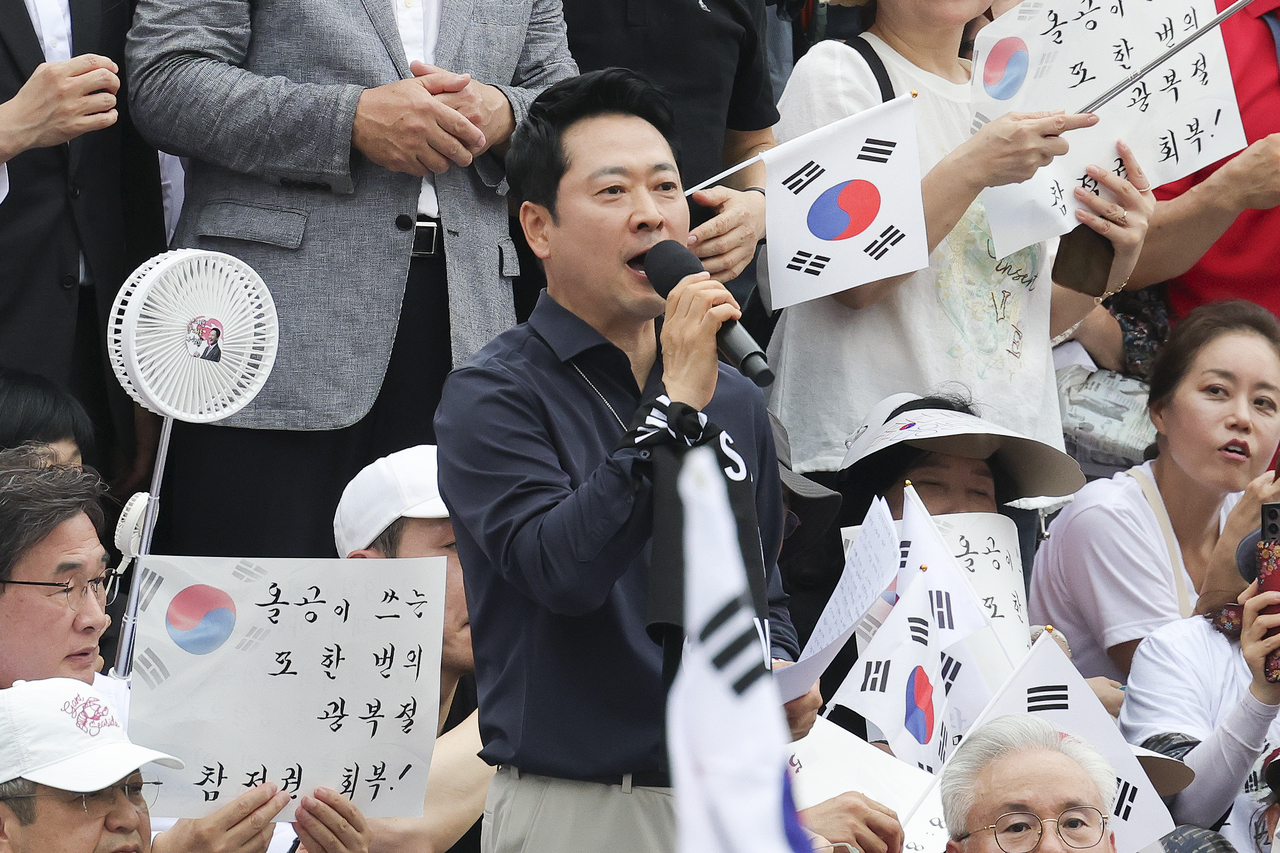
The PPP's approval rating fluctuated considerably during Jang's tenure. According to pollster Realmeter, the party's support stood at 36.1 percent in the first survey conducted after Jang took office last August, a figure analysts attributed in part to a convention bounce following the leadership election.
Support, which had held in the 30-percent range, slid to 28.1 percent in March amid internal turmoil over candidate nominations for the local elections. It then surged to 44.3 percent in June — the highest since the current government took office — following the ballot paper shortage controversy during the local elections. The most recent survey, released Monday, put the PPP at 40.9 percent, ahead of the Democratic Party at 36.2 percent. For details on the survey methodology, see the National Election Survey Deliberation Commission website.
Despite the recovery in approval ratings, concerns persist that the party's direction has tilted too heavily toward its hard-line base. Critics point out that even as Jang has emphasized expanding the party's appeal to centrist voters, his handling of the party's relationship with former President Yoon and internal disciplinary matters has continued to reflect a preoccupation with keeping the existing base satisfied.
Some within and outside the party view the prolonged Jang leadership as a product of the absence of alternatives. With more than a year remaining before the next general election, no clear figure has emerged as a new rallying point for the conservative camp. A senior PPP lawmaker said, "Calls for Jang's resignation have quieted for now, but the time has come for a style of leadership that can accommodate people with different political views."
Seoul Mayor Oh Se-hoon, frequently mentioned as a potential presidential contender within the party, had his legal risk cleared after being acquitted on appeal in a political funds law case, improving his standing within the party. Independent lawmaker Han Dong-hoon was expelled from the PPP over a controversy involving the party's member message board, while Reform Party lawmaker Lee Jun-seok, having stepped down from the party leadership, is seen as still mapping out his next political moves.
mp1256@heraldcorp.com
raining@heraldcorp.com