KOTRA analysis of global trade data
Hormuz blockade disrupts shipments
Countries with alternate port access maintain exports
Experts urge firms to secure alternative routes, build local capacity
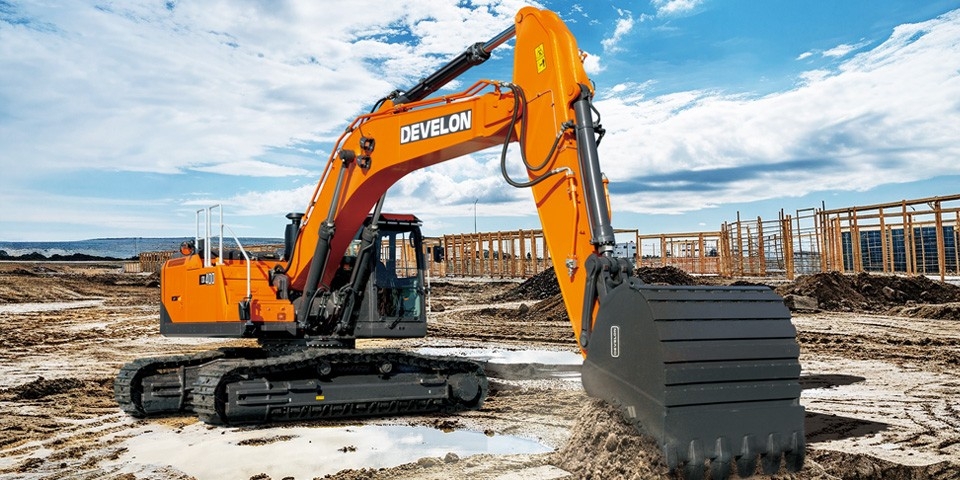
The blockade of the Strait of Hormuz has caused excavator imports into the UAE to fall by nearly half, hitting South Korean suppliers particularly hard, according to a new trade analysis. As geopolitical tensions persist, experts say Korean companies expanding into emerging markets must take proactive steps to guard against logistics risks of this kind.
Data released Saturday by the Korea Trade-Investment Promotion Agency, which analyzed figures from Global Trade Atlas, showed that UAE excavator imports totaled $165.48 million in the first half of this year, down 38 percent from the same period last year. South Korean excavator exports to the UAE plunged 53.1 percent over the same period, to $11.66 million.
The drop marks a sharp reversal of a trend that had been consistently rising for years. As recently as last year, South Korea exported $56.7 million worth of excavators to the UAE annually — roughly 2.2 times the $25.92 million recorded in 2023. Korea's share of UAE excavator imports also climbed from 5.7 percent to 9.4 percent over that period, keeping it in fourth place for three consecutive years.
That growth was driven by massive UAE government investment in transportation infrastructure. Dubai is currently running several large-scale projects simultaneously, including the world's largest airport development at a cost of $36 billion, a high-speed rail link between Abu Dhabi and Dubai, and a new driverless urban rail line. Kim Hak-bin, head of KOTRA's Dubai trade office, said the projects "involve large-scale civil engineering work such as site foundation construction and below-ground excavation, which translates directly into demand for mid- to large-sized excavators."
The blockade of the Strait of Hormuz, triggered by the US-Iran war, was identified as the main reason excavator imports fell this year. The UAE borders the strait and was among the countries most directly affected by the resulting export disruptions. Kim said the decline in exports to Saudi Arabia and India was comparatively smaller, attributing this to their geographic advantages — either access to overland transport routes or easier use of the UAE's eastern ports. "Infrastructure construction within the UAE is continuing," he said, "so the impact of logistics constraints is greater than any actual weakening of demand."
In response, KOTRA urged Korean exporters to prepare in advance for logistics risks such as strait blockades, given the persistence of geopolitical instability worldwide. Kim said companies "should check in advance the shipping routes and costs via UAE eastern ports such as Korfakkan and Fujairah, and work with local dealers to secure inventory of key models and parts."
Kim also stressed the need to strengthen on-the-ground capabilities. "In the UAE, excavators are mostly sold through official local dealers designated by the manufacturer," he said, adding that buyers there place as much weight on parts supply speed and maintenance responsiveness as on price. Because UAE excavator dealers typically handle not only sales but also parts supply and equipment rental, he said the ability to respond immediately on the ground is paramount.
US manufacturer Caterpillar sells excavators through official local dealers, while Japan's Hitachi operates a regional headquarters in the Middle East to provide product and maintenance services. HD Construction Equipment, which entered the UAE market last year with its first export of an 80-ton ultra-large excavator, sells its Hyundai and Develon brand machines through local dealers as well.
Kim added that Korean products occupy a middle price tier — cheaper than Japanese machines but more expensive than Chinese ones — and urged Korean firms to compete not on price against Chinese rivals but by emphasizing performance, durability, parts availability and maintenance responsiveness.

klee@heraldcorp.com