The two organizations held a closed-door meeting Thursday
'End-of-life equipment is an easy entry point for hackers'
Companies must assess risks in advance and draw up systematic transition plans
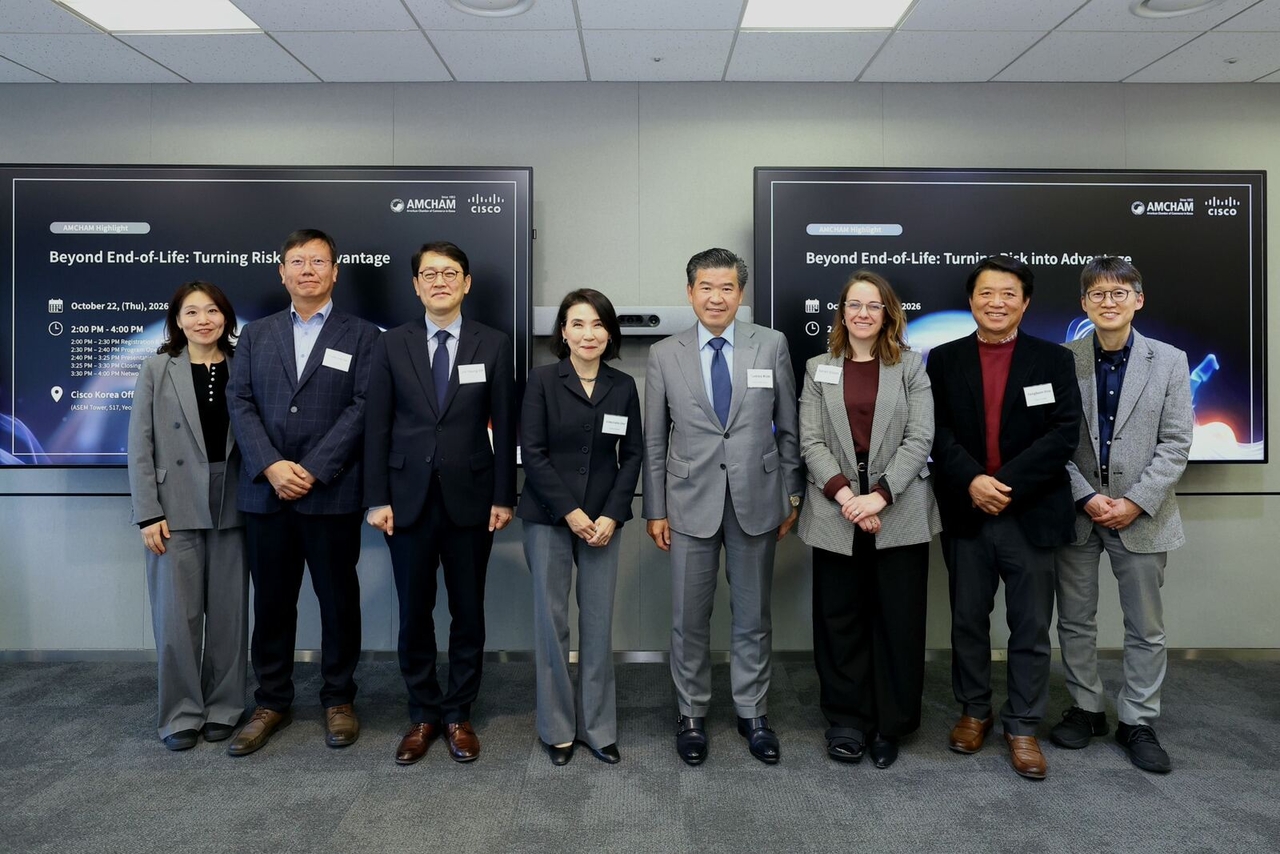
James Kim, chairman and CEO of the American Chamber of Commerce in Korea (AmCham), said "a secure and stable digital foundation is essential to translating the potential of Korea-US technology cooperation into tangible and lasting business opportunities."
Kim made the remarks Thursday at a closed-door meeting with Cisco Korea held at the ASEM Tower in Samseong-dong, Seoul, adding that "upgrading outdated systems is one of the key challenges ahead." He said AmCham would continue working with Cisco and other companies to facilitate dialogue between government and industry on managing technology risks, driving innovation and strengthening long-term competitiveness.
The event, held under the theme "End-of-Life Technology Risks: Turning Challenges into Competitive Opportunities," was organized to examine the risks posed by aging IT systems and discuss ways for companies to strengthen their digital competitiveness.
As rapid advances in AI and quantum computing reshape the security landscape, end-of-life equipment — hardware and software no longer receiving vendor support — has become one of the easiest entry points for hackers.
Participants said companies must identify the risks in their legacy systems early and put systematic transition plans in place.
Choi Ji-hee, president of Cisco Korea, said leaving end-of-life equipment without official security updates or technical support "can pose a fatal threat to business continuity." She called on companies to pursue phased infrastructure modernization by setting strategic replacement priorities based on available budgets and the criticality of each system.
Sarah Sloan, Cisco's head of cybersecurity policy for Asia Pacific, presented a report titled "Past Its Use-By Date: Turning Legacy Technology Risk into National Competitive Advantage," published by the Australian Strategic Policy Institute with Cisco's sponsorship.
Drawing on case studies from South Korea, India, the Philippines and Australia, the report framed the management of end-of-life technology not as a routine IT matter but as a challenge requiring attention at the management and policy level. It recommended that organizations clarify accountability for system management and replacement, and plan the necessary investment in advance. The report also outlined ways to reduce security risks and create new business opportunities through better technology lifecycle management and improved procurement practices.
joze@heraldcorp.com