Foreign Ministry sends Security Council letter demanding North Korea apologize over mine blast; Kim Yo-jong says loudspeakers will be on standby 'within days'
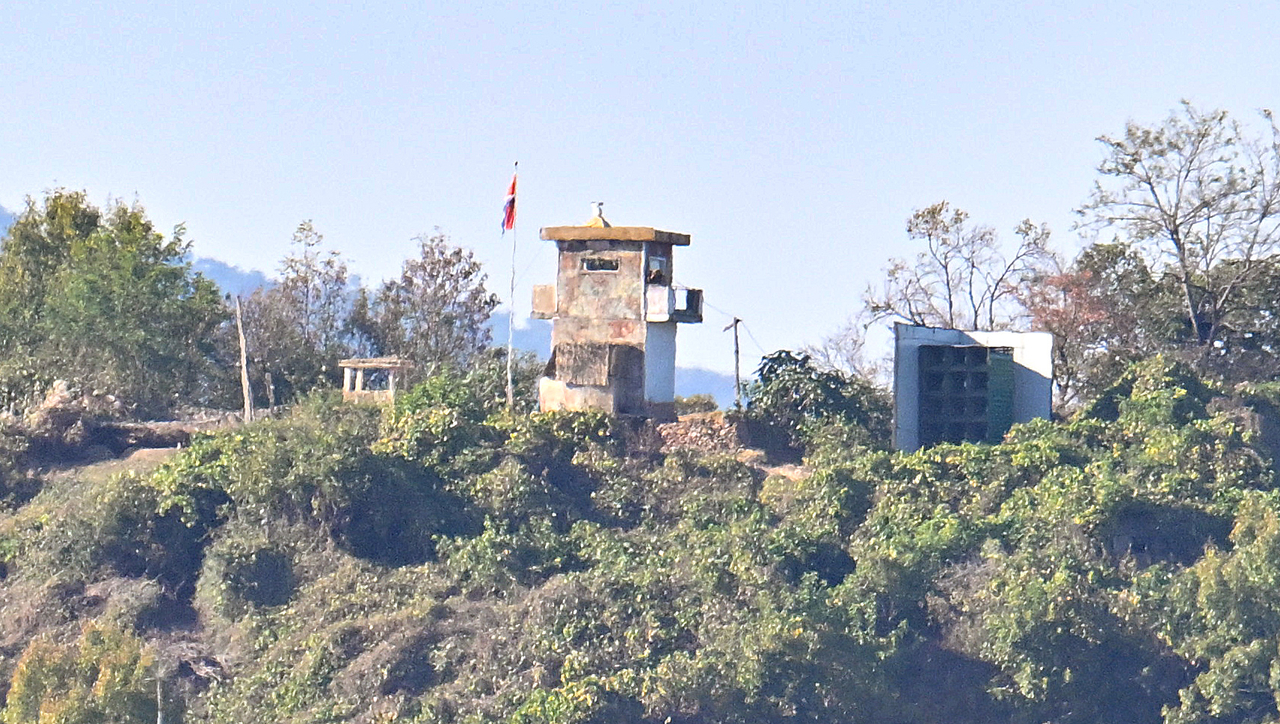
The two Koreas are edging toward a resumption of loudspeaker psychological warfare after North Korea signaled it would restart cross-border broadcasts and South Korea's military left open the possibility of a matching response. Analysts note, however, that Seoul faces considerable pressure not to follow suit, given persistent questions about the effectiveness of such broadcasts and growing concerns about their impact on border communities.
Kim Yong-hyun, a professor at Dongguk University, said Friday that the likelihood of loudspeaker operations resuming "is currently rising."
"The North is signaling firm resolve and showing through this mine incident and related developments that it will not back down," Kim said. "There is also an element of reinforcing internal cohesion." He added that "finding an exit strategy is not easy at this point," and that "without new movement in North America–North Korea dialogue, it will be difficult to find a breakthrough in inter-Korean relations."
Kim Yo-jong, director of the Korean Workers' Party General Affairs Department, cited South Korea's warning shots fired at North Korean soldiers who crossed the MDL on Thursday as a pretext to announce that "our new countermeasures along the entire border will enter a mission-ready posture," adding that "loudspeakers directed at South Korea will also be placed on standby within days."
On this, the Defense Ministry said at its regular briefing the same day that "nothing has been decided," but added, "If North Korea does something, I think we naturally need to have a proportionate response," leaving open the possibility of a reciprocal move.
Resuming South Korea's own loudspeaker broadcasts toward the North would not come without significant costs, however. The effectiveness of such broadcasts has consistently been questioned, and residents in border areas have long complained of health problems — including sleep deprivation — caused by the noise. The tourism and livestock industries in those areas have also suffered heavily.
That is why the Ministry of Unification said Thursday that "just over a year ago, we experienced unbearable suffering on both sides as loudspeakers blared at each other," urging that "the mistakes of the past must not be repeated."
Meanwhile, the Ministry of Foreign Affairs sent a two-page letter to the president of the UN Security Council on Thursday (local time), under the name of South Korea's UN Ambassador Cha Ji-hoon.
The letter conveyed the findings of a probe concluding that the Sept. 21 landmine explosion in the demilitarized zone was caused by mines planted by North Korean troops, and stated that the incident constituted a violation of the Armistice Agreement. The government used the letter to demand a North Korean apology and responsible action, and to call on Pyongyang to engage in dialogue to ease tensions and restore trust.
rimsclub@heraldcorp.com