Six years after nationalization, local governments still shoulder over 90% of firefighter wages
Bill would have state cover all shortfalls in firefighter payroll accounts
Lawmaker says freed-up local funds should go to aging equipment and better conditions
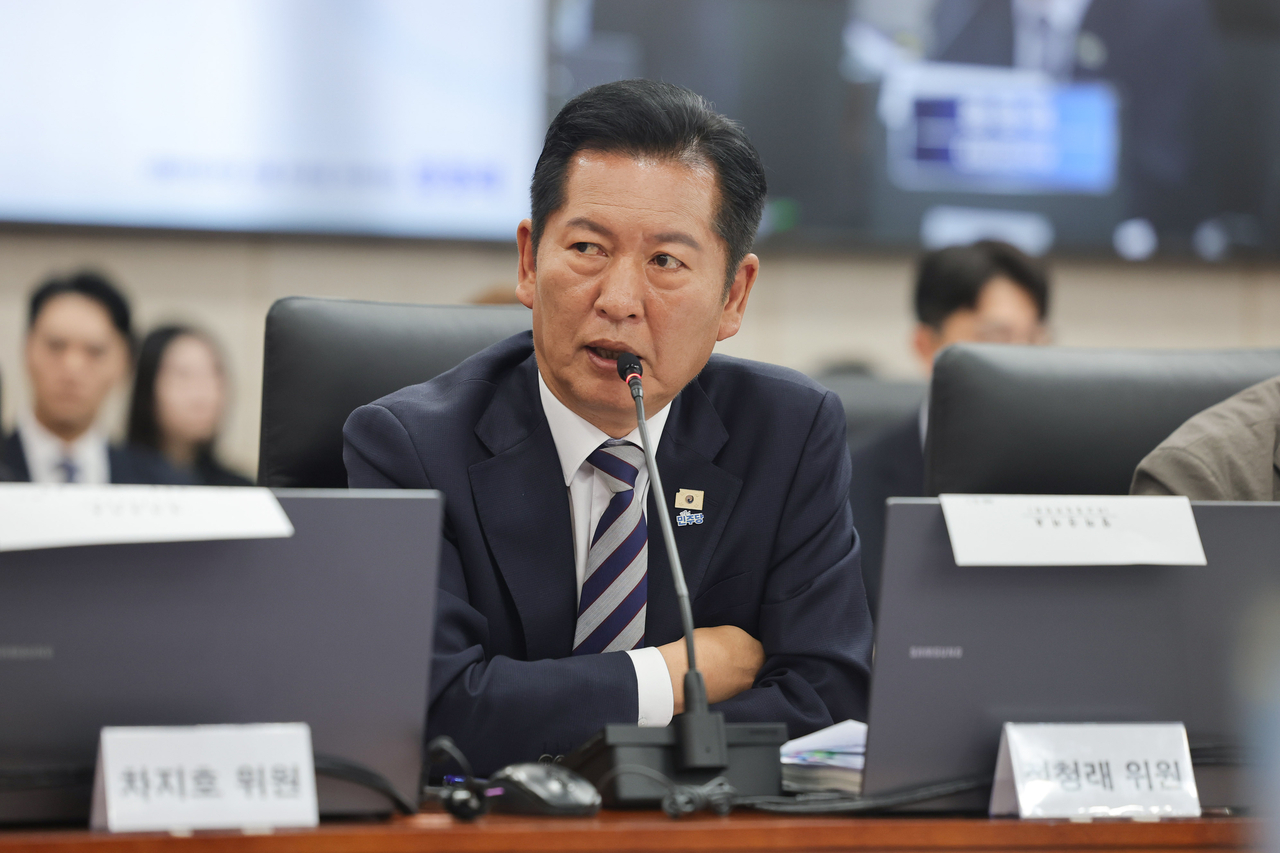
Democratic Party of Korea lawmaker Jung Chung-rae has introduced legislation to make the central government responsible for firefighter labor costs, seeking to fix a funding structure in which local governments shoulder more than 90 percent of firefighter wages — six years after firefighters were reclassified as national civil servants.
Jung on Thursday introduced a partial amendment to the Fire Service Fiscal Support and Special Accounts Act that would require the state to cover any shortfall in the firefighter payroll account of the fire service special accounts.
According to the National Assembly Research Service, total local firefighter labor costs rose from 3.7 trillion won ($2.78 billion) in 2019 to 6.36 trillion won last year. Meanwhile, central government contributions fell from 565.7 billion won in 2021 to 547.6 billion won last year. Local governments currently bear about 92 percent of firefighter labor costs.
Firefighters were reclassified as national civil servants in 2020, but because fire services remain legally defined as a local government function, municipalities still fund a large share of related expenses. Critics have long warned that this arrangement creates disparities in fire service quality and firefighter treatment depending on each local government's financial condition.
The bill would remove transfers from local general accounts as a revenue source for the firefighter payroll account within the fire service special accounts, and instead require the state to cover any amount not met by the fire safety earmarked grant and the local resource facility tax. The aim is to ease the fiscal burden on local governments and free up funds for improving firefighter welfare.
"As firefighting duties have expanded into national disaster response and firefighters have been fully reclassified as national civil servants, their treatment and safety measures remain inadequate," Jung said. "There are cases where conditions differ depending on each local government's fiscal self-reliance ratio."
He added that the state should take full responsibility for firefighter wages to ensure stable payment, and that the fire service special account funds previously spent on labor costs by local governments should instead go toward replacing aging equipment and modernizing facilities.
thanks@heraldcorp.com