Bloomberg: debut flop 'stokes fears of end to AI investment frenzy'
Elice closes 32% below IPO price on Kosdaq debut
US AI infrastructure stocks also weaken early in session
Overvaluation concerns and funding pressures come to the fore
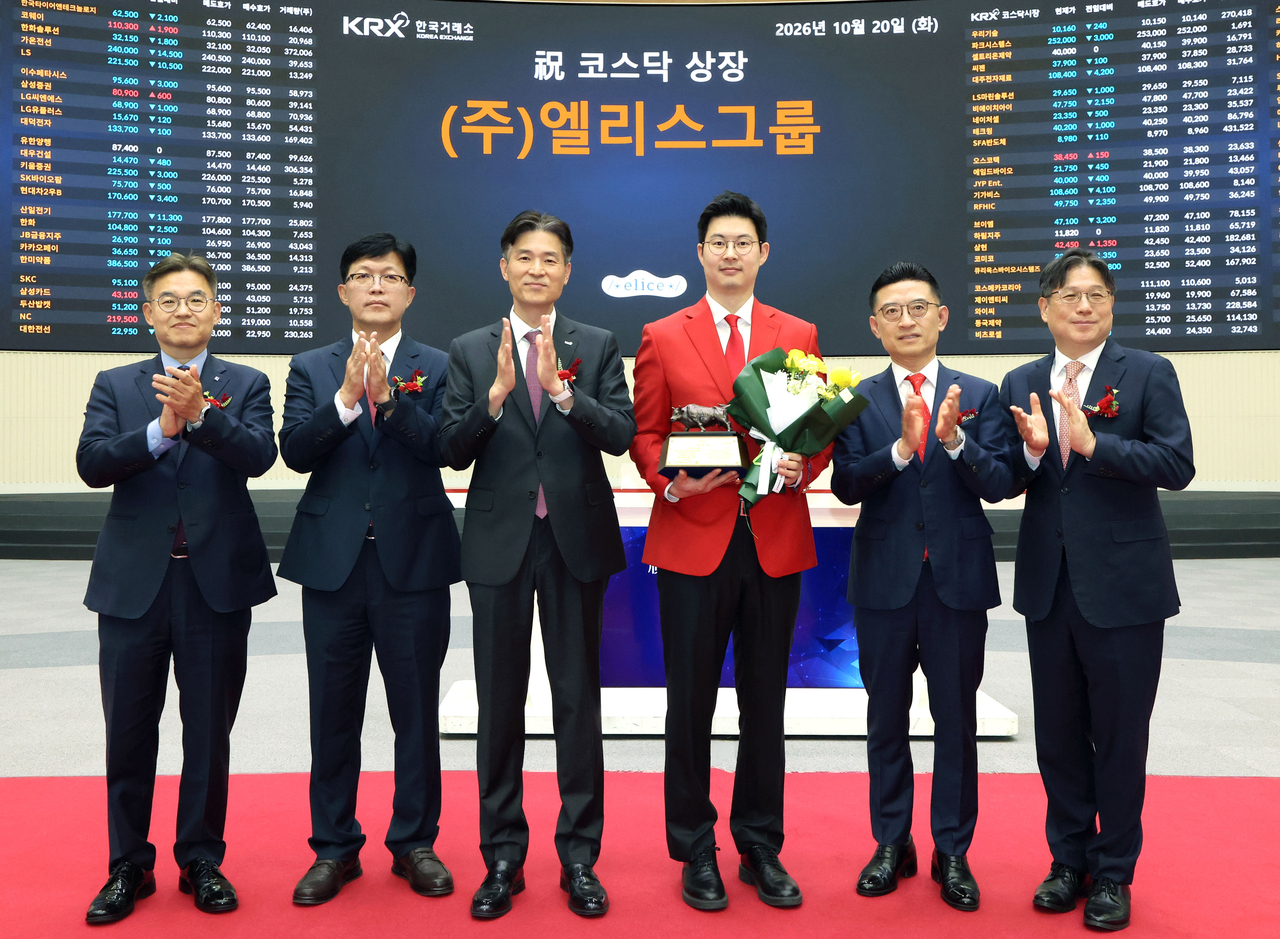
Global financial markets were rattled after South Korean AI infrastructure company Elice saw its share price plunge more than 32% on its first day of trading on the Kosdaq. Major international outlets including Bloomberg and Reuters trained their focus on the dismal debut, reporting that investor skepticism toward the AI investment frenzy is deepening. Analysts say the market mood that once drew capital on the strength of the "AI" label alone is shifting.
Bloomberg ran a story Tuesday (local time) under the headline "AI Firm's IPO Flop Stokes Fears of End to Investment Frenzy," giving prominent coverage to Elice's sharp first-day drop on the Kosdaq.
Elice closed at 61,500 won ($46), down 32.04% from its IPO price of 90,500 won. Bloomberg said Elice, "little known outside South Korea, has found itself at the center of a fierce debate about the valuations and real-world performance of AI companies."
Bloomberg particularly highlighted growing investor unease toward "neocloud" companies — operators of data centers specialized for AI computing.
"Elice's dismal stock market debut reconfirms that we have shifted from an era of 'buy anything AI' to an era of 'question everything AI,'" said Hebe Chen, a senior market analyst at Vantage Global.
Barron's, the American financial publication, also covered Elice's share price collapse under the headline "A Korean IPO Disaster Exposed the Vulnerability of the AI Investment Frenzy."
Barron's noted that Elice's sales in the first half of this year tripled compared with the same period last year and that profitability had also improved — yet the company still could not escape a disastrous debut. Steep growth alone, the analysis suggests, is no longer enough to ease investor concerns about lofty valuations and future fundraising burdens.
The share price collapse also weighed on sentiment toward AI-related stocks in the United States.
Reuters reported that Elice's weak debut dragged on Wall Street AI stocks. CoreWeave, a US AI cloud company, fell more than 6% in early trading that day, and other AI infrastructure names including Nebius and Iren also weakened.
CNBC noted that while Elice's IPO size of $150 million was relatively modest, investors were treating it as a signal of broader sentiment toward the global AI infrastructure market.
CoreWeave later reversed course, however, and major AI and semiconductor stocks including Nvidia and Micron also rebounded. Key indexes on Wall Street likewise moved higher, buoyed by optimism over progress in diplomatic negotiations between the United States and Iran.
Signs of cooling sentiment have been mounting across the global AI infrastructure sector in recent months. Australia's Firmus Grid and AirTrunk shelved or postponed their listing plans, while Britain's Nscale and US-based SB Energy faced investor pushback over valuation disputes.
CoreWeave is also grappling with mounting financing pressures, with yields on its corporate bonds surging to 15% amid concerns about its heavy debt load.
As astronomical sums continue to pour into AI infrastructure buildout, analysts say investors have begun scrutinizing not just revenue growth but also profitability and debt burdens. Elice's first-day collapse attracted attention well beyond South Korea — a development analysts tie to that broader shift in investor sentiment.
sjy@heraldcorp.com