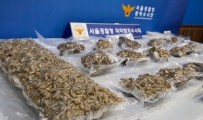
Exports of rice cakes and tteokbokki reach $14.73 million, accounting for 88.1% of processed food and fishery exports from the region
Traditional Korean foods such as rice cakes and tteokbokki are gaining traction among overseas consumers on the back of the K-food boom, cementing their place as major export items.
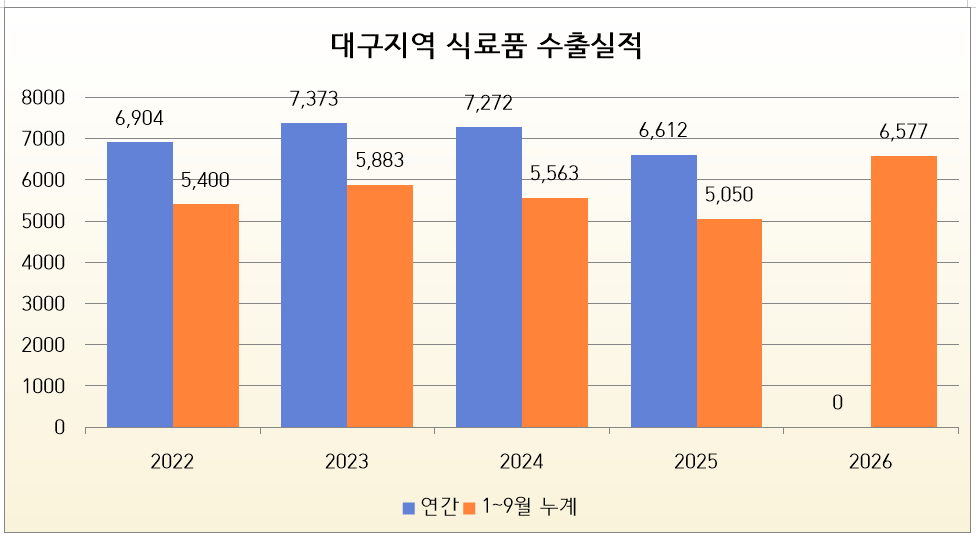
According to the Korea Customs Service, food exports from the Daegu region rose 30.2 percent year-on-year to $65.77 million as of the end of September 2026, driven by growing global interest in K-food.
The rebound marks a recovery from a decline caused by global uncertainty, including the impact of US tariffs imposed in 2025, and raises expectations for stronger performance ahead.
By product category, beverages led with a 27.0 percent share, followed by processed food and fishery products at 25.4 percent, noodles at 6.9 percent and vegetables at 5.8 percent. Beverages and noodles have consistently driven export growth, posting particularly high increases.
Within processed food and fishery products, rice cakes and tteokbokki accounted for $14.73 million — or 88.1 percent — of the category's total export value.
By destination, the United States topped the list at 30.9 percent, followed by China at 20.4 percent, Canada at 6.1 percent, the Netherlands at 4.6 percent and Indonesia at 4.4 percent. Daegu's food products now reach 75 countries worldwide.
Exports to Indonesia were particularly notable, surging 833.5 percent year-on-year to $2.89 million, suggesting that local companies have successfully diversified their export markets by riding the global wave of K-content.
The Daegu Customs Office is actively supporting local food companies — one of the region's key emerging industries — by offering tailored consulting on tariffs, product classification and rules of origin to help them expand into overseas markets.
kwonhl@heraldcorp.com