Tribute marks sixth anniversary of late Samsung Group Chairman Lee Kun-hee's death
Lee Jae-yong, family and current and former Samsung presidents visit ancestral grave
Lee staked personal fortune on semiconductors in 1974
Semiconductor operating profit hits 100 trillion won, spotlighting his vision
1993 'new management' declaration shifted Samsung toward quality over quantity
Cultural legacy grows as 'Lee Kun-hee Collection' draws global audiences
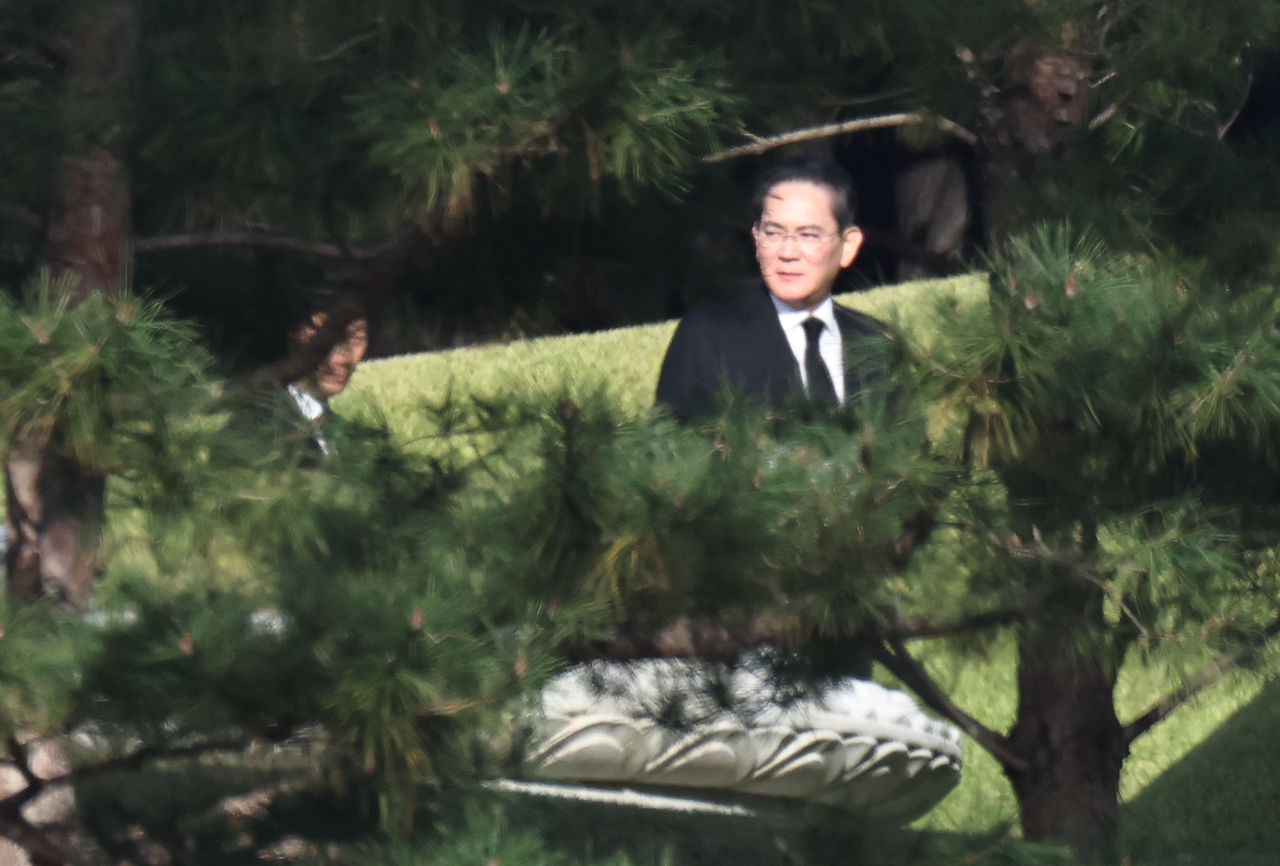
Samsung Electronics Chairman Lee Jae-yong visited the ancestral burial site of his late father, Samsung Group Chairman Lee Kun-hee, on Friday morning — two days before the sixth anniversary of Lee Kun-hee's death on Oct. 25 — accompanied by family members and senior executives to pay his respects.
The visit came as Samsung Electronics posted a record quarterly operating profit of 107.4 trillion won ($81.1 billion) in the third quarter of this year, marking the first time the company has surpassed 100 trillion won in a single quarter. Lee reaffirmed his commitment to strengthening the company's business competitiveness while honoring his father's management philosophy.
With the semiconductor business delivering unprecedented profitability this year and driving earnings growth, the late chairman's decision more than 50 years ago to stake his personal fortune on entering the semiconductor industry is drawing renewed attention.
Lee Jae-yong leads Samsung presidents, family in memorial visit
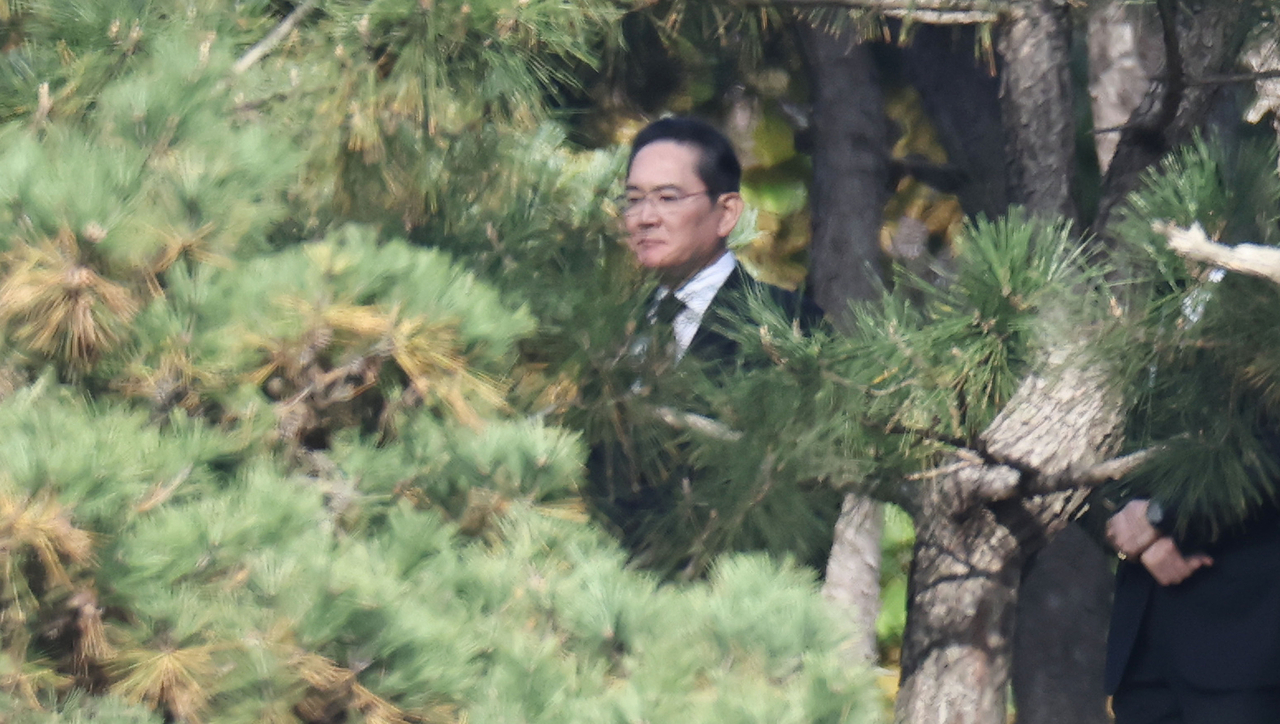
Lee arrived at the ancestral burial site in Imok-dong, Suwon, Gyeonggi Province, at around 8:50 a.m. Friday for the sixth-anniversary memorial ceremony. Family members joined him, including his mother Hong Ra-hee, honorary director of the Samsung Leeum Museum of Art; his sister Lee Boo-jin, president of Hotel Shilla; his other sister Lee Seo-hyun, president of Samsung C&T; and Kim Jae-yeol, president of Samsung Global Research.
About 150 current and former executives also attended, among them Jeon Young-hyun, vice chairman and head of Samsung Electronics' DS (Device Solutions) division overseeing the semiconductor business, and Roh Tae-moon, president and head of the DX (Device eXperience) division, each carrying a floral tribute.
After the ceremony, Lee traveled to the Changjo Hall at Samsung Electronics' Human Resources Development Center in Yongin, Gyeonggi Province, where he shared lunch with affiliate presidents in memory of the late chairman. The Changjo Hall serves as a training facility for new employees and houses a bust of the late chairman. Lee has held a similar luncheon there with company presidents following the annual memorial ceremony each year.
He is also scheduled to attend a commemorative concert marking the sixth anniversary of Lee Kun-hee's death, to be held Wednesday at the concert hall of Samsung Electronics' Human Resources Development Center. As in previous years, Lee is expected to visit the center before the concert to encourage newly appointed executives and outstanding employees, and to hold a dinner with newly appointed executives and key management attending the event.
In 1974, Lee staked his personal fortune to enter semiconductors
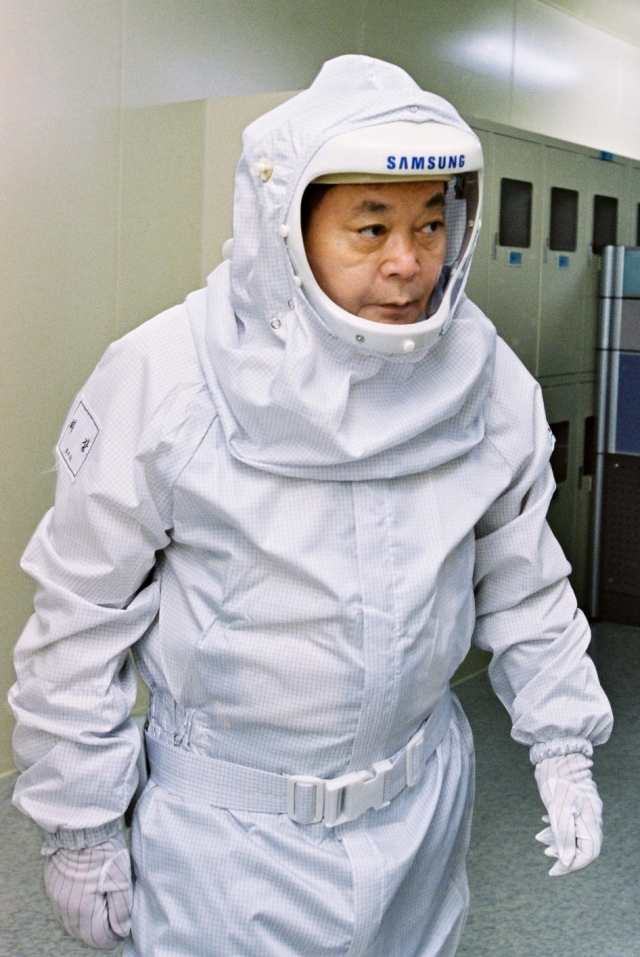
As Samsung Electronics' semiconductor business continues its record-breaking run this year, the late chairman's foresight in recognizing the industry's importance and building its foundations is drawing fresh recognition.
Samsung's semiconductor business traces its origins to the acquisition of Korea Semiconductor. In December 1974, Lee Kun-hee used his personal funds to acquire a 50 percent stake in Korea Semiconductor for $500,000.
At the time a director at Tongyang Broadcasting Company, Lee had concluded that the future of the electronics industry depended on semiconductors. He was also driven by the conviction that Korea needed to enter high-value advanced industries for the good of its economy.
Korea Semiconductor, founded by Dr. Kang Ki-dong, had launched Korea's semiconductor history with chips for wristwatches but was struggling financially in the wake of the oil shock.
The year after Lee's acquisition, in September 1975, the company developed a semiconductor for electronic watches and turned a profit, recording sales of 200 million won for the year.
In 1977, Samsung Electronics acquired the remaining 50 percent stake held by US firm ICII and renamed the company Samsung Semiconductor.
52 years on, semiconductors yield a record quarterly operating profit of 110 trillion won
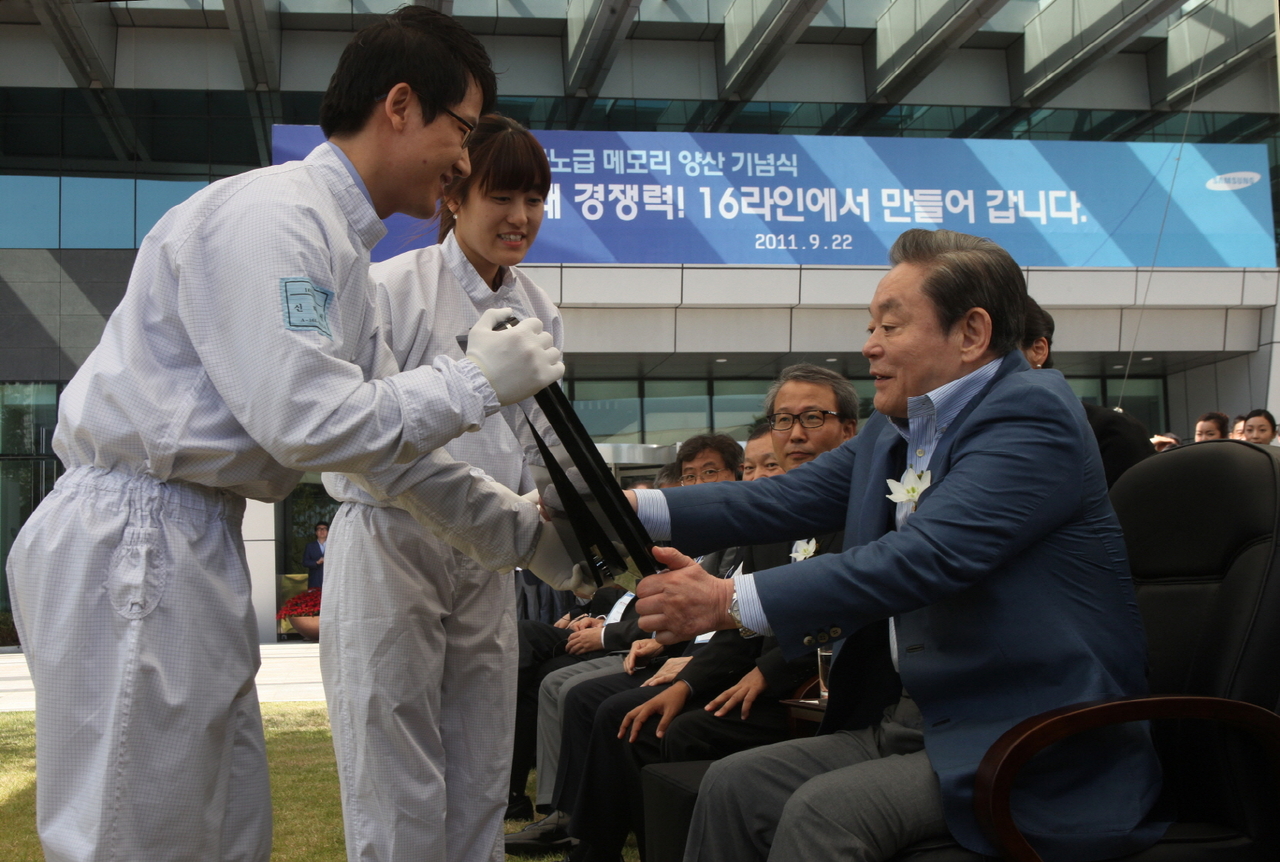
Samsung's semiconductor growth accelerated in earnest following the "Tokyo Declaration" of 1983, when late Samsung founder Lee Byung-chull announced at the Hotel Okura in Tokyo that the company would enter the VLSI (very large-scale integration) semiconductor business. Samsung Electronics chose DRAM as its strategic product within the memory segment and launched its first production line in Giheung in 1984.
Having succeeded in developing 64K DRAM around that time, Samsung Electronics claimed the top share of the global DRAM market in 1992 and has held that position ever since. The semiconductor business surpassed 100 billion won in sales in 1986 and reached 1 trillion won in 1991.
What began with 64K DRAM has since expanded to encompass advanced memory chips including HBM, a foundry business producing AI chips for major US technology companies, and a System LSI division designing the processors at the heart of electronic devices.
Driven by the pursuit of an insurmountable technology lead and the rise of the AI era, Samsung's semiconductor business has grown beyond all comparison with its early days. After surpassing 100 trillion won in annual sales in 2024, the business is now writing a new chapter with a quarterly operating profit of 110 trillion won in the third quarter.
Buoyed by the semiconductor boom, Samsung Electronics set an all-time earnings record in the third quarter of this year, with sales of 195 trillion won and operating profit of 107.4 trillion won. The market expects the semiconductor division alone to generate annual sales of 500 trillion won and operating profit of 360 trillion won for the full year.
1993 'new management' declaration: a defining moment in Korean business history
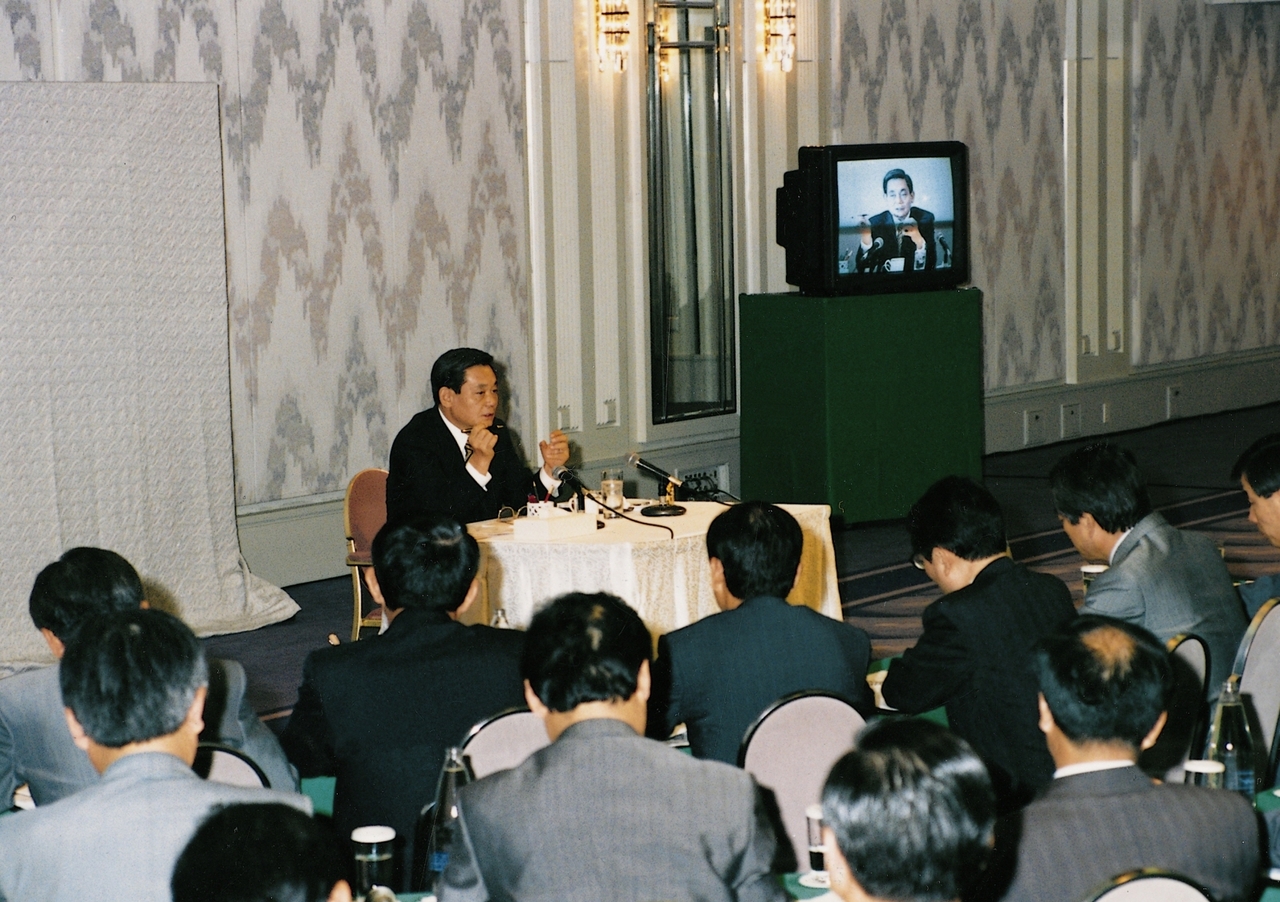
The late chairman's "new management" declaration — best remembered for the line "Change everything except your wife and children" — remains the most dramatic moment in the history of not only Samsung Group but Korean business as a whole.
After launching the new management initiative in Frankfurt, Germany, on June 7, 1993, Lee spent 68 days through Aug. 4 traveling between Germany, Switzerland, the United Kingdom and Japan, holding roundtable discussions with 1,800 people over 350 hours. Normally reserved by nature, Lee spoke with remarkable candor throughout that period, laying out his management philosophy at length. His discussions with company presidents alone ran to more than 800 hours.
Samsung Group compiled Lee's remarks from that period into 33 thematic categories, producing a management guide spanning the equivalent of 8,500 A4 pages known as the "Jihaeng 33 Teachings." The word "jihaeng" is a condensed form of a five-part Korean concept encompassing knowing, acting, applying, teaching and evaluating — the five qualities Lee identified as the virtues of a true leader.
The most representative management philosophy in the Jihaeng 33 Teachings is "quality management" — the principle that the focus of management must shift from quantity to quality. Only by making that shift, Lee argued, could a company raise its international competitiveness and complexity, and from that foundation leap to become a world-class enterprise in the 21st century.
A decade later, Lee called on Samsung to "rearm itself with a sense of crisis." On the 20th anniversary of the new management declaration, he stressed that the company must not grow complacent simply because 20 years had passed, and must always maintain a sense of urgency.
Lee's "talent-first" philosophy also remains a cornerstone of Samsung Electronics' management. Believing that a single genius could support 100,000 employees, he recruited talent willing to pay salaries higher than those of company presidents. Engineers recruited from the United States under this philosophy — including former Chairman Kwon Oh-hyun, former President Hwang Chang-gyu and former President Jin Dae-je — went on to lead Samsung Electronics' semiconductor renaissance.
Lee also predicted early on that an era would come in which semiconductors, computers, software and robots converged into one. From the early days of his chairmanship in 1988, he called for the cultivation of software talent, foreseeing that advanced technologies would merge. Analysts say his prediction has proven prescient in today's AI era.
A cultural legacy: 'Lee Kun-hee Collection' draws crowds in the US and UK

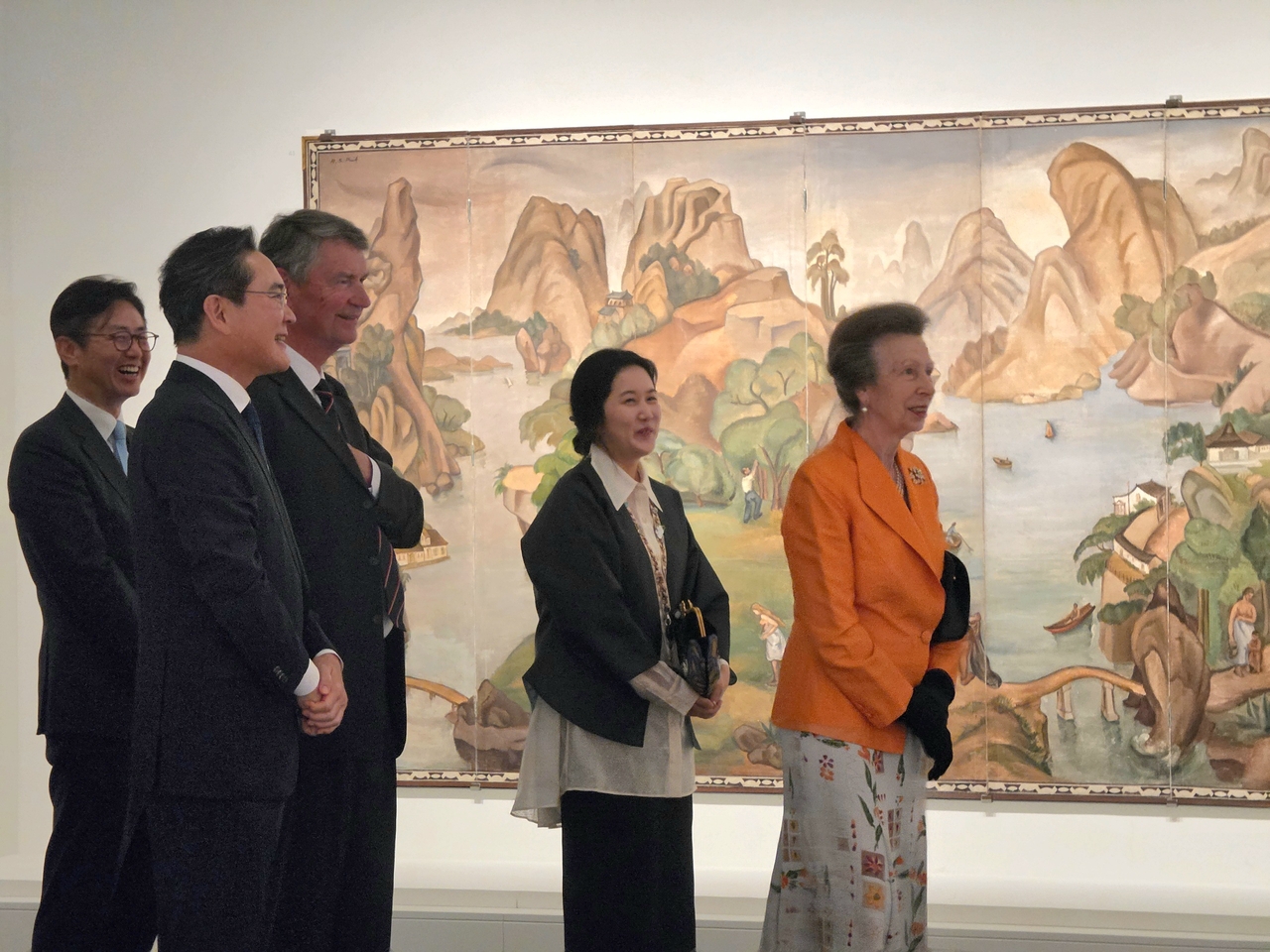
The late chairman's influence extended well beyond the business world into the cultural sphere. After his death, Lee Jae-yong and other family members donated more than 23,000 artworks from his personal collection to national institutions in 2021, including the National Museum of Korea and the National Museum of Modern and Contemporary Art.
The donation sparked intense public interest in his collection. A total of 35 traveling exhibitions were held between 2021 and 2024, drawing a cumulative audience of 3.5 million visitors.
The collection is now attracting audiences abroad as well. After stops in Washington, D.C., and Chicago, a traveling exhibition titled "Korea: A 2,000-Year Journey of Creativity" opened at the British Museum in London on Oct. 1 and is currently on display.
The Lee Kun-hee Collection has met audiences in major cities around the world, raising awareness of the value and historical significance of Korean culture and contributing to the country's international standing.
The first overseas stop, held in Washington, D.C., last November, drew about 80,000 visitors — the largest attendance for a special exhibition at the Smithsonian's National Museum of Asian Art in the past decade.
The Chicago exhibition, which ran from March through July this year, attracted about 115,000 visitors — more than 40 percent more than the Washington, D.C., showing. Combined attendance across the two American cities reached roughly 195,000, underscoring strong international interest in the long history and artistic depth of Korean art.
joze@heraldcorp.com
jeongwan@heraldcorp.com