Interim CEO, board chair vow to maintain existing business strategy
Shift in aggressive AI investment stance could affect HBM demand
US congressional probe looms; chip export controls in focus
Hyundai Motor, LG Electronics watch physical AI partnerships closely
Naver, armed with 1.3 trillion won, eyes large-scale AI factory plans
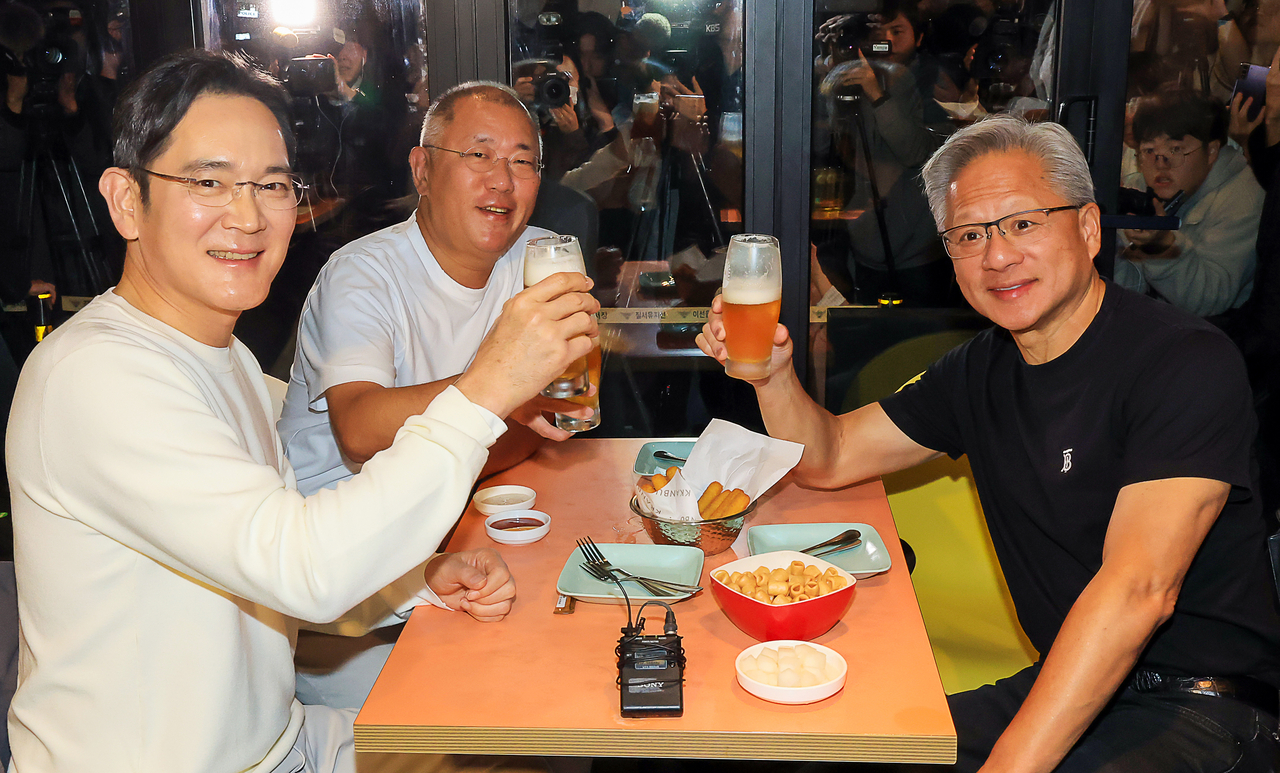
The resignation of Nvidia CEO Jensen Huang amid a series of extramarital affair scandals has put South Korean companies on high alert — from chipmakers Samsung Electronics and SK hynix to Hyundai Motor Group, LG Group and Naver, all of which forged sweeping partnerships with Nvidia through the so-called "Kkanbu alliance" meetings.
Some observers have voiced concern that the partnerships could fracture, given that Huang had been driving not just Nvidia but the entire AI industry forward on the strength of the company's dominant grip on the GPU market.
AI infrastructure investment at risk? Samsung, SK hynix watch memory demand closely
Colette Kress, Nvidia's chief financial officer and executive vice president who was named interim CEO, said in a statement issued shortly after her appointment that the company would remain "focused on supporting our customers, partners, developers and shareholders."
Harvey Jones, the newly appointed board chair, said he expected "the company's business operations, supply commitments to customers and product development roadmap to continue without disruption." Both statements were aimed at reassuring stakeholders rattled by the sudden leadership change.
South Korea's AI-related industries are deeply embedded in the Nvidia ecosystem, a relationship that grew even closer after Huang visited Korea in October last year and again in June, cementing what became known as the Kkanbu alliance.
Memory chipmakers, whose products power Nvidia's GPUs, are watching the situation with particular attention. SK hynix, which has supplied HBM to Nvidia since the technology's early days, announced a long-term partnership agreement for the joint development of next-generation memory chips for AI factories when Huang visited Korea in June.
SK Group also unveiled plans to go beyond memory supply and build next-generation data centers — so-called AI factories — with SK Telecom taking the lead in operating gigawatt-scale data centers.
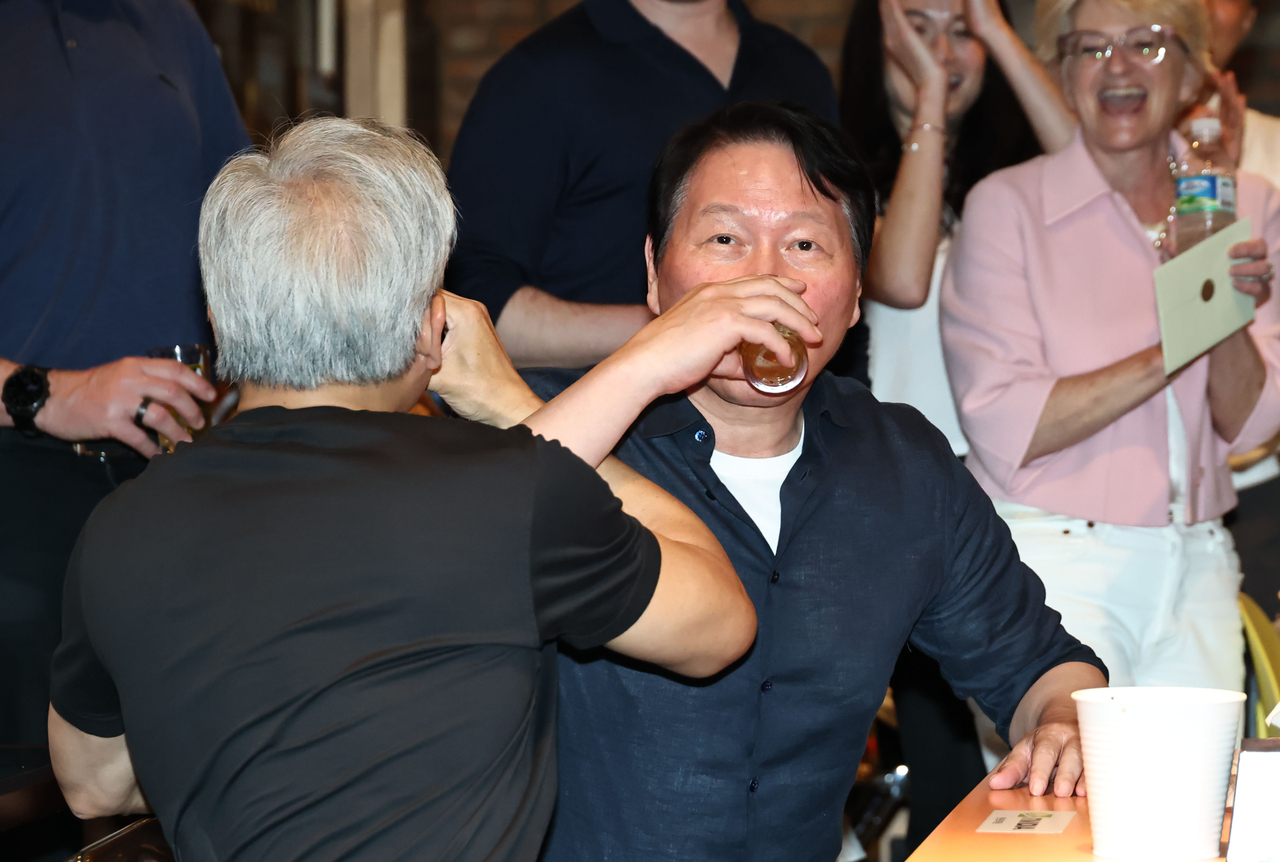
In July, Huang and SK Group Chairman Chey Tae-won met at the K-AI Summit in San Francisco and agreed to cooperate on AI infrastructure worth more than $500 billion.
Samsung Electronics had also been repositioning itself in the HBM market around sixth-generation HBM chips destined for Nvidia's next-generation AI platform, Vera Rubin, with some analysts projecting the company could claim the top market share in HBM next year.
Since Nvidia has signaled it will maintain its existing product roadmap, observers say the immediate risk of disruption to HBM supply is limited. However, any shift away from the aggressive AI infrastructure investment strategy that Huang championed could alter memory demand.
The near-term impact may be cushioned by hyperscalers such as Microsoft, Amazon and Google, which are pouring vast sums into their own AI data centers. Still, demand from neo-cloud companies — which had been buying GPUs using Nvidia financing in what was dubbed "circular funding" — could slow.
There are also concerns that a full-scale US congressional investigation into Huang could lead to tighter export controls on China. Observers note that the probe may extend to export-control circumvention allegations tied to Megaspeed, a company linked to Alice Huang, who faces suspicions of connections to Chinese intelligence agencies, potentially complicating Nvidia's China business strategy.
"The immediate impact on memory cooperation will likely be limited," a semiconductor industry official said. "But depending on what comes out of the congressional hearings and the AI policy signals from a Democratic-led political landscape, the fallout could be prolonged — we are watching with a heightened sense of tension."
Physical AI — Huang's 'next wave' — puts autonomous driving and robotics partnerships in question
South Korean companies that had been collaborating with Nvidia on physical AI — the field Huang identified as the next wave of the AI era — are also closely monitoring the leadership vacuum. Hyundai Motor Group is the most prominent example. Executive Chair Euisun Chung and Huang had already signaled their close ties at the Kkanbu meeting in October last year, and the two met four times this year alone.
The two companies are cooperating across a broad range of areas including autonomous driving, robotics, AI factories and data center construction. Hyundai Motor and Kia decided in March to adopt Nvidia's autonomous driving platform Hyperion and apply it to select models first, with plans to eventually extend the collaboration to Motional's Level 4 robotaxi operations.
Nvidia's AI computing platform Jetson Thor has been integrated into Atlas, the humanoid robot developed by Hyundai Motor Group subsidiary Boston Dynamics. In July, the two companies agreed to jointly build a "robot reference platform" combining their respective technologies.
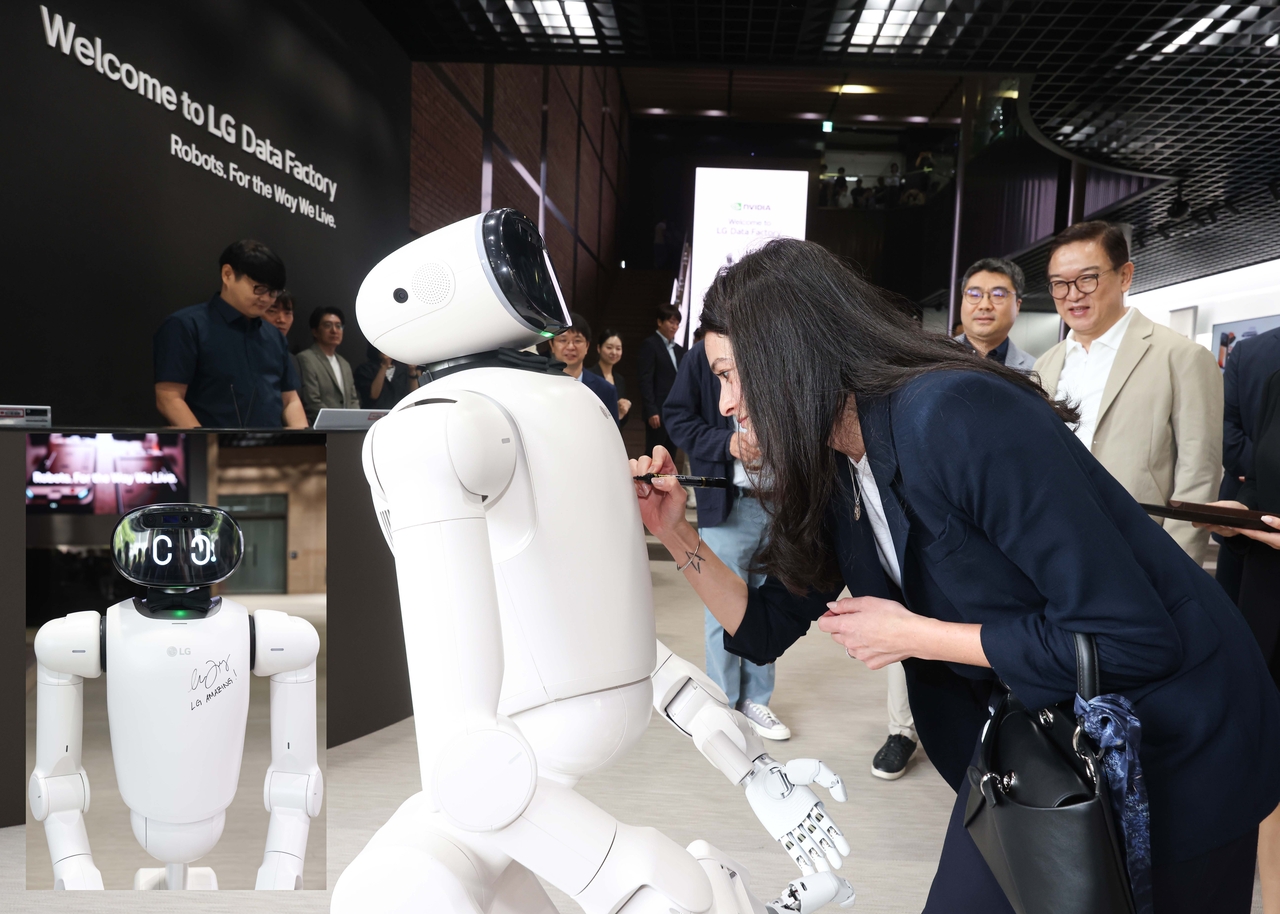
LG Group is also developing humanoid robots based on Nvidia's robotics platforms, including Jetson Thor and Isaac GR00T. LG Group Chairman Koo Kwang-mo visited Nvidia's headquarters in Santa Clara, California, in August and presented Huang with a prototype of a humanoid robot the group plans to unveil in the first quarter of next year.
Madison Huang, Nvidia's senior director of Omniverse and robotics product marketing and Jensen Huang's daughter, promptly visited the LG Data Factory in Seocho-gu, Seoul, to accelerate robotics cooperation. LG Electronics presented at Nvidia AI Day Seoul 2026, held at COEX in Seoul on Monday, a case study demonstrating its Cloid robot — trained using Isaac GR00T — operating on a washing machine factory floor.
Because Huang had been personally involved in key physical AI partnership discussions, questions have been raised about whether investment priorities or decision-making speed could change under the new leadership. Having steadily expanded the scope of its Nvidia collaboration to secure future growth engines, LG Group is wary of any slowdown in business momentum.
Naver, which counts Nvidia as its third-largest shareholder, is also closely watching how the leadership change will affect their partnership.
Naver completed receipt of a 1.3 trillion won ($976 million) investment from Nvidia on Nov. 6, with Nvidia acquiring approximately 4.13 percent of Naver's shares to become its third-largest shareholder.
With the funds already transferred, Naver has avoided immediate uncertainty. But concerns remain that Huang's departure — he had been the driving force behind the partnership — could disrupt core projects including the construction of an AI factory. Huang had visited Naver's 1784 headquarters in Seongnam, Gyeonggi Province, during his trip to Korea in June, meeting with Naver Chairman Lee Hae-jin and publicly showcasing the strength of their alliance.
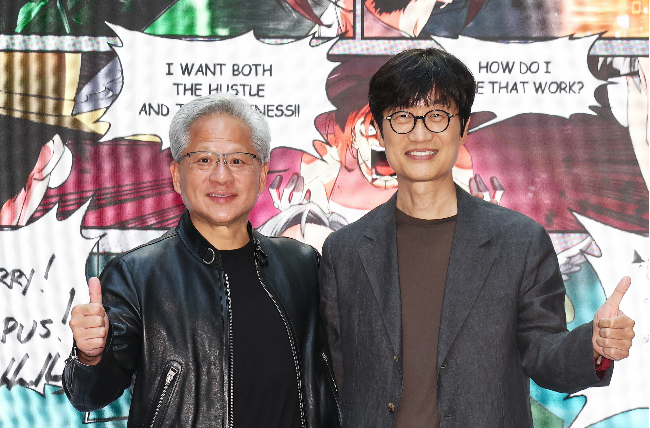
The two companies have been deepening cooperation on the AI factory business, with Naver taking the lead by leveraging its in-house expertise in building large-scale GPU clusters, while Nvidia provides technical support centered on next-generation high-performance computing platforms. The project is set to launch at 55 MW in the first half of 2027, scaling up to 100 MW by the end of that year and 200 MW by 2028, with a long-term goal of building AI computing infrastructure reaching 1 GW.
With the massive AI factory project just hitting its stride, Huang's sudden exit has introduced an unexpected variable, and Naver is watching closely to see whether the departure will affect technical cooperation and business momentum going forward.
jeongwan@heraldcorp.com
sjpark@heraldcorp.com
kwater@heraldcorp.com