National funding of 2.53 trillion won needed as annual port budget stands at 60–80 billion won
Lawmaker Kim Seong-beom calls for reclassification to accelerate development
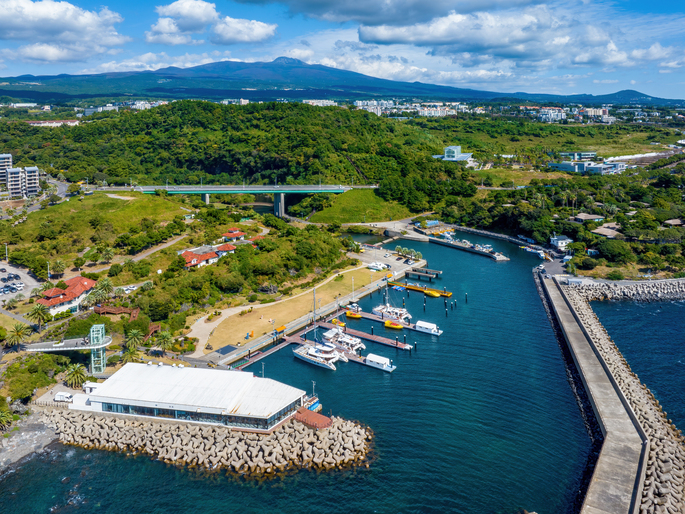
The Jeju new port development project, estimated to cost more than 3.8 trillion won ($2.87 billion), is facing a serious funding challenge. The annual budget for seven ports in the Jeju region amounts to only 60 billion to 80 billion won, far short of the more than 2.5 trillion won in public funds needed to build the new port. A proposal has emerged to convert Jeju Port to a nationally managed port and have the central government take over development directly to move the project forward.
Democratic Party of Korea lawmaker Kim Seong-beom of the National Assembly's Agriculture, Food, Rural Affairs, Oceans and Fisheries Committee said the total project cost for the Jeju new port development stands at 3.83 trillion won. Of that, 2.53 trillion won is to come from national funds and 1.3 trillion won from private investment.
The Jeju new port project aims to expand maritime and port logistics capacity and establish an international cruise hub. The Ministry of Oceans and Fisheries announced the basic plan for the new port in 2019, then revised and republished it with partial amendments in April last year.
Securing the necessary funding, however, remains a major obstacle. Jeju Port is currently classified as a locally managed port, with Jeju Island responsible for its development, management and operations. The combined annual budget for the seven Jeju-area ports — including Jeju Port and Seogwipo Port — stands at only 60 billion to 80 billion won.
The national funding required for the Jeju new port project, by contrast, amounts to around 2.5 trillion won. Even spread over 10 years, that would require roughly 250 billion won annually — more than three times the total annual port budget for the entire Jeju region. Critics say the current Jeju account under the regional balanced development fund cannot realistically cover the cost.
In response, Kim proposed that the Ministry of Oceans and Fisheries develop the Jeju new port directly under the Act on Promotion of New Port Construction. If that approach proves difficult, he said, Jeju Port should be reclassified as a nationally managed port, with the ministry assuming responsibility for its development, management and operations.
Reclassifying the port would require legislative amendments — specifically, removing Jeju Port from the special provisions on the transfer of port-related authority under the Jeju Special Act, and revising the Enforcement Decree of the Harbor Act to designate it as a nationally managed port.
The Ministry of Oceans and Fisheries said it would consult with related ministries and the National Assembly on amending the relevant laws once Jeju Island decides whether to pursue the reclassification. No decision has been made on whether to proceed with the conversion or on a specific timeline.
"The Jeju new port is a large-scale project that cannot be handled within the current port budget," Kim said. "We must push ahead with the project as quickly as possible, even if that means amending the Jeju Special Act and the Enforcement Decree of the Harbor Act to convert it to a nationally managed port."
adastra@heraldcorp.com