
23 businesses obtained policy loans through brokers using fake sales records; three brokers indicted; W190m recovered so far
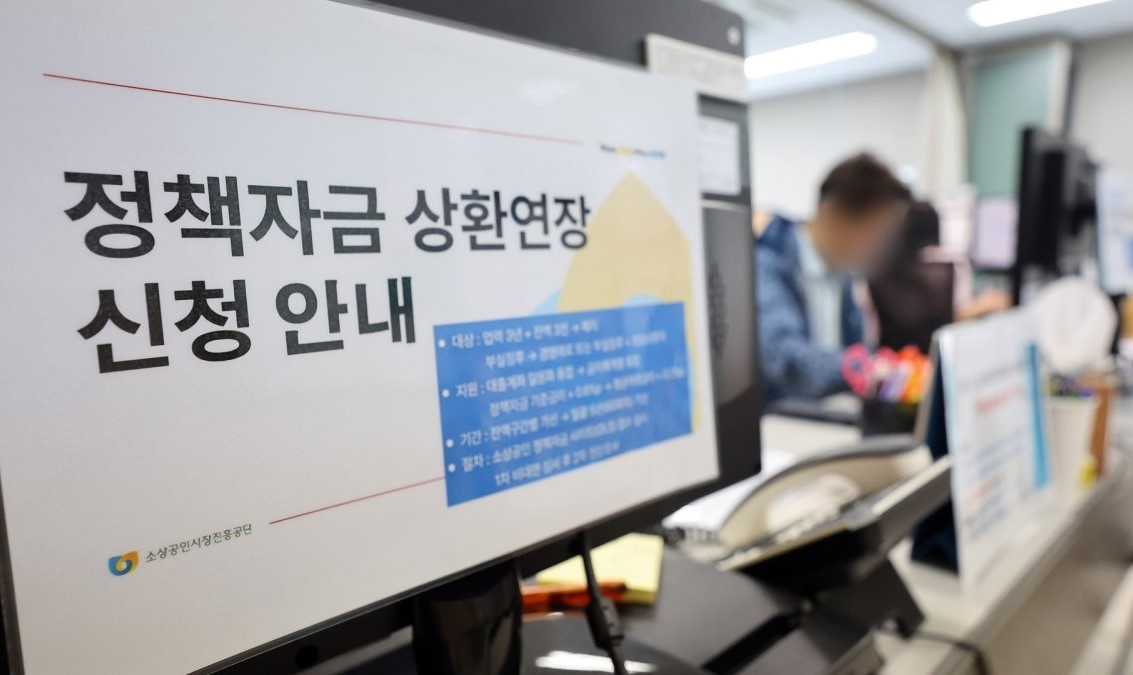
The government's screening process for small business policy loans has been compromised by illegal brokers and forged documents. Twenty-three small businesses that submitted fabricated sales records through brokers obtained a combined 540 million won ($407,000) in policy funds.
According to data submitted to People Power Party lawmaker Park Sung-min of the National Assembly's Industry, Trade, Resources, SMEs and Startups Committee by the Small Enterprise and Market Service, the agency identified 23 businesses that submitted fraudulent documents while applying for low-credit small business funds. The total policy funds disbursed to those businesses came to 540 million won.
External brokers were involved in the fraudulent applications. The businesses backdated their opening dates to periods before they had even filed for business registration, then submitted electronic tax invoice summaries as proof of normal business operations — documents designed to look like evidence of actual sales activity and pass the policy loan screening.
The scheme came to light when the agency compared documents submitted by applicants and found that the electronic tax invoice summaries from some businesses were nearly identical to those submitted by others.
The agency launched a full investigation — including on-site inspections — targeting businesses that had applied for the same policy funds during the same period, checking whether their submitted documents had been falsified. The probe identified 23 businesses suspected of having submitted identical fraudulent documents.
The agency demanded explanations from those businesses and conducted face-to-face interviews, through which it confirmed broker involvement. It also secured fabricated sales records and KakaoTalk message exchanges between the businesses and their brokers.
The agency filed a complaint against the loan brokers with the Daejeon District Prosecutors' Office on Oct. 8, 2024. Following an investigation, three broker suspects were indicted without detention on June 12 this year.
Recovery of the fraudulently disbursed funds remains incomplete. Of the total 540 million won across 23 cases, 190 million won has been recovered to date. Only seven of the 23 businesses have repaid their loans in full.
The agency plans to pursue additional legal action, including civil suits to recover outstanding loans, depending on the outcome of trials involving the brokers and the implicated businesses. How much more can ultimately be recovered remains uncertain.
Reports of policy-fund brokers have also been mounting. According to data the Ministry of SMEs and Startups submitted to Park, a total of 677 reports were filed with the illegal broker reporting center from 2022 through the end of August this year. Of those, 17 cases — 2.5 percent of the total — were referred for investigation on suspicion of improper interference, and three were forwarded to prosecutors.
Reports filed directly with the agency totaled 445 — one in 2024, seven in 2025, and 437 through the end of August this year. The agency said it resolved 412 of those cases internally, with three still under review.
The government launched a task force in December last year to address third-party interference in policy financing, holding six meetings through June this year. It has operated reporting centers at individual policy finance institutions, pushed to introduce whistleblower reward programs and voluntary disclosure immunity, and launched a special crackdown in cooperation with the Korean National Police Agency.
This case illustrates that fraudulent documents can slip through the screening stage and result in actual loan disbursements. Because the agency detected the irregularities only after comparing documents across multiple applicants, experts say cross-verification of application materials and stronger post-disbursement oversight are needed.
"Policy funds that should be reaching desperate small business owners are being exploited as a money-making tool by brokers," Park said. "We must strengthen the screening system to filter out fraudulent documents and take more aggressive action to refer brokers for investigation and recover illicit loans."
boo@heraldcorp.com




