
'The question is whether the US will meet North Korea's preconditions'
Experts see Trump's attention shifting after midterm elections
Analysts suggest a formal speech as a more credible channel for outreach
North Korea has launched twice as many missiles as during Trump's first term
Pyongyang avoiding nuclear tests, ICBM launches — seen as testing Washington
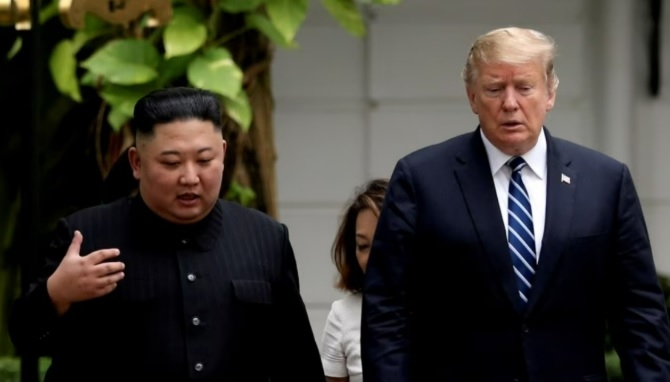
US experts say there is little chance that President Donald Trump will meet North Korean leader Kim Jong-un on the sidelines of next month's Asia-Pacific Economic Cooperation summit during his Asia trip.
Jenny Town, a senior fellow at the Stimson Center, said Thursday (local time) on a podcast hosted by Victor Cha, Korea Chair at the Center for Strategic and International Studies, that the odds of a North Korea-US summit happening anytime soon were "quite low" — well below 50 percent.
"The question is not whether North Korea will come to the negotiating table, but whether the United States is willing to take steps — such as easing its hostile policy toward the North and setting aside denuclearization discussions," Town said. "It does not seem likely that the US will go that far in the near term."
Town added that North Korea is demanding as preconditions the kinds of concessions that would normally be secured through the negotiating process itself, so Pyongyang sees no urgency in meeting with Washington as long as it believes those demands cannot be met immediately.
Ankit Panda, a senior fellow at the Carnegie Endowment for International Peace, put the probability of a North Korea-US summit on the APEC margins at "probably less than 10 percent," noting that it is already late October. He also predicted that after the midterm elections in early November, Trump's attention would shift to other priorities.
Panda said North Korea would want to see something that signals a genuine change in US policy toward the North. He suggested that Trump could send a message to Kim through his State of the Union address early next year. A more deliberate, official message delivered through a formal statement or address would likely draw greater attention from Pyongyang than the current approach of responding to reporters' questions about the possibility of resuming dialogue, Panda said.
Should a meeting take place, Panda said possible venues could include the Joint Security Area at Panmunjom, a runway at Pyongyang's airport, or Beijing.
Panda also noted that while North Korea has been conducting various shows of force, it has avoided nuclear tests and intercontinental ballistic missile launches that could embarrass Trump. He said that if Trump continues to appear unfazed by North Korea's missile launches, Pyongyang may begin to consider talks with Washington more seriously. Panda assessed that North Korea is currently testing the United States.
In a recent report, Cha noted that North Korea has launched missiles 34 times over the 21 months of the second Trump administration — twice the 17 launches recorded during the same period of Trump's first term. Over the full four years of the first Trump administration, North Korea conducted 37 missile launches.
kate01@heraldcorp.com




