'Like a Star in the Sky,' starring Hirose Suzu, opens Oct. 28
Six Japan Academy wins with Shim Eun-kyung's 'The Journalist'
"My bond with Ryusei is like Lee Chang-dong and Sul Kyung-gu"
Fifteen years etched through three cameras — the last on film
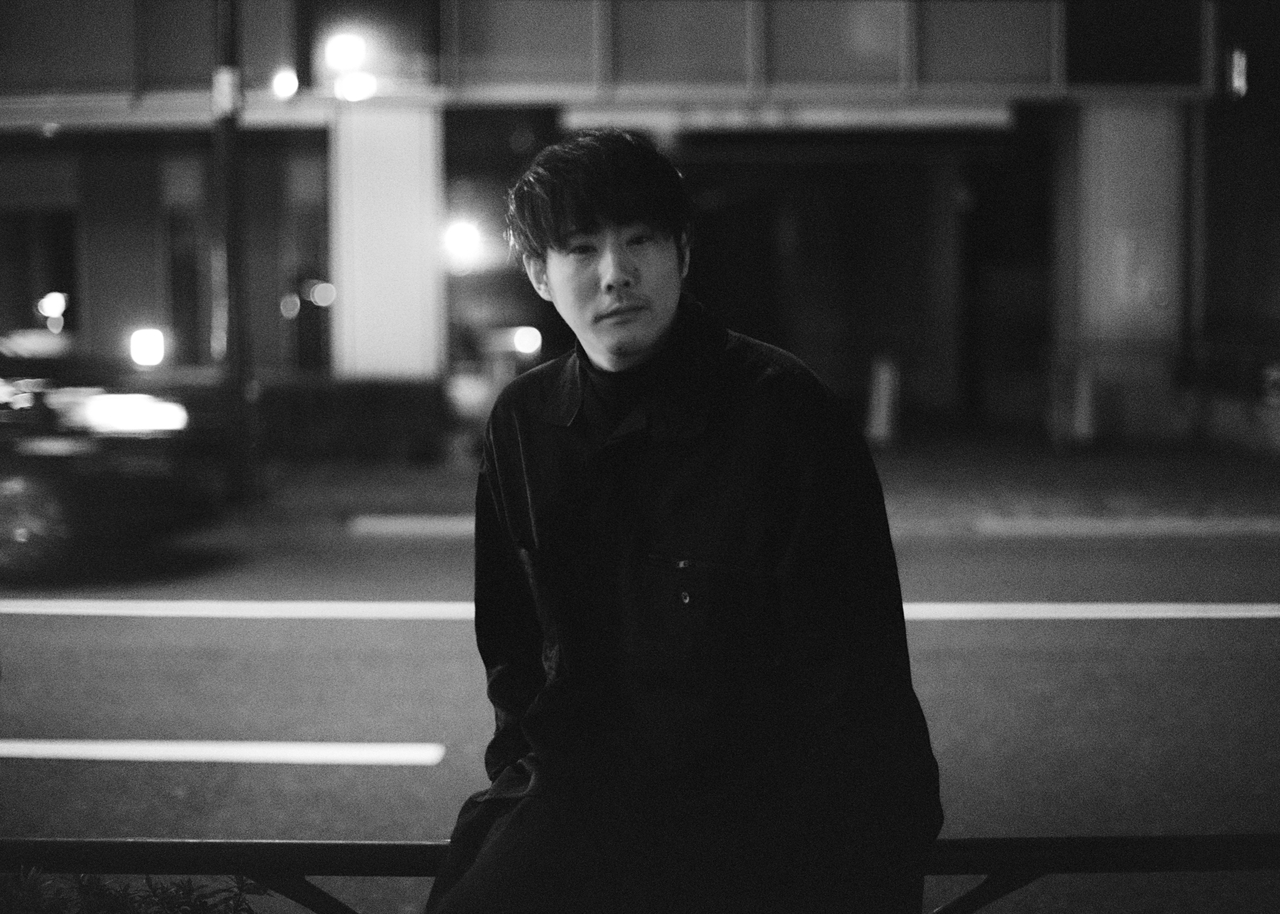
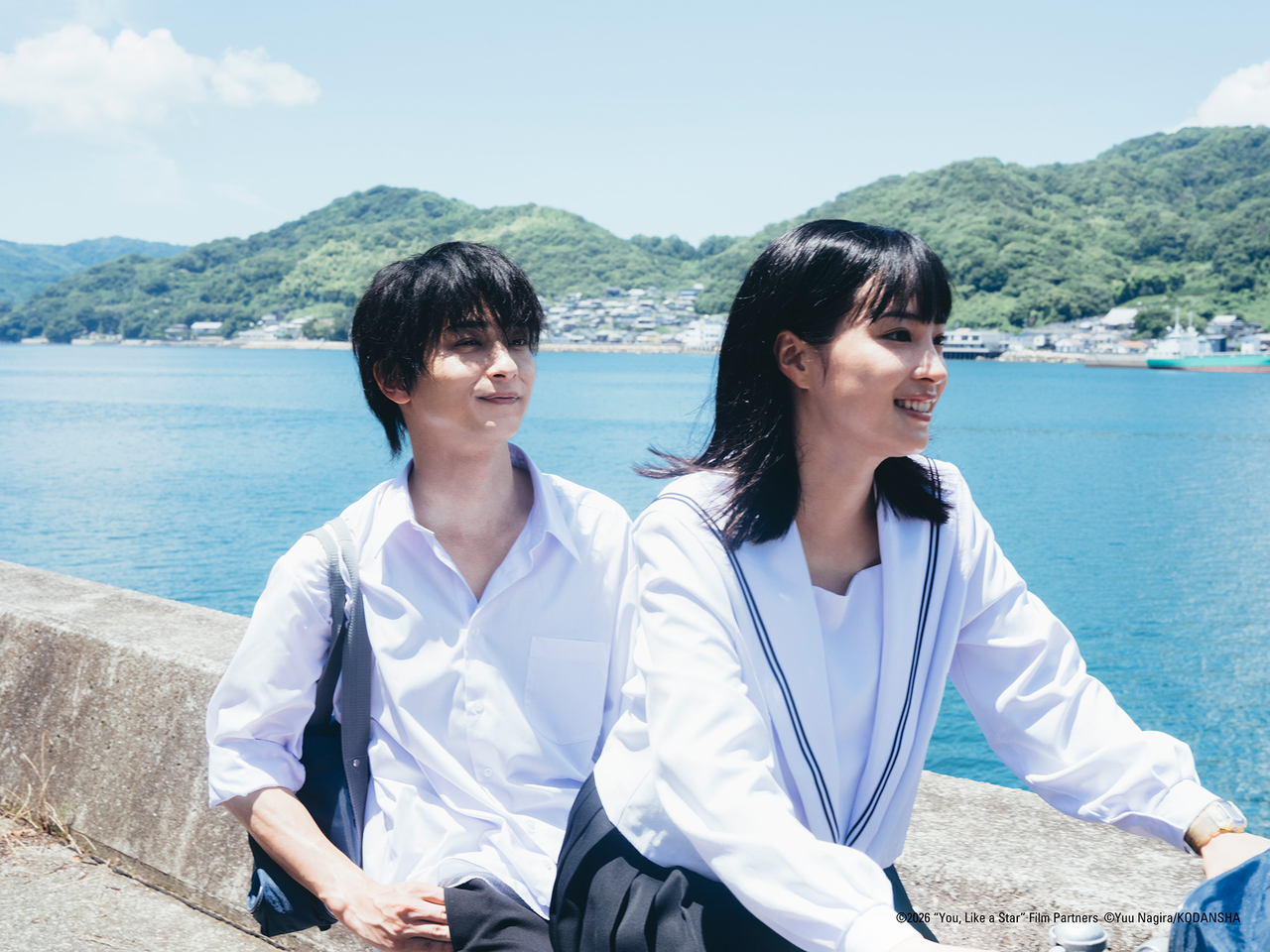
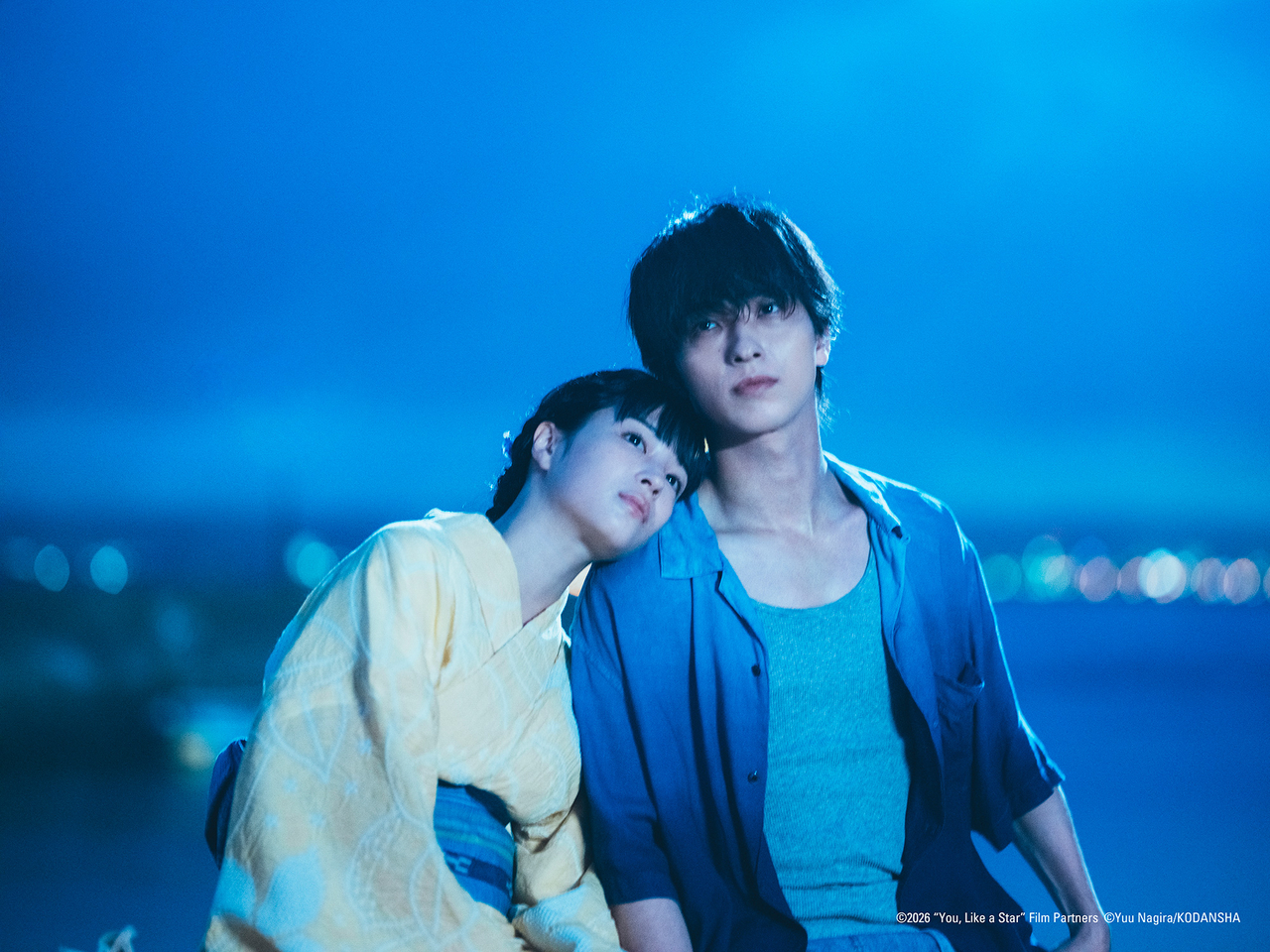
Time does not flow in a straight line. Fifteen years separate the summer a boy and girl meet at seventeen from the summer they reach thirty-two — long enough for first love to learn the weight of the world, for dreams to be crowded out by the demands of daily life, for trust to be broken by the people who mattered most. Life wears and creaks like a pair of old jeans or the rusted joint of a machine. Kai (Yokohama Ryusei) and Akimi (Hirose Suzu), who meet on a small island in the Seto Inland Sea, cross those years together — but mostly apart. The summer fireworks they promised to watch together keep missing each other. "Like a Star in the Sky" neither rushes nor inflates that passage of time. It watches the quiet ripple of emotions rise and settle from a hand's breadth away. The digital image that opens the film gives way, in its final chapter, to 35mm film. Time that cannot be undone at last acquires a texture you can hold. Life continues even where love has ended, and in the evening sky, the first star to appear remains.
"I thought of it not as a simple romance but as a story about many people's lives and many people's loves," he said. "If I could film the lives of people living in Japan across fifteen years, I wanted to try."
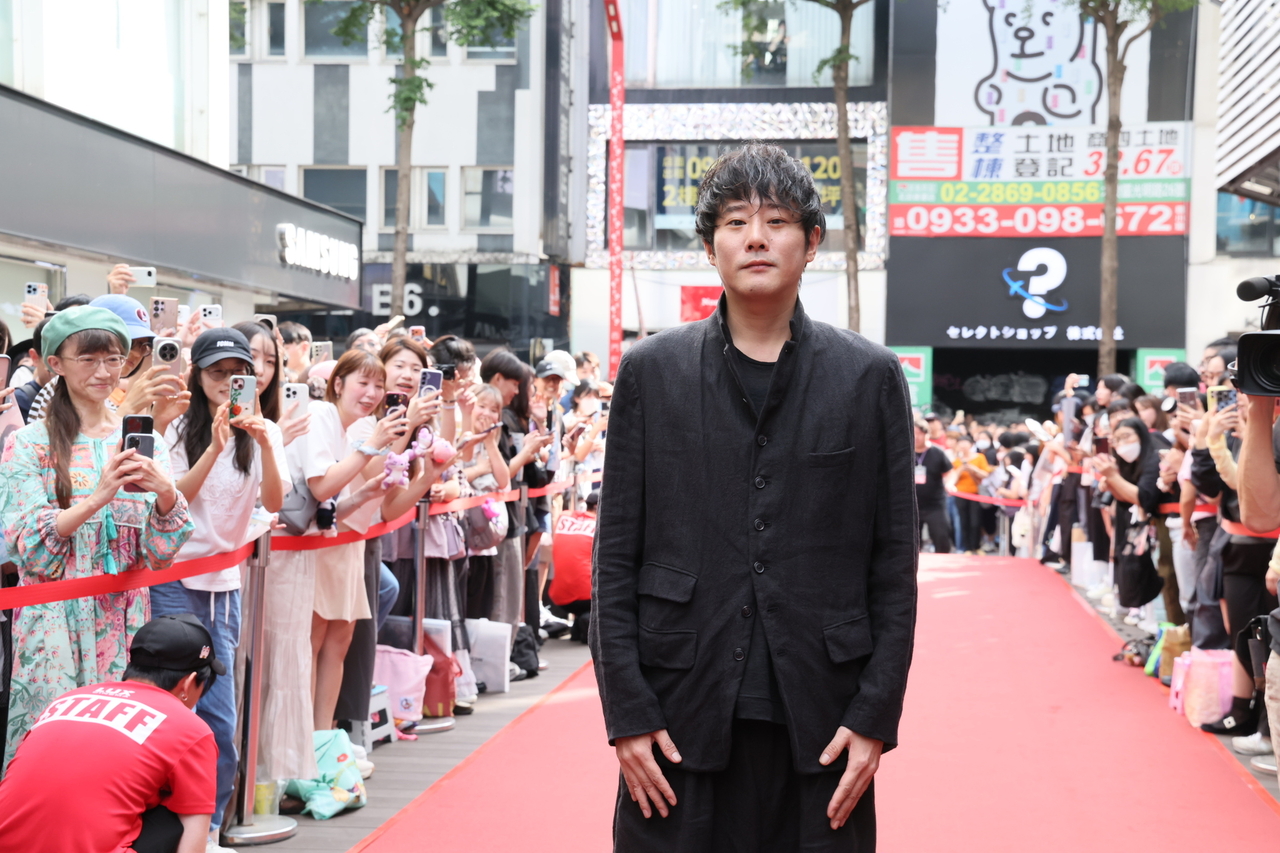
Director Fujii Michihito, 40, visited South Korea ahead of the film's release and explained why he chose "Like a Star in the Sky." He is one of Japan's most celebrated directors, having swept six Japan Academy Awards with "The Journalist," starring Shim Eun-kyung. The film is based on the novel of the same name by Nagira Yu, which won the 2023 Japan Booksellers' Award. It screened in the Asian Cinema Fund section of the 31st Busan International Film Festival earlier this month and opens Oct. 28.
The project actually began with Yokohama Ryusei. Having read the source novel, Ryusei joined as a producer and proposed the adaptation to Fujii. The director described their partnership of more than a decade with a laugh, saying it was "like the relationship between director Lee Chang-dong and actor Sul Kyung-gu."
"When an actor says he wants to play this role himself, that he wants to deliver it to audiences in this era — that is something very special," Fujii said. "As an older brother, as a friend, I wanted to make it happen no matter what."
One red card, and what remains after
What Fujii read in the source novel — which wears the face of a love story — was a portrait of contemporary Japanese society, and perhaps of the world everyone stands on.
"In Japan right now, a single word — 'correctness' — has a grip on people," he said. "There is a kind of common sense that lives inside social media, and the image reflected there looks like the whole of who a person is. Japan is fundamentally a world with no second chances. The novel asked, with real urgency, whether people are truly meeting each other with open hearts."
How do we judge other people? Fujii has lingered beside that question for a long time. He placed it before a journalist confronting a truth that power wants buried ("The Journalist"), before a man who cannot shed his stigma even after leaving an organization ("Yakuza and the Family"), and before the people who each remember a fugitive murder suspect differently ("Shotai"). The question he once posed in the grammar of social-issue cinema he has now set down on the fifteen-year road two lovers travel.
Fujii said Japan has "a culture of handing out a red card in one go. A mistake is obviously wrong, but in a society like that, people stop communicating with one another."
"Because if you reach out, you might fail, you might clash," he said. "What waits at the end of that is loneliness and emptiness. I think the essence lies in the fact that people who can never fully understand each other still collide and live together in one society."
Fujii himself lives under that same scrutiny. "In a society that attacks other people's lives more than necessary, I am relatively on the receiving end," he said. "Even so, rather than shouting 'stop,' I wanted to properly portray in film that these people, too, each have their own background and their own life." His approach is to choose understanding over accusation, and story over lecture.
From the outset, the two protagonists, Kai and Akimi, carry burdens that were never theirs to bear. Akimi has had to put her dreams and her love on hold to stay by her mother's side after her father left for another woman. Kai, too, arrives on the island dragging the shadow his parents cast over him. Fujii called what the two carry their "original sin."
"Just as you cannot choose your parents, you cannot choose the environment you are born into," he said. "That original sin presses down on the two of them like a cross. It makes them doubt themselves — wondering whether they are doing something wrong — and even when they try to live differently from their parents, it follows them like a curse."
The adult who watches that curse up close is Kitahara (Hasegawa Hiroki), their high school chemistry teacher. He repeatedly makes choices that are hard to accept by the world's usual logic — a lifeline, a safety net, a source of hope for those who have reached a dead end. "Kitahara-sensei also lives carrying his own original sin from the past," Fujii said. "Offering unconditional love to someone while ignoring all the rules of 'correctness' — that is something almost impossible to find in Japanese society."
"I thought he was the embodiment of author Nagira's prayer: 'I wish someone like this had been there,'" Fujii said. "So while I was directing, I tried to be Kitahara-sensei as much as I could."
A decade on film, and the next reel
Fifteen years of time accumulated in the texture of the image itself. The film's first chapter was shot on a DSLR with the cinematographer who accompanied Fujii through his twenties; the next on an ALEXA, the camera that brought him "so many encounters"; the last on 35mm film. He layered his own fifteen years as a filmmaker over the fifteen years his two characters live on screen. "I felt that the fifteen years we had walked were a time that fit perfectly with this novel," he said. "For me it was the last film of my thirties, and I thought it would be fine if it were the last. I wanted it to stand as the culmination of everything I had made since my twenties." His fascination with film began a few years ago, when he shot "Light of the Harbor" with cinematographer Kimura Daisaku.
"Film is once only," he said. "You cannot say 'let's go one more time' the way you can with digital. The fact that time does not come back — I thought that was Kai's life itself."
About half of Fujii's filmography is adapted from existing works; the other half is original. His approach to source material reflects a clear creative conviction. "Honestly, if you are just going to follow the novel, you are better off reading the novel," he said. "If it is a film, you have to properly layer the lives and hearts of many people on top of one another." For that reason, the film — unlike the novel — opens with a shot of Kai's back. Toward the single scene where the fireworks that keep missing each summer and the first star in the evening sky finally converge at the last moment of a life, the director fired off countless rockets.
Presenting what he calls his "graduation work of his thirties," Fujii shared a decision he said he had never stated so plainly even to the Japanese press. "I will probably direct almost no Japanese projects for the next few years. I am not taking on new offers either. I think it is time to stop for a moment, change my environment, and study again."
The roots of that decision reach back to his childhood. "I spent my early years in the United States, and my grandfather is Taiwanese," he said. "I am proud to be Japanese, but I have a very strong sense of being Asian. When I was young I wrestled a great deal with questions of nationalism. That is why meeting cinema felt like fate." Having wound the last frame of the reel that was his thirties, the director is now threading a new one — carrying into his own life the lesson film taught him: the scenes that have passed do not come back.
"What I loved about film was that it has a visual language that lets you connect with people beyond words," he said. "Right now I want to weave stories together with filmmakers from across Asia. I doubt I will ever know, in my lifetime, what kind of director I am best at being. So I suppose I will have to keep searching, slowly."
shee@heraldcorp.com