'Doctor X' reaches 18.5% by episode 4, tops Netflix non-English chart
'100 Days of Lies' closes gap to 2.07 percentage points in buzz rankings
Medical drama faces review board complaint amid record-breaking run
1932 independence movement history woven into colonial-era spy thriller
#1. "I never fail."
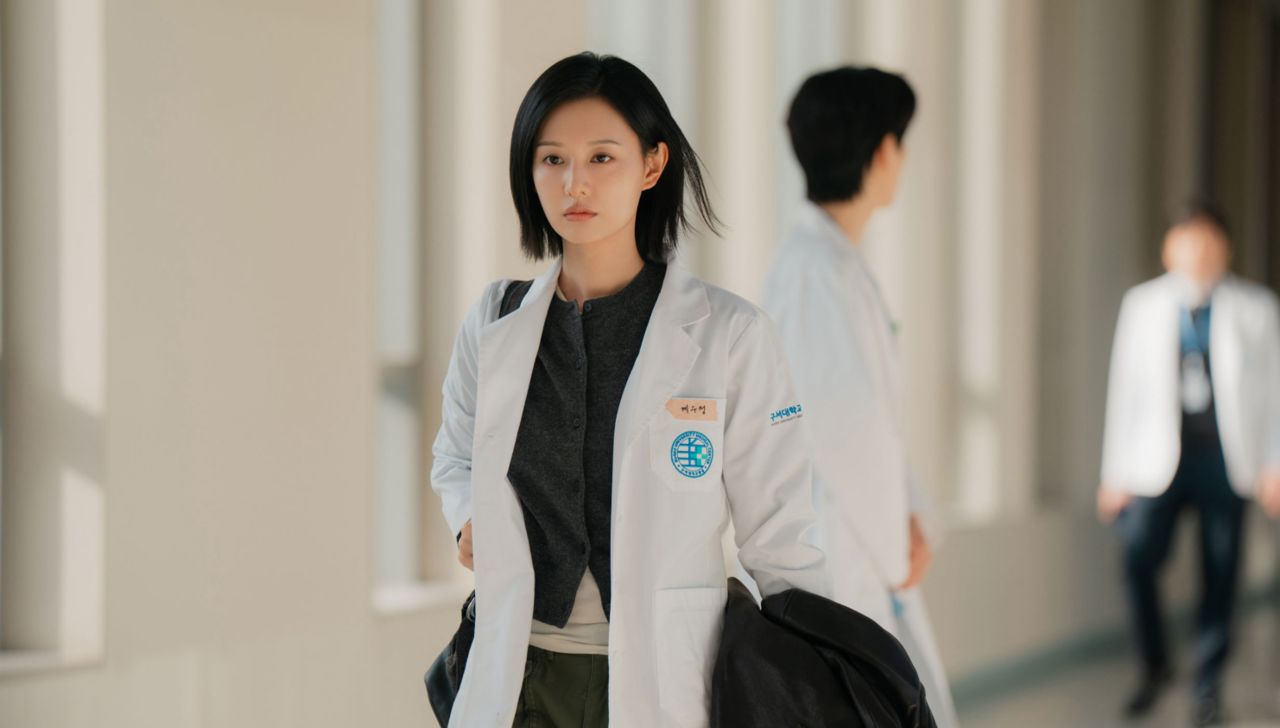
Doctors scramble in a panic as the hospital director collapses mid-surgery, leaving an elderly patient's abdomen open on the table. Into the chaos walks contract surgeon Gye Su-jeong (played by Kim Ji-won), radiating an icy calm. She finishes the operation flawlessly — and receives a termination notice as her reward. The hospital cannot bring itself to let her go. She commandeers a VIP's wheelchair to carry a collapsed girl, and without hesitation opens the skull of a janitor felled by a cerebral hemorrhage. She refuses ward rounds, staff dinners and overtime. Her one principle: surgeries do not fail. That is the premise of SBS's Friday-Saturday drama series "Doctor X: The Age of the White Mafia" (hereafter "Doctor X").
#2. "If I have a backer, it is 20 million Joseon people. Long live Korean independence."
Gyeongseong Station, 1932. Pickpocket Lee Ga-gyeong (played by Kim Yu-jeong), who has been saving up for a boat ticket to America, steals a bag — and finds it full of cold bullets. The bag belongs to sniper Yoo So-ran (played by Kim Hyun-ju), who has returned after 13 years to assassinate Sato Shin-ichi (played by Jin Seon-kyu), the second-in-command of the Japanese Government-General of Korea. Swept up in the assassination plot, Ga-gyeong agrees to spend 100 days undercover as a Government-General interpreter in exchange for passage to America. The pickpocket who once cared only about money eventually finds herself roaring with defiance. That is tvN's Saturday-Sunday drama series "100 Days of Lies."
Weekend television does not get hotter than this. Two women who fearlessly crack the foundations of entrenched power have taken complete command of October prime time.
"Doctor X" opened to a nationwide rating of 11.4 percent (Nielsen Korea) — the highest first-episode figure for a miniseries this year — then soared to 18.5 percent by its fourth episode, with a per-minute peak of 20.8 percent. Released Oct. 9, the drama topped Netflix's non-English TV show chart for two consecutive weeks within three days of its debut, reaching No. 1 in seven countries including South Korea, the Philippines, Vietnam and Indonesia, and landing in the top 10 in 48 countries.
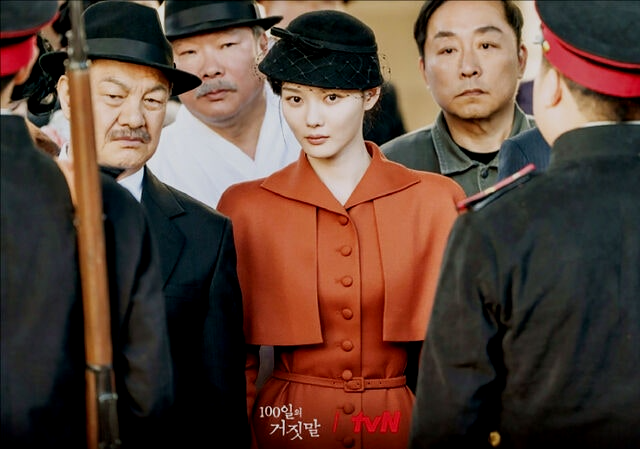
The challenger is closing fast. "100 Days of Lies" launched at 5.3 percent and broke 9.0 percent by its fourth episode (on paid platforms), claiming the No. 1 spot in its time slot. Direct comparisons between the two figures are difficult because terrestrial and paid-platform ratings use different sample populations, but the buzz competition is already fierce. In Fundex's third-week-of-October popularity rankings, the gap between the two dramas had narrowed to just 2.07 percentage points. In the individual performer category, Kim Ji-won and Kim Yu-jeong ranked first and second, respectively.
Two women take the wheel
For years, the "surgical genius" in Korean medical dramas was almost exclusively male — think Jang Jun-hyeok from "White Tower" or Dr. Kim from "Romantic Doctor." Female doctors were typically cast in "growth narratives," fighting tearfully for recognition, as in "Surgeon Bong Dal-hee." Gye Su-jeong in "Doctor X" is different: she arrives already at the top of her field. Even the hospital director who once called her "a tail you can just cut off" has no choice but to bring her back.
"100 Days of Lies" does include a romance with Government-General interpreter Sato Hideo (played by Park Jin-young), but the wheel of the larger story is held entirely by pickpocket Ga-gyeong's web of lies and quick thinking.
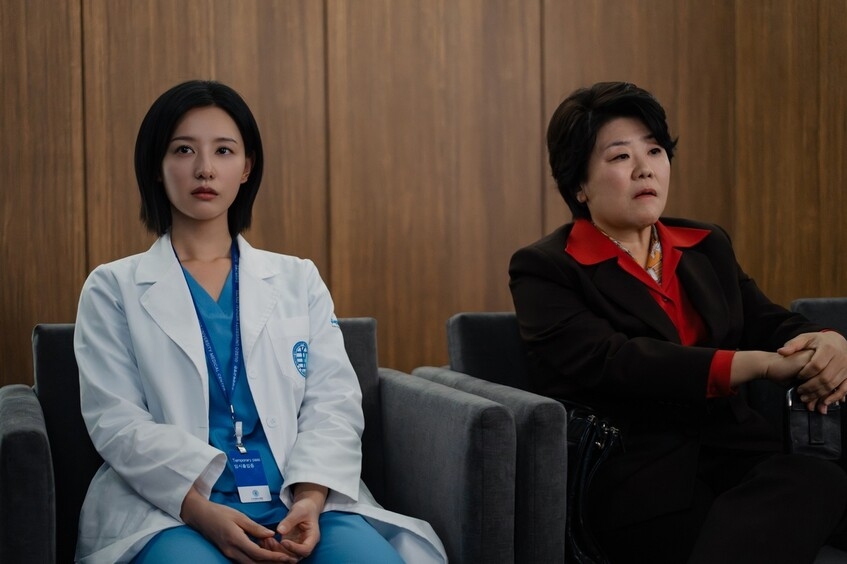
"Doctor X" is the first overseas remake of TV Asahi's "Doctor X: Surgeon Daimon Michiko," which ran for seven seasons and 69 episodes from 2012 to 2021. Unlike the original, however, the Korean version is densely layered with the realities of the domestic medical system — the push to legally mandate CCTV in operating rooms, the collective strike against medical school enrollment expansion and other flashpoints of the Korean healthcare debate. For Kim Ji-won, whose ratings have typically started low and built through word of mouth — "Fight for My Way" (5.4 to 13.8 percent), "My Liberation Notes" (2.9 to 6.7 percent), "Queen of Tears" (5.9 to 24.9 percent) — this drama marks a turning point: double digits from the very first episode.
Kim Yu-jeong's trajectory, by contrast, pivoted sharply with her previous role as the villain Baek A-jin in the Tving original "Dear X." Playing a woman who tramples others on her climb to the top, Kim drove six consecutive weeks of No. 1 rankings for new paid subscriptions among Tving originals, and the series finished first among all Tving originals in both total viewing hours and number of viewers who completed it. Overseas, it topped Rakuten Viki's charts in 108 countries. As writer Ryu Bo-ri said at the press conference for "100 Days of Lies," "We needed an actor who could bewitch the audience" — and Kim Yu-jeong has done exactly that, proving her presence one project at a time.
Vicarious thrills — and the shadows they cast
"Objection. That is an excess of greed in old age."
That is Gye Su-jeong's opening salvo on her first day at work. Her refusal of ward rounds, staff dinners and overtime is the fantasy of every salaried worker — a fact borne out by the drama's episode-4 rating among viewers aged 20 to 49 (5.9 percent), which topped all Saturday programming. Particularly striking is an episode in which a hospital publicly apologizes for the death of an emergency responder who lost the golden hour because no neurosurgeon was available. The scene extends the lineage of the "catharsis drama" — stories in which one person's skill dismantles the injustice that institutions cannot fix — delivering a powerful release to viewers worn out by the ongoing healthcare crisis.
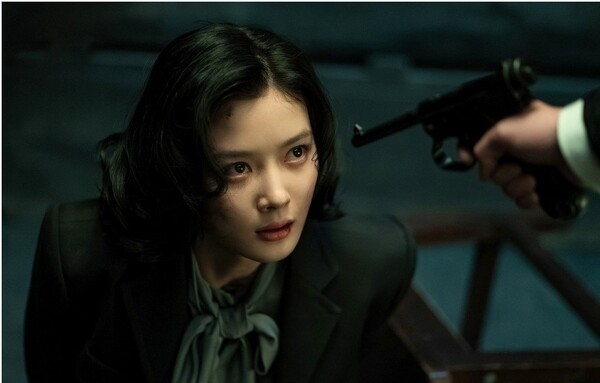
The emotions stirred by "100 Days of Lies" run on a different frequency. A line delivered by Government-General interpreter Suzuki (played by Kim Do-hyeon) — revealed to be a spy for the independence resistance — that "spring will soon come to Joseon" sent a heavy ripple through viewers. Audience response peaked in the early part of episode 4, when Ga-gyeong, kidnapped with a gun pressed to her forehead as a test by the resistance, refuses to give up her comrades. Director Yoo In-sik said he "was curious about the force that moved independence fighters," and the drama's fictional imagination translated into what writer Ryu Bo-ri called "exhilaration and consolation" for viewers.
The shadows behind the breakneck momentum are equally deep. "Doctor X" drew a complaint to the Korea Communications Standards Commission over a scene depicting 300-joule defibrillation on a cardiac-arrest patient and a portrayal of a child with Type 1 diabetes as a "drug addict." The drama's on-set medical consultant, Professor Nam Gung-in, was pointed in his criticism, saying "the consultant lost to the production team." SBS said only that it had "no separate position" and continued to air a fiction disclaimer each episode. Ratings, meanwhile, soared to 18.5 percent — a precarious tightrope walk between viewership and ethics.

"100 Days of Lies," which has been drawing global viewers from the moment it launched, is also generating buzz in Japan. Despite claims by some local online users that it is an "anti-Japanese drama," it has entered the top 10 on Japan's Netflix TV show chart. Jin Seon-kyu, who had no prior knowledge of Japanese, spent two months in Japan studying his script for seven hours a day, and his Japanese-language performance has earned praise from local viewers as well.
The drama's fictional roots reach deep into history. Overseas reactors on YouTube are sharing reaction videos and revisiting Korean history of the 1920s. The series weaves the painful legacy of the back-to-back 1932 actions by independence fighters Lee Bong-chang and Yun Bong-gil into its spy thriller framework with precision. The fictional village of "Gyeamri," the hometown of the daughter Yoo So-ran lost, is modeled on the 1919 Jeamri Massacre carried out by Japanese colonial forces. The Western-style house "Hiwon," where the character Yoo Philip (played by Lee Mu-saeng) lives, is based on Dilkusha, the home of AP correspondent Albert Taylor, who exposed Japanese atrocities. That historical authenticity extends to a special exhibition, "1932 Gyeongseong: Becoming a Spy," running at the Seoul Museum of History through Nov. 29 — demonstrating the positive ripple effects that quality content can generate.
A broadcasting industry official said the two dramas "strike at the deep fatigue the public feels toward outdated systems," adding that "the uncompromising surgeon and the spy who turns even romance into a survival tool are the most contemporary dark heroes — characters who crack the absurdities of the world — and the finest examples of autonomous female narratives."
shee@heraldcorp.com