8 of 12 teams that swept the wild-card round reached the Korean Series — a 66.7% rate; both teams to win in three games under the best-of-five format fell in the next round

Can the KIA Tigers break the curse that has doomed every team to sweep the wild-card round in three games — and still fall short of the Korean Series?
KIA swept the LG Twins 13-1 on Tuesday at Jamsil Baseball Stadium in Seoul to advance to the playoff round with a perfect 3-0 series record. The Tigers will face second-place Samsung Lions in the best-of-five playoff series beginning Sunday at Daegu Samsung Lions Park, with a Korean Series berth on the line.
Historically, teams that went undefeated through the wild-card round have fared reasonably well. Since the wild-card round was introduced in 1989, 12 teams through last year swept their series without dropping a game. Eight of those 12 went on to clear the playoff round and reach the Korean Series — a success rate of 66.7 percent.
The Lotte Giants in 1992 and the Doosan Bears in 2001 swept the wild-card round in two games and went on to win the Korean Series. Samsung in 1990, the Hyundai Unicorns in 1996, LG in 1998 and 2002, the SK Wyverns in 2003, and Doosan in 2020 also swept the wild-card round and reached the Korean Series.
On the other side of the ledger, the Hanwha Eagles in 1994, Doosan in 2004, Samsung in 2008, and the NC Dinos in 2023 all swept the wild-card round but were eliminated in the playoff round.
What makes the current situation particularly notable is the format. Only two teams have swept a best-of-five wild-card series in three games — Samsung in 2008 and NC in 2023 — and both failed to reach the Korean Series.
Samsung swept Lotte in three games in 2008 but lost to Doosan in the playoff round, going 2-4 in what was then a best-of-seven format — different from the current best-of-five.
NC swept SSG Landers in three games in 2023, then took a 2-0 lead against KT Corp Wiz in the playoff round. The Dinos, however, lost the next three games in a row and were eliminated with a 2-3 series record.
The wild-card round was originally a best-of-three format before expanding to best-of-five in 2005. It reverted to best-of-three in 2006 and 2007, then returned to best-of-five from 2008 onward. In 2020 and 2021, the format was temporarily shortened back to best-of-three to compress the schedule.
Ultimately, two-thirds of all teams that swept the wild-card round have reached the Korean Series — but no team that swept a best-of-five wild-card series in three games has ever advanced past the next round.
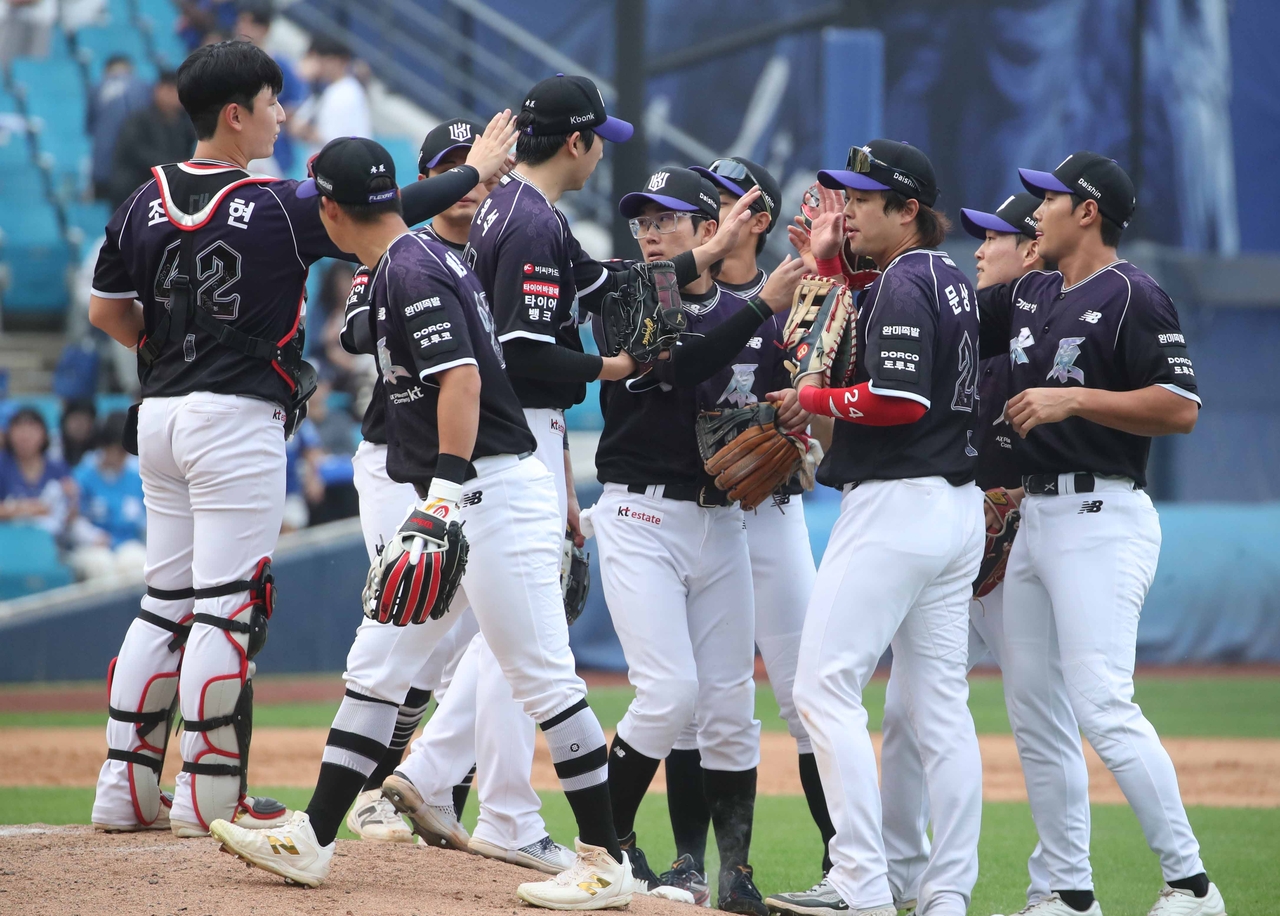
KIA is the third team ever to sweep a best-of-five wild-card series in three games. By closing out the series early, the Tigers secured four days to regroup before Game 1 of the playoff round on Sunday, giving starters James Naile and Adam Oller time to line up on normal rest.
The offense has also been a source of optimism. Kim Do-young drove the attack throughout the wild-card round, hitting three home runs and driving in eight runs across the three games.
Their opponent, Samsung, finished second in the regular season and received a first-round bye. The Lions come in well-rested and with home-field advantage. KIA will need to sustain the offensive firepower and pitching stability it showed in the wild-card round on a bigger stage.
Of course, there are only two prior examples of a three-game sweep in a best-of-five wild-card series. It would be premature to conclude that sweeping in three games is inherently a disadvantage based on just those two cases.
Whether KIA extends the strong Korean Series advancement rate of wild-card sweepers or stumbles in the playoff round as the two previous three-game sweepers did will be decided when the series opens Sunday at Daegu Samsung Lions Park.
yjc@heraldcorp.com