Herald Business·Daelyuk Aju 'Labor and Safety Law Forum'
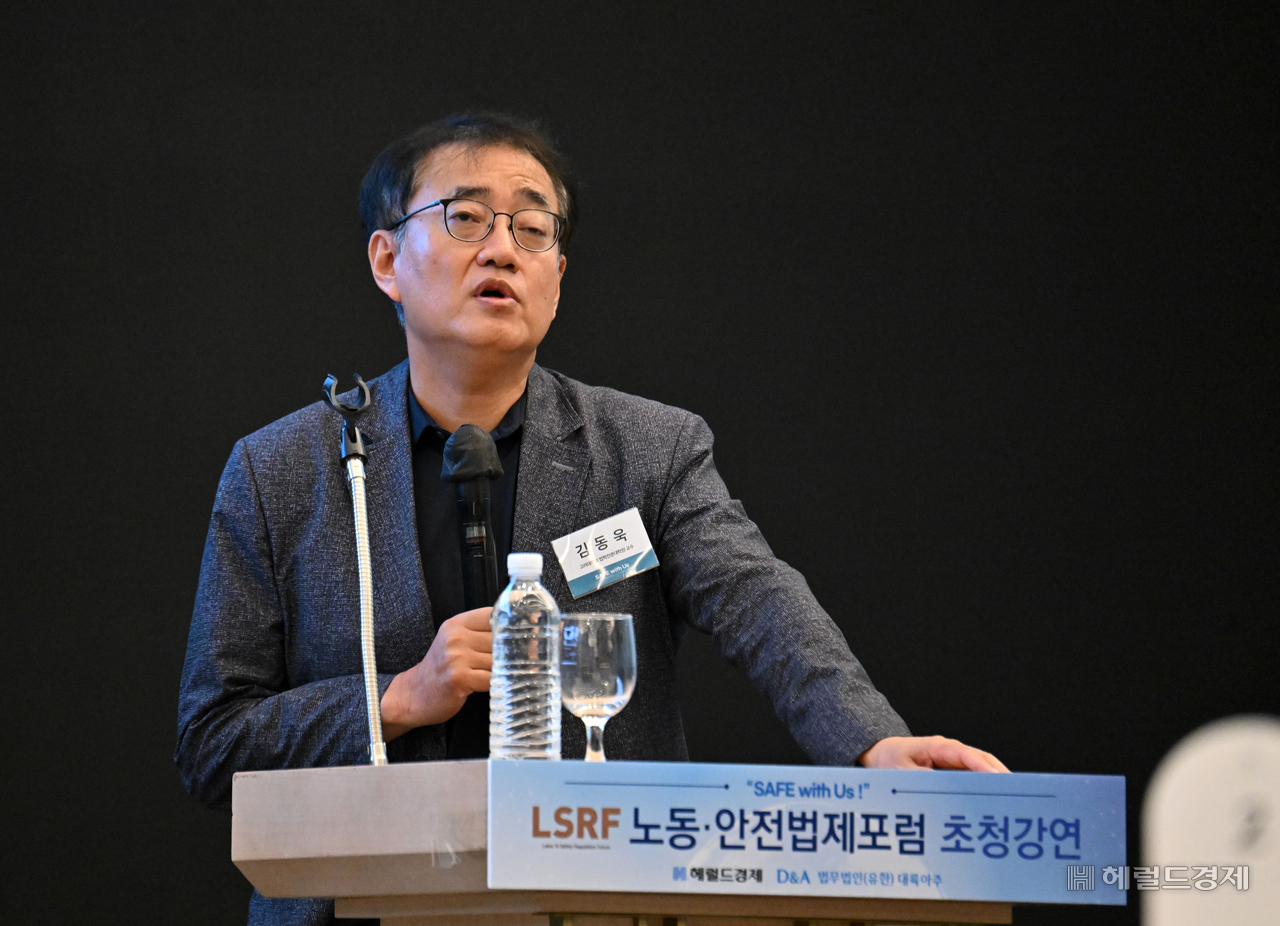
Korea University law professor Kim Dong-wook delivers lecture
Revised union law raises questions over scope of AI-related bargaining
'Can companies survive if they can't even reassign workers or adjust wages?'
Algorithmic supervision also a flashpoint, with potential expansion of primary contractor liability
Legal risks in AI-assisted hiring and performance reviews flagged
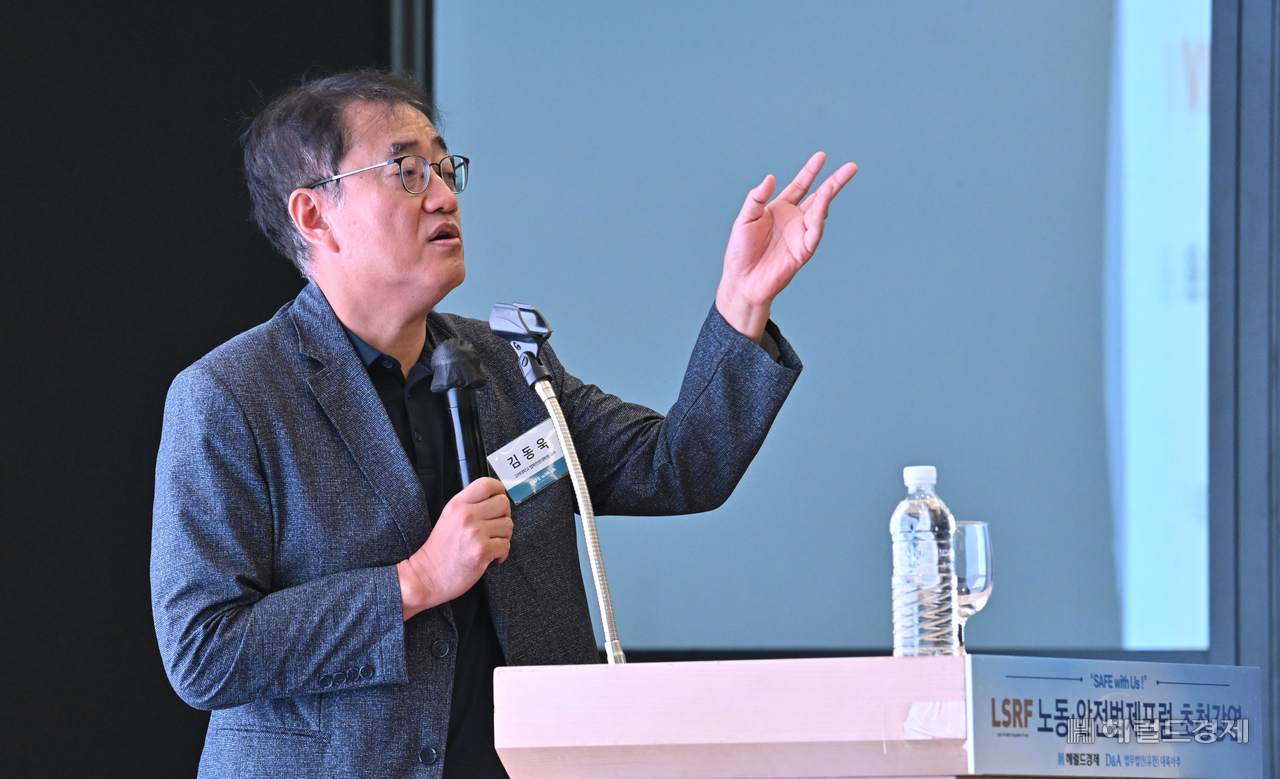
"Bargaining over AI adoption and the workforce restructuring that follows is a problem that is bound to explode before long. What matters, I think, is the question of how far that bargaining can go."
As AI spreads rapidly and reshapes how companies manage their workforces, a new flashpoint is emerging in the workplace: how much of AI-driven employment adjustment falls within the scope of labor-management bargaining. Even when the decision to adopt AI is treated as a management prerogative, concerns are growing that disputes over workforce reassignment and wage adjustments could slow the pace of corporate innovation.
Korea University School of Law Professor Kim Dong-wook made the remarks Wednesday at the Labor and Safety Law Forum on Serious Accident Prevention, co-hosted by The Herald Business and law firm Daelyuk Aju at Ambassador Seoul Pullman Hotel in Jung-gu, Seoul.
Kim is a labor law specialist who has served as chief litigation counsel at the National Labor Relations Commission, a senior official at the Ministry of Employment and Labor, and head of the labor practice group at law firm Sejong.
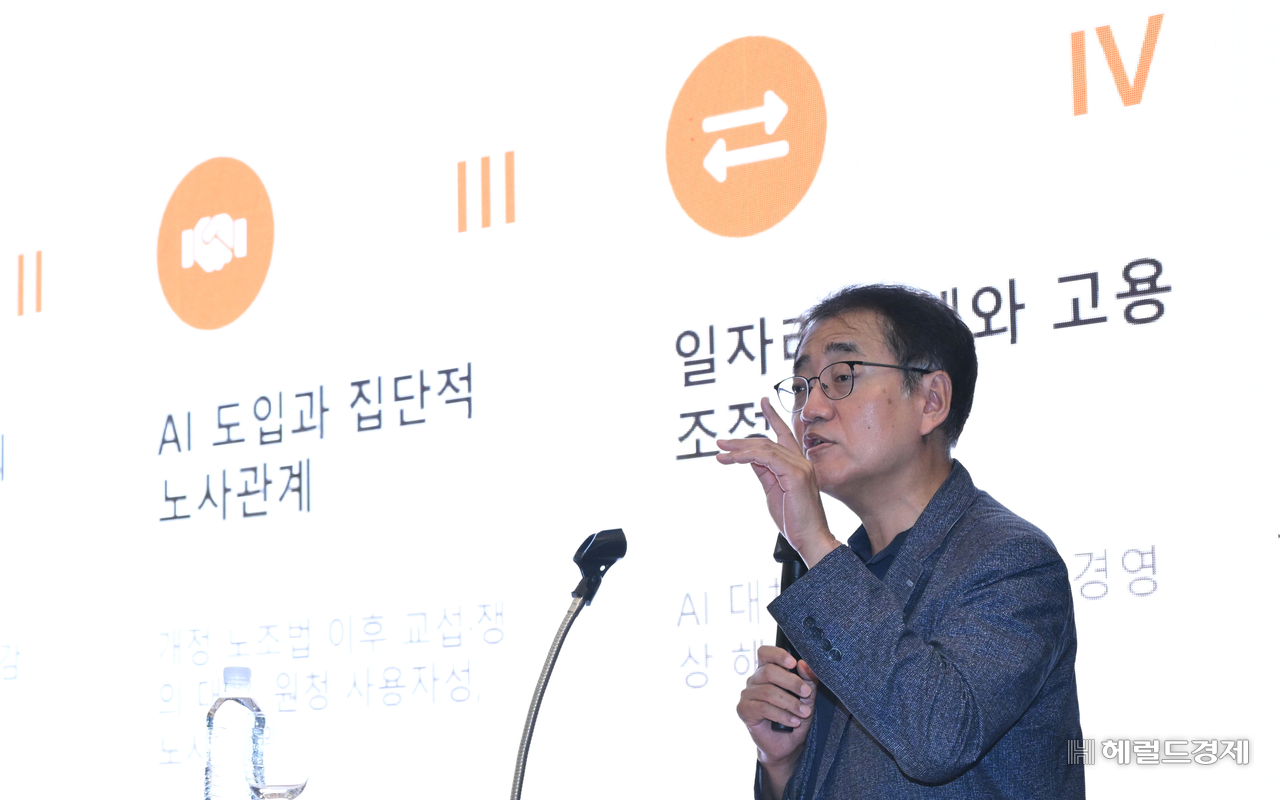
Kim said the uncertainty surrounding the scope of labor-management bargaining under the revised Trade Union and Labor Relations Adjustment Act — which took effect in March and is commonly known as the "yellow envelope law" — was a particular concern. The amended law expanded the definition of labor disputes to include business management decisions that affect working conditions, heightening the potential for conflict between corporate judgment and workers' rights.
Applying the Ministry of Employment and Labor's interpretation to AI adoption, management decisions such as whether to adopt AI, when to do so, and which technology to choose are in principle not subject to bargaining. However, if workforce reductions or reassignments are objectively foreseeable, unions can demand negotiations over changes to working conditions, including job security.
Kim said this distinction may be difficult to apply clearly on the ground. "Even before, business management decisions closely tied to working conditions were considered subject to bargaining," he said, adding that courts may interpret the scope of bargaining more broadly following the revised law's enactment.
Using the example of physical AI robots being introduced on Hyundai Motor production lines, Kim highlighted the difficulty of adjusting the workforce in the face of union opposition. "If companies adopt AI but still cannot reduce headcount, reassign workers, or adjust wages, can they really sustain that?" he said.
He added that while companies cannot freely dismiss workers, they should at least be able to reassign them, and said greater flexibility in the labor market was needed.
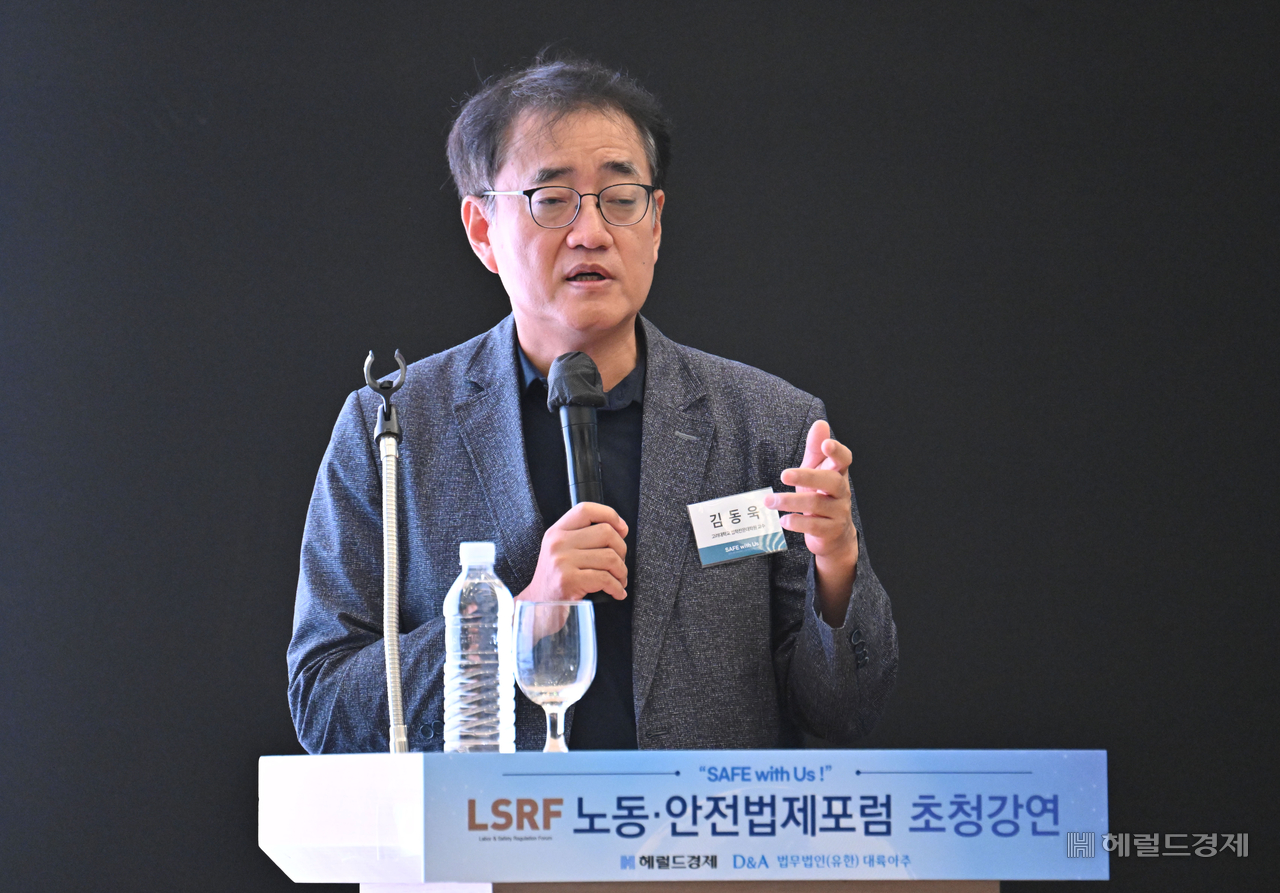
Kim also identified as a key issue whether algorithmic work instructions constitute direction and supervision under labor law. "There is debate over whether electronic signals mechanically issued by AI can be considered commands," he said, citing examples such as task assignment by food delivery platforms and call dispatch and rating management by taxi and designated-driver platforms.
Referencing the Supreme Court's 2024 ruling recognizing Tada drivers as employees, Kim said algorithmic work instructions could constitute substantive direction and supervision. He added that companies should consider, from the system design stage, how much discretion to give workers.
This issue also connects to the question of whether primary contractors can be deemed employers. The revised union law allows a party that is not a direct signatory to an employment contract to be recognized as an employer to the extent that it substantially and specifically controls or determines working conditions. If a primary contractor directly assigns tasks to subcontracted workers through an AI system or factors AI-generated performance evaluations into their pay and personnel decisions, it could be found to bear employer status.
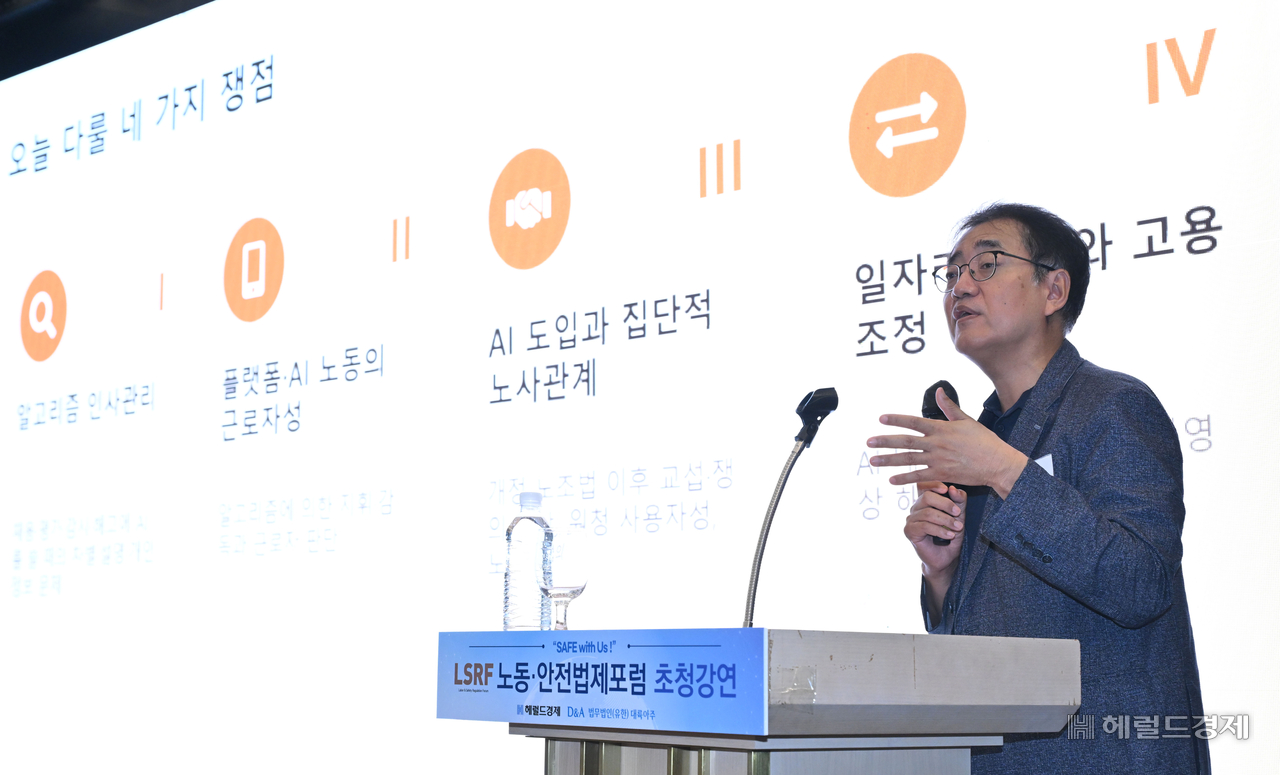
Kim warned that legal liability can also arise in AI-assisted hiring and performance evaluations. If an AI system trained on historical hiring data produces results that disadvantage a particular gender, it could give rise to indirect discrimination claims under the Equal Employment Opportunity Act. Leaving consequential decisions such as hiring outcomes entirely to AI could also raise issues under the Personal Information Protection Act regarding the right to refuse automated decisions and the right to request explanations.
Kim said that if AI used in hiring qualifies as "high-impact AI" under the Framework Act on Artificial Intelligence, companies must review their obligations, including notifying applicants of its use and ensuring human oversight.
Because AI can reflect biases in historical hiring data or misjudge a candidate's capabilities, he said it is risky for HR managers to simply approve AI-generated results as they stand. If a human's role is reduced to a rubber stamp, the AI may in effect be treated as the final decision-maker — a situation that could create problems under the Personal Information Protection Act.
Kim said that when disciplining or dismissing employees based on AI evaluations, companies must apply fair and objective assessment criteria, and stressed that using AI does not exempt employers from liability.
On AI's broader impact on the labor market, Kim identified a decline in new hiring of young workers as a primary concern. While there is no clear evidence yet that overall employment has fallen, he said young people's entry into the labor market is contracting.
According to his presentation materials, the rate of new labor market entrants aged 22 to 25 in high AI-exposure occupations in the United States fell 14 percent in 2024 compared with 2022. A similar trend has been observed in South Korea, where hiring of junior workers has declined while demand for senior workers has relatively increased. This is because AI tends to replace the routine, repetitive tasks performed by younger workers while complementing the experience and judgment of more seasoned employees.
Kim said a sustained reduction in entry-level hiring could eventually break the pipeline for developing skilled workers. "Companies need to redesign job roles for the AI era and build education and training systems for young workers," he said.
In closing, Kim urged proactive discussion on how labor law and related systems should be reformed to prepare for the labor market changes brought by AI's spread.
"AI is already transforming the structure of our society, and there are areas where it conflicts with existing labor law," he said. "The related disputes have simply not yet been fully litigated in court — but they are already surfacing in the National Assembly, in companies, and on the shop floor."
kwater@heraldcorp.com